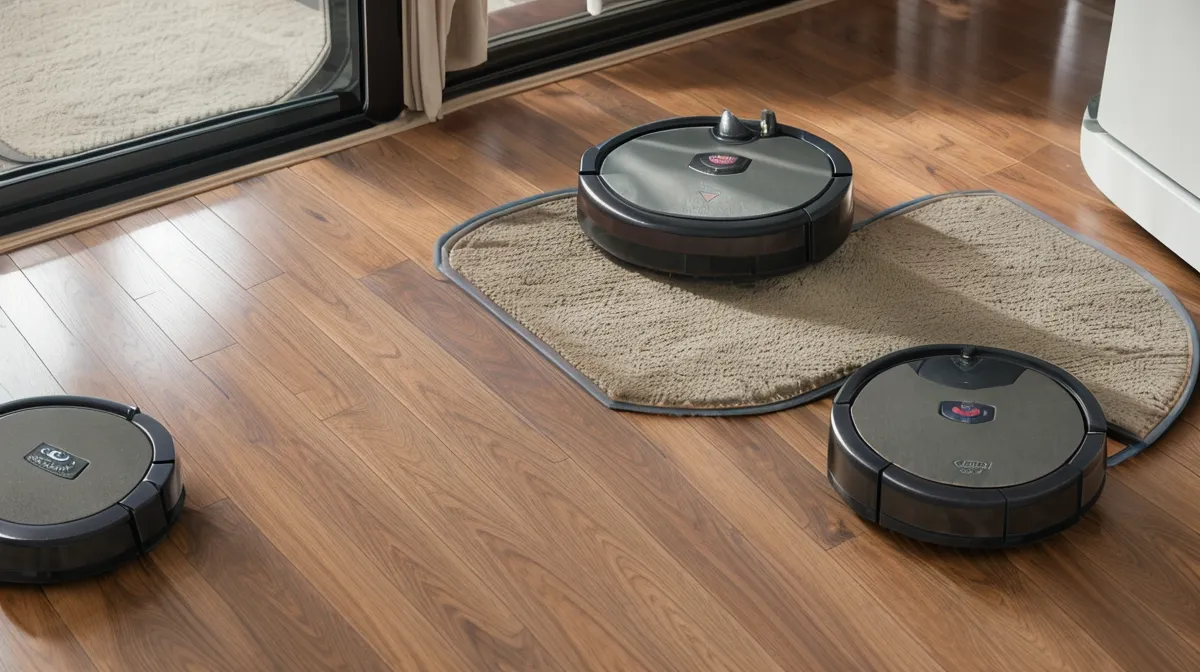
I'm on the kitchen floor with a bent paperclip, teasing a rope of husky undercoat out of a brush roll while my phone buzzes with a push notification asking me to confirm a time zone I already set two screens ago. This is the robot vacuum testing operation I run out of our 1920s bungalow — the one where pet hair removal turned out to be less about suction numbers and more about how much of the process a company's smart-home app gets in the way of, which is basically the whole game for any dog owner trying to keep a machine honest.
Quick disclosure before anything else: I earn a commission if you buy something through a link below, at no extra cost to you. None of these picks come from a press release — they come off the dustbin tally I keep on the counter, the same one that started the day my old Roomba i3 got itself stuck on the basement steps and never came back.
What Actually Matters in a Robot Vacuum for a Two-Dog House?
Beans, our senior Beagle, and Murph, the husky mix, shed enough undercoat between them that a full dustbin barely counts as news anymore. Bin size gets treated like the headline spec in most reviews, and it shouldn't be — how often a bin needs emptying only matters once you know how badly the brush roll tangles first, and that's the actual bottleneck in a two-dog house. The full weigh-in numbers are logged in the Pet Hair Spreadsheet; the short version is that dustbin capacity is a second-order problem behind detangling.
Mapping accuracy is the other spec that sounds abstract until it isn't. A bot that can't hold a stable map through our hallway's uneven old floor transitions ends up re-learning the house every other run, and that's its own rabbit hole for another time. Suction and battery life pull against each other too, and how a brand balances that trade-off is worth a longer breakdown than I have room for here.
Where the Contenders Actually Split Apart
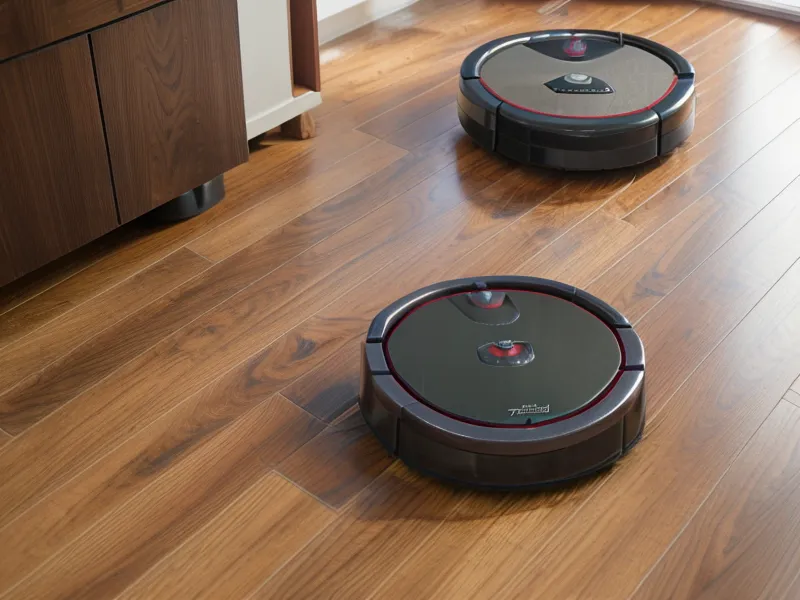
The iRobot Roomba j7+ earned its keep on one thing specifically: pet waste avoidance actually worked the one time Beans lost an argument with a chew treat in the middle of the living room. How a bot tells droppings from a dropped sock is really its own topic, one I've broken down elsewhere. What it didn't earn back was patience for its no-go zone editor, which forced me to redraw boundaries every time the map quietly re-saved itself. Sam's the one who noticed it spinning in the same corner of the dining room for a solid twenty minutes before I even saw the notification, plus there was a Premium-tier nag that kept showing up in the app days after I'd already declined it twice.
Obstacle handling matters just as much when the floor is covered in dog toys instead of debris — that's a separate scoring system I keep for another post entirely. Clearance under furniture gets personal in our house: the sectional sits low enough, somewhere around three inches off the hardwood, that more than one bot has simply backed away and marked the space unreachable. The Basement Stairs Test settled a more literal version of that question between the Roomba and the Roborock S8 Pro Ultra. The Roborock is also the only bot that got a real reaction out of Sam. We were on the couch when it reached the runner rug in the hallway and lifted its mop pad clean off the floor before crossing. "Wait, it actually knows the rug's there?" Sam said, and didn't say much else for a solid minute, which is about as impressed as Sam gets over a vacuum. Whether a mop pad is worth the trade-off against a plain dry run is a longer argument than I can settle here, and deep-cleaning a thick carpet is a different test altogether from daily maintenance passes.
Not every fix I've tried has held up. For a while I ran the old Roomba i3 on a strict daily timer, figuring a fixed schedule would keep pace with the shedding between walks along the White River Greenway path — instead I came home to find it trapped three rooms short of its own dock, wheels still spinning against a chair leg. That idea got shelved for good. I've also learned to read the room without being told anything directly: I know a bot has lost Sam's confidence when the charging dock turns up plugged into a different outlet a few days later, relocated without a word, because Sam got tired of routing around the cord. Brenley Hessler, who trades floor-specific numbers with me in the r/robotvacuums thread where this tally first got noticed, was the one who flagged it when a routine app update wiped out everyone's saved cleaning schedules overnight — a good reminder that reliability depends on a company's servers as much as its hardware.
The Air Half of the Tally
Floors were only ever half of this. Dander doesn't stay on the hardwood — it ends up in the air of a bungalow built in the 1920s, long before anyone designed a house around two shedding dogs. Setting up the X-Sense Smart Smoke and CO Detector hub took longer than it should have, because the hub wouldn't pair until I dropped my phone to the 2.4GHz band, which nobody prints on the box. Where you actually mount a hub relative to the kitchen and the bedrooms matters more than the spec sheet, and that's its own checklist I won't try to cram in here.
The PuroAir HEPA 14 Air Purifier is what actually closed the loop. It runs a true HEPA 14 grade filter, a stricter tier than most bedroom purifiers bother with, and that comparison alone deserves its own breakdown rather than a paragraph here. Sleep mode reads quiet enough on my phone's sound-level app that I stopped noticing it was running, which after so many humid Indiana summers with a box fan churning stale air felt like a small win. Placement matters almost as much as filter grade — where a unit sits relative to airflow in a room changes the numbers more than people expect, and that's a guide of its own too. It hasn't erased the damp, closed-up smell a house gets with two dogs in a humid spring, but it's the closest anything's come.
The LG CordZero Kept Winning the Tally
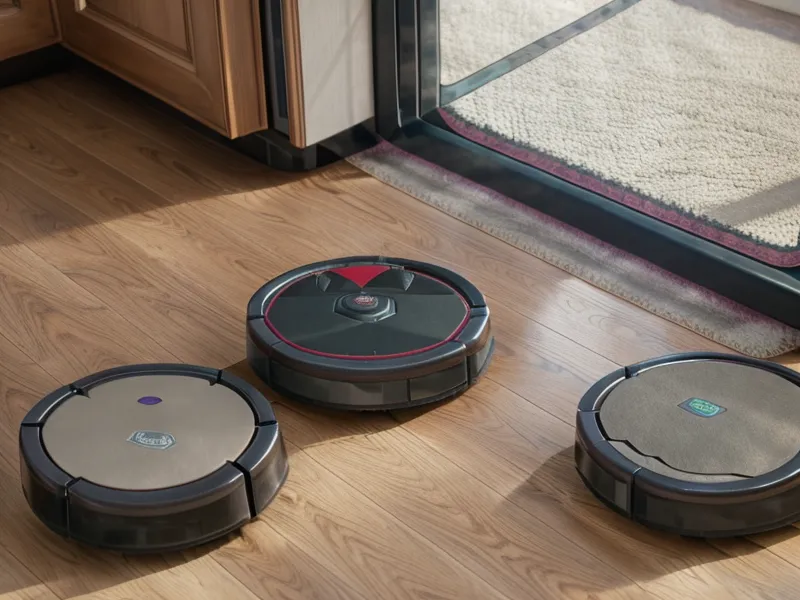
That pattern flipped with the LG CordZero Robot. It's the one that actually stuck: three-stage suction held up across both the hardwood and the high-pile bedroom rug without needing a different mode selected first, and the auto-empty base went a full week without needing us to touch it — in a house with a husky, that's not a small thing. Onboarding was the least painful of the seven models that have gone through this tally: no account scavenger hunt, no permissions requests that read like a background check. It just started cleaning.
My full notes on it are in My Tracking Notes: Eight Weeks with the LG CordZero, but the short version holds: it hasn't eaten a phone charger, it hasn't needed rescuing from the basement stairwell that still doesn't have a gate, and Sam hasn't had to relocate its dock out of frustration once — which, given everything above, counts as its own kind of endorsement.
Check the Maintenance Reality Before You Buy
If you're picking a robot vacuum for a house with dogs, skip the suction number on the box. Go straight to three questions instead: how many minutes does clearing the brush roll actually take, does the no-go zone editor survive a map re-save, and will the app let you start a clean run without creating an account first. Mop pads, voice prompts, app themes — all of that is decoration once those three hold up over repeated runs, not just a single demo in a store.
For our floors, the combination that's kept the tally trending the right way is the LG CordZero handling the daily runs and the PuroAir catching what gets kicked into the air along the way. Murph and Beans aren't going to shed any less, and the mud tracked in from Greenway walks isn't going anywhere either, but the maintenance side of this has finally stopped feeling like a second job.