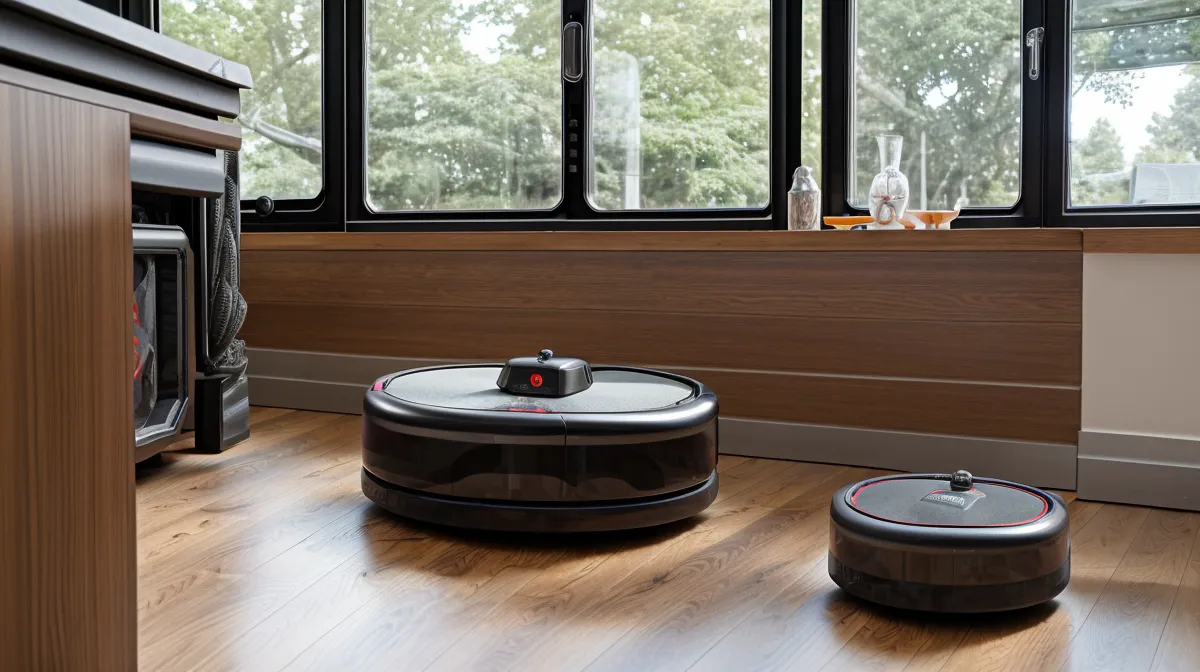
The LG CordZero treats a muddy paw print like a suction problem. The Roborock S8 Pro Ultra treats the same paw print like a moisture problem, and after another season of Murph and Beans dragging half the yard across our 1920s craftsman bungalow floors, that one difference in philosophy decided which bot earned a permanent spot in the pet-hair-cleanup rotation. This is less a robot-mop-review in the spec-sheet sense and more of a dog-owner-hack: what actually survives a husky and a senior beagle tracking mud through original hardwood, and which smart-home-ux disaster of an app makes you want to throw the whole dock out the window before the first cycle even finishes.
Quick disclosure up front, since this gets recommendation-heavy fast: some of the robot-vacuum and smart-home links below are affiliate links, and I earn a commission if you buy through one — no extra cost to you, but you should know that going in before you keep reading. Every product mentioned here ran actual laps through our hallway on my dime or a refurb deal, and the dustbin tally reflects what I weighed on the kitchen scale after each run, not a manufacturer's claim. If you want the short version before the long one: the Roborock S8 Pro Ultra is the one that actually keeps up with a full mud season, and the LG CordZero Robot is the one you buy if your priority is never opening the app more than once a week.
Suction Versus a Mop: The Trade-Off Nobody Puts on the Box
Suction alone stopped being enough around the point mud season actually started this year. Dry fur is a suction problem — more airflow, a wider brush roll, done. Dried mud worked into the grain of hundred-year-old oak is a completely different mechanical job: vacuuming lifts loose debris, mopping is a wet-cleaning process most bots treat as an afterthought bolted onto the same chassis, and no single robot in this lineup does both equally well no matter what the marketing implies. That's the trade-off nobody puts on the box, and it's the whole reason this comparison isn't just "buy the one with the highest suction number."
As a UX writer by trade, I notice friction everywhere, and a clunky checkout flow and a bot that leaves a streak down the hallway are the same category of problem to me — a process that almost works. Most of our mud starts at Garfield Park Conservatory, where the path past the sunken garden turns to soup within an hour of rain, and Murph treats every puddle on the way home like it's the entire point of the walk. None of the bots below solve that part, the part at the door. What they solve — or don't — is everything the mud does to a floor once it dries.
The Roborock and the LG: Two Different Bets on Mud Season
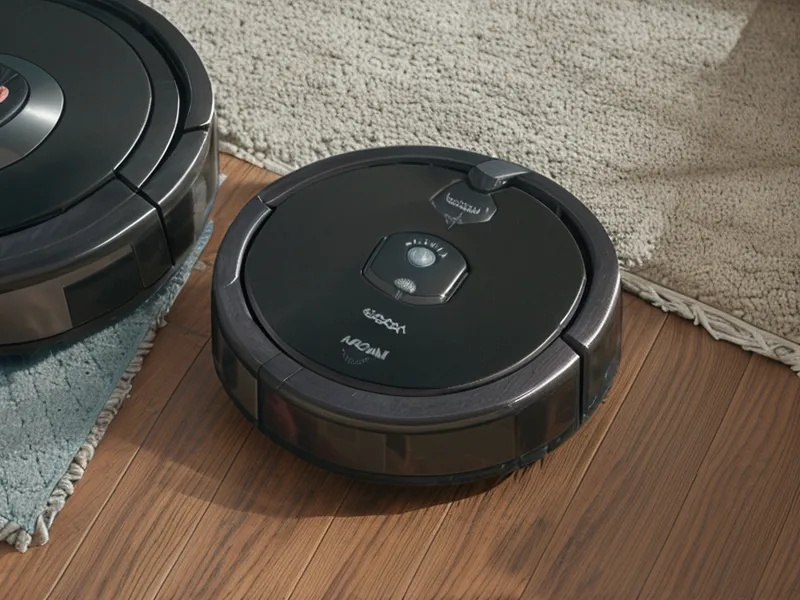
The Roborock S8 Pro Ultra and the LG CordZero Robot take genuinely different bets on how to handle mud season. Sam needed convincing on the Roborock's price tag until he watched the mop pad lift itself clear of our hallway runner instead of soaking it — the kind of reaction that ends an argument fast. That mop-lift is the whole reason the Roborock keeps beating cheaper mops in this house: a pad that stays wet against the floor but lifts clean off carpet and rugs solves the mop-versus-vacuum tradeoff other bots just shrug at. Mapping-wise, the Roborock also locked in our floor plan by the second run, while a couple of the other bots on this list needed three passes before they stopped trying to route themselves up the basement stairs.
Suction is the LG's whole strategy instead of moisture control, and it's genuinely strong across both hardwood and our thicker rugs. Murph blowing his coat twice a year is where that pays off — if you've never lived with a husky, "blowing coat" means your hallway turns into a snow globe for about three weeks straight. There's a real trade-off buried in that strength, though: more suction pulls more battery, and the LG's runtime on a full-house cycle runs shorter than a bot that's mopping instead of muscling through carpet. Its dustbin also just holds more than the Roomba's, which matters more than people expect once shedding season hits full force. I wrote up the longer version in My Tracking Notes: Eight Weeks with the LG CordZero in a Two-Dog Bungalow, including the one week the app onboarding actually worked on the first try, which is rare enough in this category to feel worth documenting.
A reader named Brenley Hessler found my numbers in a Roborock thread on r/robotvacuums a while back — she runs two Labradors through her own place in Fort Wayne — and she's been sending me unsolicited before-and-after photos of her dustbin ever since, which is a strange kind of friendship but a genuinely useful second data point outside my own house. She's the one who pushed me to actually measure the noise difference between surfaces instead of just guessing at it. I ran the NIOSH decibel app on the Roborock one night while Sam slept through the whole cycle without stirring, and the reading stayed low and steady on hardwood, then jumped to 68 the second the bot crossed onto the hallway runner — enough of a spike that I checked the number twice before believing it, since carpet is supposed to muffle a machine, not amplify it.
Why the Roomba Still Wins the Middle-of-the-Night Emergency
Beans is a senior beagle who occasionally loses an argument with his own digestive system in the middle of the night, and that's the exact scenario where the iRobot Roomba j7+ earns its keep. Pet-waste avoidance sounds like a gimmick until the alternative is a robot grinding a mess into the rug instead of driving around it, and the j7+'s camera has caught every incident in our house without a miss so far. Obstacle avoidance in general is where the price gap between bots actually shows up in daily use — a cheaper unit sees a shoe or a charging cable and stops dead, while the good ones see the same obstacle and route around it without needing a rescue.
How each bot reads a drop-off is its own separate test, not something you can infer from how well it dodges a shoe, and I ran that comparison directly in The Basement Stairs Test, which is still the closest thing I have to a controlled experiment in this house. The Roomba came out the most cautious bot we've run, hanging back from the top step further than its sensors technically require. Its app is the real letdown: a subscription nag for the Premium tier shows up every couple of weeks no matter how many times you decline, and no-go zones you've already drawn get wiped out any time the map re-saves itself — a pattern I'd run into again with a completely different bot before the season was over.

Is the Smart-Home App Going to Undo All of This?
The bot I ran into that exact problem with was an ECOVACS Deebot X2 Omni, and the one intervention that never actually held was a no-go zone I drew around a troublesome rug corner in the dining room. Rug edges are their own category of failure, separate from mud or fur entirely — a curled corner or a loose fringe can stop a bot as completely as a wet sock jammed in the brush roll. I set that boundary on a Tuesday; by Thursday the app had silently reset it back to nothing, because every time the floor plan re-saved itself overnight, my edits didn't survive the update. The Deebot's app also made me uninstall and reinstall it twice just to get past the forced country-selection screen, which is a bad sign before the bot has even left the dock.
Low-clearance navigation is a separate skill from mapping or suction, and it's not one every bot has — some units see a gap under low furniture and commit anyway, and some back off the second the ceiling gets tight, even with clearance to spare. Marketing loves the phrase "tangle-free" on a brush roll, and every brush roll in this test disagrees with that phrase eventually; Murph's undercoat finds its way onto the roller no matter which bot we run, just at different speeds depending on the bristle design. None of that is really an app problem. The app problems are their own category, and every single companion app in this lineup has one — the only real question is whether it's a minor annoyance or a full uninstall.
The Floor Isn't the Only Thing Mud Season Wrecks
Floors are only half the battle once you're dealing with dried mud and husky dander at the same time, and that's where the PuroAir HEPA 14 Air Purifier comes in. Not every filter labeled HEPA is actually graded the same way, and PuroAir's HEPA 14 rating sits a notch above what most bundled purifiers carry, which matters more once you're running a vacuum that's actively kicking dust back into the air. Placement changes how well any purifier actually performs, too — ours sits somewhere the air actually moves instead of a dead corner, and that alone made a bigger difference than switching brands would have. Sleep mode reads around 28 decibels on the same NIOSH app, quiet enough that Beans doesn't so much as lift his head at it.
We also replaced our old hallway alarms with the X-Sense Smart Smoke and CO Detector this year, and where you actually mount a smart detector changes how much warning you get more than which brand you pick — ours ended up closer to the kitchen than the old units were, since that's where a false alarm was always going to start first. Pro tip if you're setting these up in an old house like ours: keep the network on 2.4GHz, because these devices consistently fail to pair on a 5GHz-only setup. The app pushes a notification to my phone a few seconds before the actual horn goes off, which is enough lead time to silence a kitchen false alarm before Murph starts pacing and Beans starts howling along with it.
So Which One Actually Wins Mud Season?
By week five of the dustbin tally, the numbers made a clearer case than any spec sheet could. If the mess in question is genuinely wet — heavy, tracking, everywhere mud instead of just dry fur — you want a bot with a self-cleaning dock, full stop. None of these bots replace an upright for a genuine carpet deep-clean, though the Roborock comes closest of the group. The Roborock S8 Pro Ultra is the one that keeps its mop pads from smelling like a gym bag, since the dock washes and dries them without me touching a thing. I go into the room-by-room version in 'Two Dogs and a Bungalow' Stress Test, if you want the longer breakdown.
The best bot isn't the one with the biggest number on the box. It's the one that needs the least amount of me stepping in — resetting a zone, unwinding a brush roll, restarting an app that froze mid-onboarding. The LG is the strongest pick for fur, the Roomba is still the most trustworthy bot around an actual mess, and for a full Indianapolis mud season, the Roborock's all-in-one dock is what actually wins. Budget for cleaning the brush roll by hand every week regardless of which one you buy — undefeated husky undercoat isn't a marketing problem any dock is going to solve.
Think about your rug fringe and your patience for a bad app before you commit to either one. Grab the LG CordZero if the priority is a system that mostly leaves you alone. Go with the Roborock S8 Pro Ultra if the mop actually needs to handle a swamp and the steeper price is worth a dock that does the gross part itself.
| Product | Rating | |
|---|---|---|
| Roborock S8 Pro Ultra Best for Mud | 9.2 | Read More → |
| LG CordZero Robot Editor's Pick | 8.9 | Read More → |
| iRobot Roomba j7+ | 8.5 | Read More → |
| PuroAir HEPA 14 | 8.2 | Read More → |
Roborock S8 Pro Ultra
Pros
- + Mop-lifting feature is a lifesaver for original 1920s hardwoods and runner rugs
- + Self-cleaning and self-drying dock actually prevents that 'wet dog' mop smell
- + Lidar mapping stabilized our bungalow floor plan in just two runs
Cons
- − High price point makes it a serious investment compared to standard vacs
- − The app interface is a bit of a learning curve for non-techies