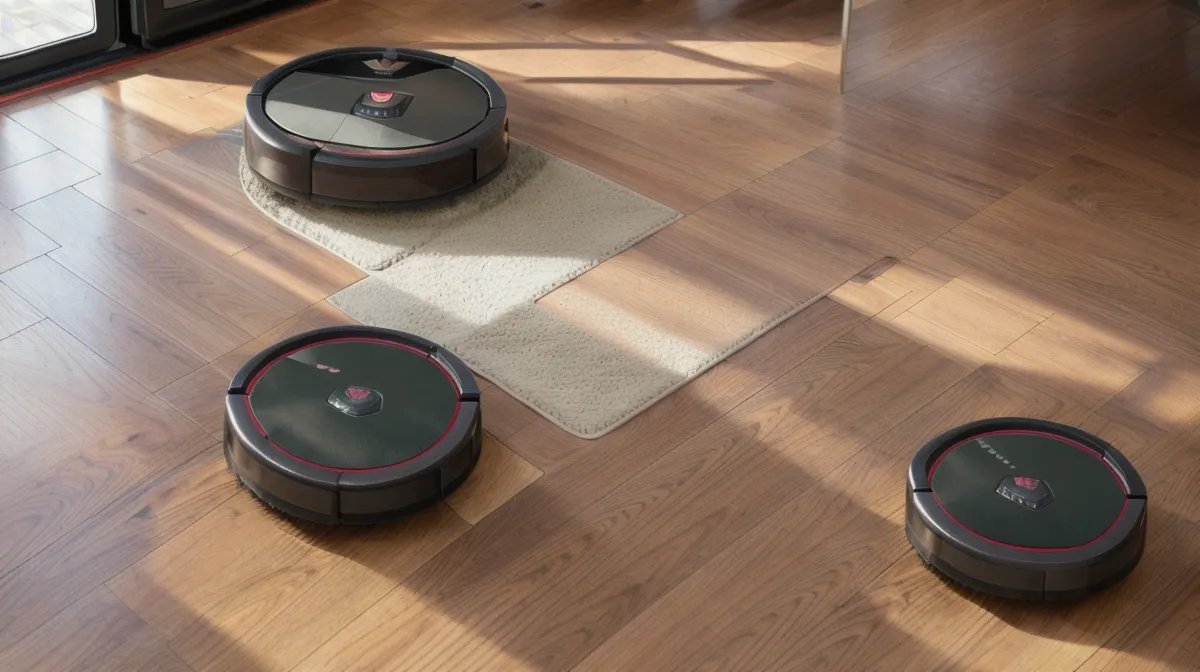
Four times in one cleaning run — that's how many separate passes it took an IKEA rug fringe to eat a robot vacuum before I roped off the dining room, and it's the exact reason the dustbin tally exists. Two years of testing robot vacuums and a couple of air purifiers in a 1920s bungalow with two shedding rescue dogs, Murph and Beans, taught me that the bots that photograph well are rarely the ones that survive a real pet-owner floor plan. This isn't a spec-sheet roundup. It's a breakdown of what actually separates a robot vacuum worth the money from one that just adds another app notification to your phone, built from an ongoing smart-home testing log rather than a press release.
Quick disclosure before the walkthrough: several of the robot vacuum and smart-detector links below are affiliate links, meaning I earn a commission if you buy through them at no extra cost to you. I've personally weighed the bins, unwound the hair from every brush roll, and argued with every one of these companion apps. None of that changes what follows — it's the same tally I'd hand a friend for free.
The short version, if you skip everything else: the criterion that matters isn't the price tag, it's how much of your week a bot actually claims back — through its obstacle-avoidance logic, its app, and how often you have to physically step in.
The UX of Dirt: What Robot Vacuum App Onboarding Actually Predicts
Working as a UX writer means I notice bad account-creation flows for a living, so app onboarding got clocked before suction ratings did on this test. The LG CordZero Robot's setup asked for a network password and nothing else — no scavenger hunt for a verification code, no drawn-out privacy waiver that reads like a mortgage application. The Roborock S8 Pro Ultra's app, by contrast, wants you to configure no-go zones, mop schedules, and carpet-boost thresholds before it'll even finish its first map, which feels less like setting up a vacuum and more like programming a small aircraft.
Why Obstacle-Avoidance Logic Is a Trade-Off, Not a Feature
ECOVACS builds toward speed: an aggressive, hardware-first obstacle-avoidance profile that plows through a room fast and sorts out the edge cases later. Dreame goes the opposite direction, leaning on a cautious, software-heavy navigation stack that slows down around anything ambiguous, including a loose rug fringe. Neither approach is objectively right — it depends on what's actually on your floor. A house with delicate tassels or trailing charger cords rewards the hesitation; a house with mostly open hardwood rewards the speed. The ECOVACS square-front design also gets noticeably closer to baseboards and low furniture gaps than the round bots in this lineup, which matters more in a room with tight clearance than any suction number on the box, and the LG's three-stage suction system is the one place in this test where more power didn't cost battery life the way I expected it to.
How Much Does a Full Robot Vacuum Dustbin Actually Tell You?
A full dustbin is the one metric that doesn't lie, which is why the tally exists at all — not because I distrust manufacturers exactly, but because a spec sheet can't tell you how a bot performs against two specific dogs on your specific floors. Dustbin capacity matters less than what a bot does with the capacity it has: the Roomba j7+'s bin runs smaller than the LG's, so it empties more often for the same square footage, and neither number means much without knowing how thick your carpet runs or how much two dogs happen to be shedding at the time.
I once tried to outsource the decision entirely by setting an old Roomba i3 to run on a fixed daily timer while Sam and I were both out of the house. It didn't save me anything. More than once I came home to find it wedged three rooms from its dock, timer long expired, battery dead, waiting for a rescue it had no way to ask for. Automation without a way to check in on the bot isn't a convenience — it's just a delayed chore.
Every time I pop the dustbin flap open under the kitchen light, a thin cloud of dander lifts off the top of the fur before it settles, and that small puff tells me more about a bot's actual pickup than any percentage on a box. Sam's usual response, half-asleep from a late test cycle the night before, is some version of "I didn't hear a thing, so it must have worked" — which is its own kind of data point, since he sleeps through everything except a bot that's genuinely struggling. A reader named Brenley Hessler, who found the tally in a Roborock S8 thread on r/robotvacuums and has been trading floor-specific notes with me since, sends her own before-and-after dustbin photos unprompted — useful, if occasionally more than I asked for.
Setting Up the Air-Quality Layer Without Overthinking It
PuroAir's HEPA 14 filter sits a full grade above what most big-box air purifiers ship with — the grading itself is a rabbit hole I've covered in more detail elsewhere, so I'll leave it there. What I can say from running it through coat-blowing season is that it caught visibly more dander in this house than the mid-range unit it replaced, and the sleep mode is quiet enough that Sam has never once complained about it at night. Working from one of the Mass Ave coffee shops for a chunk of most weeks means I notice the second a push notification interrupts a call, so the PuroAir HEPA 14 Air Purifier's honest filter-replacement alerts, with no gamified nagging to overbuy, stood out fast. Placement changes the reading more than the spec sheet does, which is exactly why that's its own breakdown: Where to Place the PuroAir HEPA 14 for Maximum Dust Removal.
Checking Pet-Waste and Rug-Fringe Handling Before You Buy
Roomba's pet-waste avoidance is the one piece of marketing language in this entire category that held up under an actual mess, though I'll point you to the full story rather than retell it here: iRobot Roomba j7+ and the comparison I ran against its closest rival, Roomba j7 Plus vs Roborock S8 Pro Ultra for Pet Hair. What I will say here: check that feature against your specific floor plan before you buy it, not against the marketing copy, because a camera-based avoidance system behaves differently on a dark rug than it does on light hardwood.
Does the Smart Detector Layer Actually Belong in a Robot Vacuum Comparison?
It belongs here because the same 2.4GHz-only pairing requirement that trips up a lot of smart-home devices trips up the X-Sense Smart Smoke and CO Detector too — if your router broadcasts a combined band instead of separate ones, expect some friction before it connects. Once it's paired, the push notification fires a few seconds ahead of the in-house horn, which is enough lead time to silence a false alarm from a smoky pan before two dogs start howling at it. Where you actually mount a detector like this changes how much warning you get, and that's a big enough topic that it earns its own separate breakdown rather than a paragraph tacked onto a vacuum comparison.
Final Verdict: Which Bot Actually Earns a Spot in the Bungalow
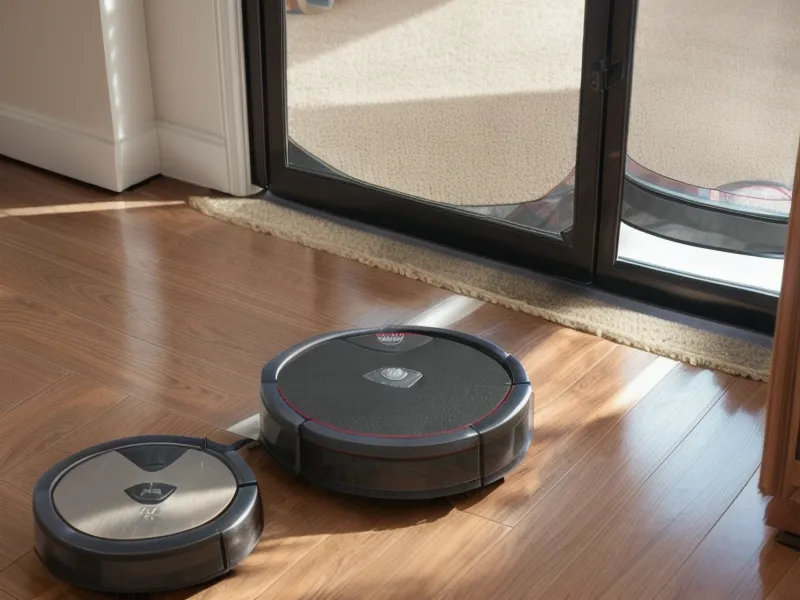
Mapping speed is the other quiet differentiator nobody puts on the box: the Roborock S8 Pro Ultra locked in a stable floor plan by its second run, while the Roomba j7+ needed three passes to stop second-guessing the same layout, and its mop-pad lift on carpet detection earned the only unprompted impressed reaction I've gotten out of Sam this entire test. Whether a mop function is worth the added noise and upkeep depends entirely on whether you'll actually run it weekly or let it sit idle — that's the trade-off, not a knock against either bot. If someone asked me today what to buy for a house with shedding dogs and mixed flooring, I'd still point them to the LG CordZero Robot: the suction handles the fur without complaint, the app doesn't hold the experience hostage to a subscription push, and it's the closest I've gotten in this whole running experiment to actually walking away from the app entirely. If you only click one link in this whole breakdown, make it that one. Just keep an eye on loose rug fringe regardless of which bot you pick — none of them are fully immune to a well-placed tassel.
None of this replaces checking the numbers yourself, which is exactly why the full dustbin tally lives in one place: The Pet Hair Spreadsheet: My Notes After Testing Several Robot Vacuums. A robot vacuum comparison is only as useful as the floor plan you're testing it against, and mine happens to include two shedding dogs, one partner who sleeps through everything, and a rug fringe that's eaten more bots than I'd like to admit.