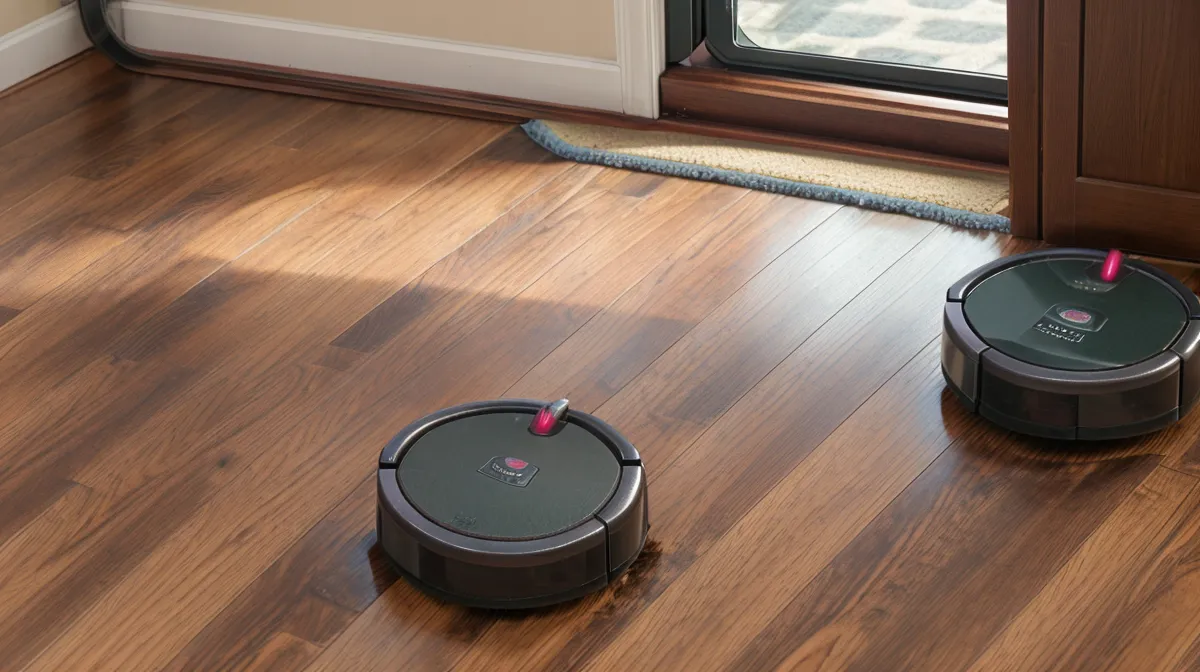
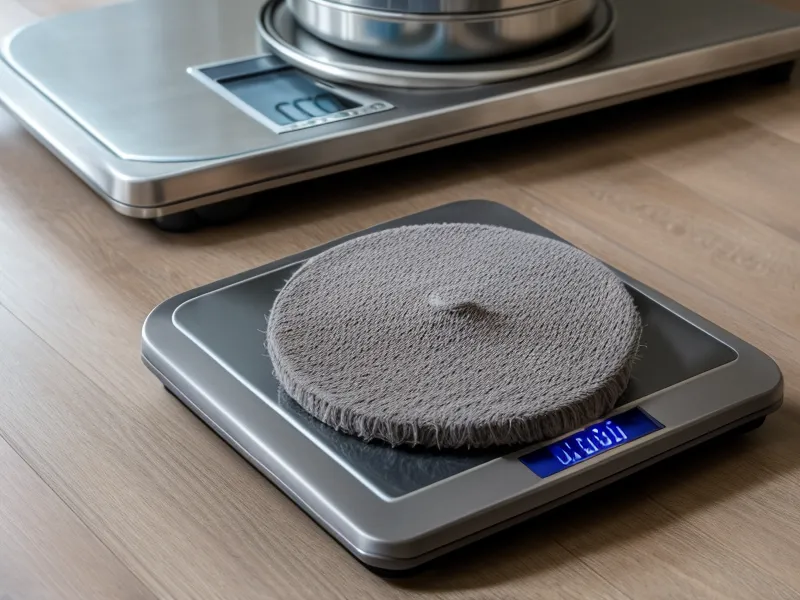
The dustbin lid clicks free in my hand, and nine grams of dog hair spill into the kitchen scale's tray — less than what came out last Tuesday, which is the kind of victory only someone running a spreadsheet on robot vacuums would notice. Six models have passed through this two-dog bungalow, and only two of them ever earned a permanent spot in the rotation. This is the head-to-head that finally ended the swapping: the LG CordZero against the Roborock S8 Pro Ultra, weighed literally, on the same floors, against the same pet hair problem, with the same smart home UX headaches built in.
Quick disclosure before the numbers: some of the robot vacuum and smart-detector links below are affiliate links, and I earn a commission if you buy through one of them — at no extra cost to you. That doesn't change the dustbin tally. The weigh-ins are from my own kitchen scale, the failures are from my own basement stairs, and I'd send a friend to these exact same picks whether or not the commission was attached.
This is a Craftsman bungalow on the northwest side of Indianapolis, which sounds charming until you count the traps: original hardwood through the main rooms and hallway, one long runner rug that grabs anything with fur, and two dogs contributing plenty of both. Murph is a husky mix who sheds like it's a competitive sport; Beans is a senior beagle who mostly just watches. Every loop down the Broad Ripple Park dog trail comes home as grit and loose fur that lands somewhere between the front door and the kitchen, which is exactly the mess this whole tally was built to measure.
Two Robots, One Bungalow, and the Dustbin That Doesn't Lie
Every run in this house gets weighed, not eyeballed. Before the bot goes out and after it docks, the dustbin comes off and sits on the kitchen scale, and the difference in grams is the only number I trust — not the little full-bin icon on the app, which has lied to me more than once. That's the dustbin tally, and after two years of logging it, dustbin capacity turns out to matter almost as much as suction does. A bin that fills at the halfway point of a run means the back half of the house gets recirculated dust instead of picked-up dust, no matter how strong the motor is.
Brenley — a regular over on r/robotvacuums who found my numbers in a thread about the Roborock S8 — runs the same math on laminate in Fort Wayne, and her totals land lower across the board than mine, which tracks: laminate doesn't trap hair at the seam the way old hardwood does. She's the reason I stopped assuming my grams would generalize to anyone else's floor.
The LG CordZero's dustbin, paired with its auto-empty dock, went a full week before it needed hands-on attention — the lid gives this small metallic click when it unseals after a long run, the only interaction it really asks of me. The Roomba j7+, by comparison, has a noticeably smaller reservoir, which means emptying it far more often for the same square footage of husky and beagle fur. The Roborock S8 Pro Ultra splits the difference: an auto-empty bin and a self-cleaning mop pad sharing one base, a step neither the LG nor the Roomba bothers with.
Why the Basement Stairs Still Set the Rules
None of this tracking exists without the Roomba i3. Back in March 2024, it rolled straight into the open stairwell off the kitchen — there's no permanent gate there, just a gap past the doorway — and went down hard enough that the unit never turned on again. Sam found it at the bottom the next morning. "Guess that one's not coming back," he said, already looking at replacements before I'd finished being annoyed about it.
That one dead robot is the reason the spreadsheet exists at all. Every bot that's come through this house since gets tested against that stairwell first, before the hardwood, before the runner rug in the hallway, before anything else. It's also why the sectional near the kitchen doorway gets treated as a hard boundary in every app's no-go zone editor now, not an afterthought added after the fact.
LG CordZero or Roborock S8 Pro Ultra: Which One Actually Wins the Sectional Test?
Both of these were tested in the same rooms, against the same hair, inside two weeks of each other, so the comparison is about as controlled as a freelance UX writer's living room gets. The LG CordZero Robot handled the high-pile rug in the bedroom without the motor straining into a higher pitch — Sam noticed before I did, which for a man who mostly ignores these robots until they prove themselves is its own kind of endorsement. There was no account scavenger hunt to get the app talking to the dock. No forced twelve-character password just to start a clean cycle. I've logged the full run history, edge cases and all, in my LG CordZero Robot Vacuum Review for Cleaning Craftsman Trim and Edges.
The Roborock S8 Pro Ultra is the pricier of the two by a wide enough margin that it needs to earn the gap, and mostly it does. Watching the mop pad lift itself clear of the vintage-style rug in the hallway, Sam said, "Okay, that's actually worth it" — the first time all year he's admitted a price tag might be justified. Mapping locked in by the second run, notably faster than the iRobot Roomba j7+, which needed three or four passes before it stopped treating the dining room like unmapped territory — its own mapping-speed rabbit hole for another post. What the Roborock doesn't hand you for free is battery life to match that suction; that trade-off gets the full breakdown in my Roborock S8 Pro Ultra Review for Managing Thick Husky Hair Tangles, not a paragraph here.
Its own path to earning a spot runs through pet mess, not mop pads: the one time Beans got into something overnight, the j7+ steered around it instead of smearing it across the runner rug, a story I've told in full elsewhere.
The Smart Home UX Gap Nobody's App Fixes
Six companion apps later, the pattern's obvious: hardware improves faster than software does. The ECOVACS app walked me through a country-selection screen. A six-step account wizard. All before it would start a single clean cycle — it felt like a beauty-counter checkout, not permission to vacuum my own house. I uninstalled it twice before I gave it a fair test. The LG's onboarding asked for a Wi-Fi password and nothing else, which shouldn't be a selling point but absolutely is at this stage.
None of this is really about robot vacuums specifically. It's about which teams treat the person paying for the hardware like an actual user, and which ones treat onboarding as a funnel. A UX writer notices these things whether she wants to or not.
What Went Wrong Along the Way
The Dreame L20 Ultra is the one that taught me to actually measure the sectional. It's a solid budget pick on paper, but that sofa leaves about three inches of clearance underneath, and the Dreame's dock-side edge caught on the frame mid-run often enough that I started keeping a tape measure next to the remote. The first time it happened, it just sat there wedged, brush still spinning, until the battery gave out and the app sent a notification I didn't see until that evening.
ECOVACS Deebot X2 Omni had its own version of that problem, minus the furniture: it ran out of charge in the middle of the hallway once, having spent most of its battery re-mapping a floor plan it should have already known, and just stopped — no error, no retry, just a dead robot parked in the one hallway everyone in this house has to walk through. Whether the self-cleaning mop pad on either of these bots is worth the extra water refill is a genuinely separate argument, one I'd rather hand off to a full mop-versus-vacuum comparison than settle in a paragraph here.
The 3 A.M. Alarm That Wasn't a Fire
Beans came off the bed barking at 3 a.m. one night, and it took a full minute of squinting at my phone to understand the X-Sense Smart Smoke and CO Detector in the hallway had pushed a smoke alert — for a candle that wasn't even lit. Nothing was burning. Nothing was smoking. The unit had picked up on something drifting from a wax melt Sam had turned off hours earlier, and by the time I'd silenced the horn and checked every room, neither of us was getting back to sleep.
What actually won me over afterward wasn't that it never misfires — it clearly can. It's that the push notification reaches my phone a few seconds before the horn does, which meant the one time Sam actually seared a steak and set off real smoke, I could kill the alarm before Beans went into a full senior-beagle panic. Where you mount these detectors in a two-story house changes how often you get pinged like that, a whole separate decision I've mapped out elsewhere rather than rehashing here. You can read the longer account of the pairing headache and the false alarm both in Why I Added an X-Sense Smart Smoke and Carbon Monoxide Detector.
Is the Air Actually Cleaner Now?
The PuroAir HEPA 14 Air Purifier came into the house late last year, after enough loose dander made it obvious the vacuums alone weren't handling everything Murph shakes off after a nap. It's graded a step above what most units in this price range ship — HEPA 14 rather than the common HEPA 13 — though the filtration math itself belongs to a different article entirely. On sleep mode, three feet away, my phone's decibel meter read in the high twenties, which matters on a Zoom call where I'm trying to explain why a button needs to move four pixels to the left. The filter-replacement schedule in its app is honest about when you actually need a new one instead of nagging you into buying early, which felt almost suspicious the first time, given the subscription pushes I've gotten from other apps in this house.
Where you actually place one of these in a room changes the reading more than the spec sheet does, a decision I've written up separately rather than squeezed into a paragraph here.
So Which One Earns a Permanent Spot?
Two years and six bots in, here's where it actually lands. Choose the LG CordZero when the app experience matters as much as the cleaning does, when a dock that empties itself without babysitting is the priority, and when mopping ambitious enough to need a self-cleaning pad isn't part of the plan. Choose the Roborock S8 Pro Ultra when the mop function is a real requirement rather than a nice-to-have, and the extra app complexity and price gap are worth trading for a machine that treats hardwood and wool differently without being told to. Neither one survives the basement stairs unattended, and neither one replaces walking Murph and Beans down to Broad Ripple Park so there's less fur circulating in the first place. That's the whole trade-off, and it's the first time in two years I've been able to state it without a third contender still waiting in the wings.