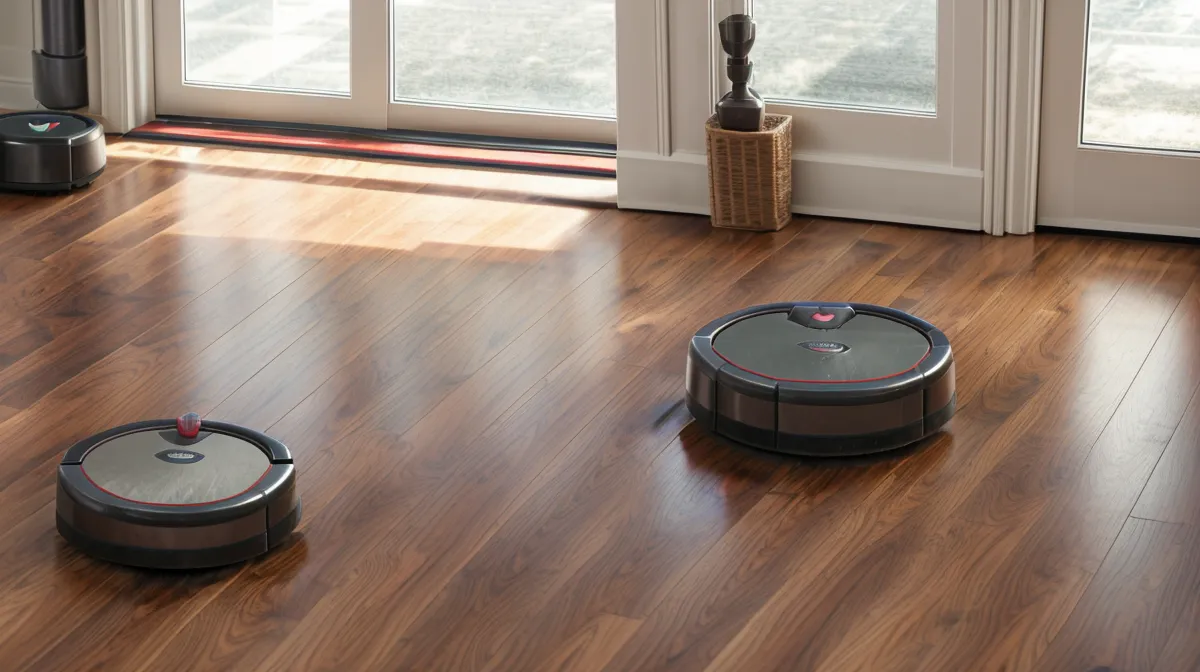
A robot vacuum coasting across flat polished concrete in a showroom video and the same bot facing a one-inch oak threshold in my 1920s bungalow are not the same test. One is marketing footage. The other is my front hallway, where every doorway between the kitchen and the bedrooms has a raised wood strip built for houses from the 1920s, not for a robot with two-inch wheels. Readers keep asking me some version of the same handful of questions about picking a robot vacuum for a bungalow floor plan with high thresholds and two shedding dogs, so here they are, answered straight from the dustbin tally instead of a spec sheet.
Quick disclosure before the questions start: some of the robot vacuum and smart-home links below are commission links, and I get a small cut if you buy through one of them, at no extra cost to you. The dustbin weights, the reset no-go zones, and the app complaints are all from my own house, not a press kit, and what follows is what I'd actually text a friend who's asking which one to buy for a bungalow like mine.
Will a Robot Vacuum Actually Clear a High Bungalow Threshold?
Some can, most can't, and the difference has nothing to do with which one advertises the flashiest suction number. Original hardwood runs through my living room and hallway, there's one long runner rug laid the length of that hallway, and every doorway threshold is high enough to stop a bot dead. I lined up the LG CordZero Robot against the Roborock S8 Pro Ultra at the kitchen-to-hallway transition, the worst threshold in the house, and ran both daily. The Roborock's mop pad lift got a genuine reaction out of Sam the first time it detected the runner rug and lifted clear before crossing onto it, though whether a mop function is worth the added upkeep compared to running vacuum-only is its own trade-off, one I weigh in more detail in another post. The LG cleared the threshold every single run, using a suction system built across three stages instead of one flat mode.
Climbing ability has a cost, though. When a bot lifts its chassis to clear an inch of oak, the seal between the intake and the floor breaks for a second, and I'd find a few grains of kibble sitting right at the base of the threshold that a flatter-riding bot would have caught clean. Higher clearance for slightly worse edge pickup. That's the real trade-off here, not suction in the abstract, and it's a separate question from whether that suction is worth the battery drain, which I break down elsewhere. The sectional in my living room sits about three inches off the floor, low enough that a bot can wedge partway under it and spin instead of backing out. "Twenty minutes," Sam said from the kitchen doorway, "and it's still going in circles under there." That's the sound of a bot finding the one blind spot its collision sensor doesn't catch. Both bots did it the first few times, and both eventually learned to route around that patch instead of testing it every run.
Mapping Accuracy Matters More Than the Spec Sheet
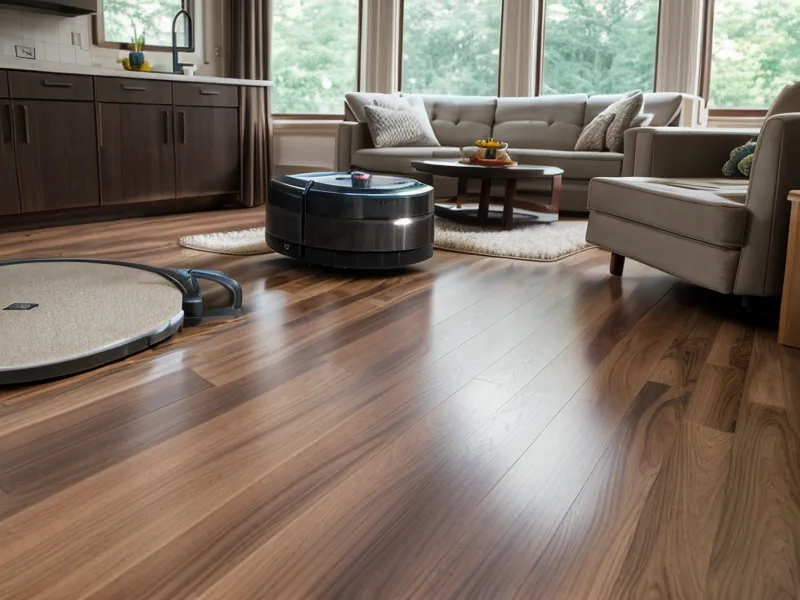
Mapping accuracy sounds like a marketing term until you watch a bot try to descend an open stairwell three times before it learns not to. My kitchen has an open basement stairwell with no permanent gate, and in a floor plan like mine, mapping accuracy comes down to one practical question: how many runs does it take before a bot stops re-attempting the routes that don't work? The LG needed three full passes before it quit trying to head down those stairs and settled into a route that avoided them completely. The Roborock got there faster, locking in its map by the second run, while the Roomba j7+ took three runs to stabilize the same floor plan, redrawing its boundaries each time in between. None of that shows up on a spec sheet, but it's the difference between a bot that learns your house and one that repeats the same mistake daily.
Does Fur Control Mean You Need an Air Purifier Too?
Probably, once the shedding outpaces what a vacuum alone can pull up. Murph and Beans between them shed enough that the floor never stays clean for long, and dustbin size becomes its own variable — I tracked exactly how much that matters over time in my long-term review on why I stopped swapping vacuums, if bin capacity is the thing you're actually deciding on. I still brace a little every time I pop the bin's flap open and a thin haze of dog hair and dust puffs up before it settles, which tells you everything about what the vacuum stirs up along the way. That fine dander is exactly what the vacuum alone doesn't catch, and it's why I run the PuroAir HEPA 14 Air Purifier alongside it. A true HEPA 14 filter pulls a noticeably finer layer of dust out of the air than the standard grade sold at most big-box stores, and on its sleep setting our iPhone's decibel app read a quiet 28 dB from three feet away — quiet enough that Murph doesn't bark at it. Where you actually place the purifier in the room matters almost as much as which model you buy, though that's its own question I won't get into here.
The Roomba's Brand Name and Its Pet-Poop Avoidance
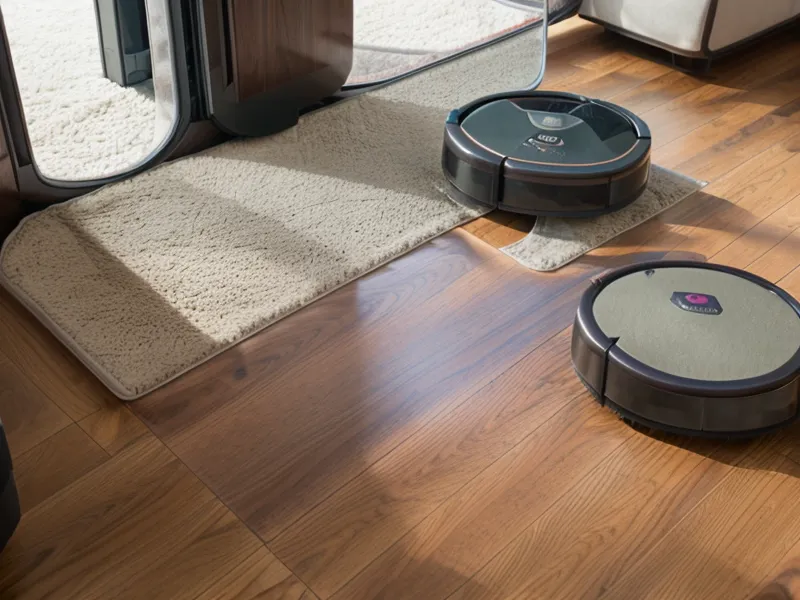
The iRobot Roomba j7+ is the name most people already recognize before they've researched anything else, and it earns some of that recognition honestly. Its auto-empty base has the tightest seal against dust leaking back out of any self-empty bot I've run, and its pet-poop avoidance worked the one time it actually mattered in this house, a story I've told in full in a separate post so I won't repeat it here. Where it loses ground in a two-dog household is bin size — it's noticeably smaller than the LG's, meaning more trips to empty it for the same square footage — and the app is where it really starts to wear on you.
Untangling the Companion App Mess
Every companion app in this lineup has a UX problem. Some are worse than others. I tried drawing virtual no-go zones around the dining room in the ECOVACS app once — the boundaries kept silently resetting after every map refresh, and I gave up rather than redraw them every few days. The Roomba's app nags about a Premium subscription tier even after you've declined it twice, which isn't a bug so much as a business model. By contrast, the LG's onboarding was the least painful of the seven models in the tally: no forced account scavenger hunt, no upsell screen standing between you and starting a cleaning run.
None of these apps stay fixed, either. Brenley Hessler, a regular in the same robot-vacuum forum threads where I first started posting dustbin numbers, was the one who flagged a companion-app update that quietly broke everyone's scheduled cleaning maps overnight. It's a fair reminder that whatever app behavior you're testing today might not hold in three months, so don't buy a bot on app polish alone — buy it on whether the hardware still does its job once the software inevitably changes.
Is a Smart Smoke Detector Worth Adding to the Mix?
If your smoke detectors are original to the house the way mine were, yes. The X-Sense Smart Smoke and CO Detector earned its keep one afternoon when a pan of steaks smoked up the kitchen faster than the vents could handle — the push notification landed on my phone roughly four seconds before the horn went off, which was enough time to wave a towel and keep both dogs from panicking. I wrote up the full pairing process and the 2.4GHz requirement separately in why I added the X-Sense detector. Where exactly to mount one in an older two-story layout is its own question, and not one I'm answering in this post.
Picking the Right Bot for Your Floor Plan
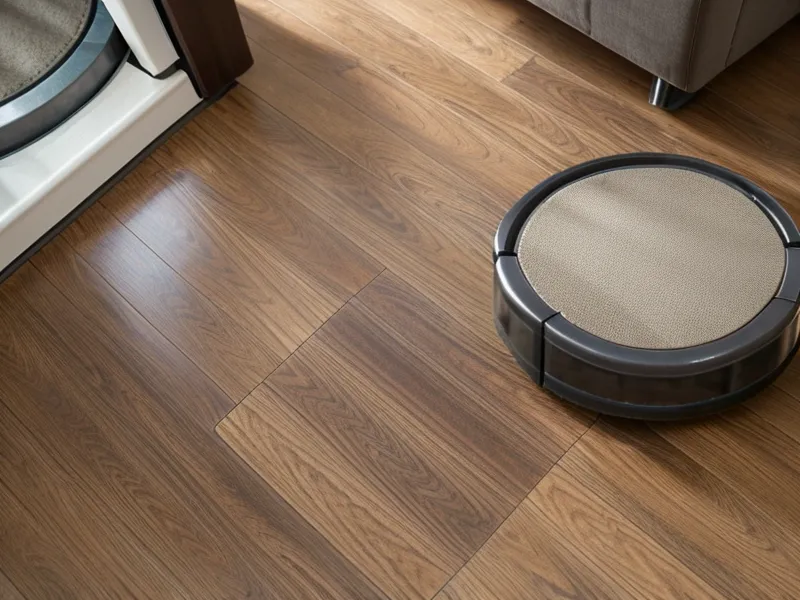
Under an inch of threshold height and flat floors throughout, most mid-range bots on the market will handle things fine, and this entire gauntlet stops mattering. Above that line, skip anything marketed mainly on suction numbers and look specifically at climbing height and mapping speed instead — that's the actual bottleneck in an older house, not raw pickup power. For a bungalow like mine, the LG CordZero is what I'd point a friend toward first: it clears the threshold every time, the auto-empty dustbin holds a full week without me touching it, and the app doesn't make me want to throw my phone across the kitchen. The Roborock earns its price if the mop function genuinely fits your routine, and the Roomba is a reasonable call if brand recognition and pet-waste avoidance matter more to you than bin size. Whichever bot you land on, pair it with the PuroAir HEPA 14 for the dander it kicks up climbing those thresholds. Between the vacuum, the purifier, and the detector, my hallway finally stopped being a daily argument with the dogs' fur.