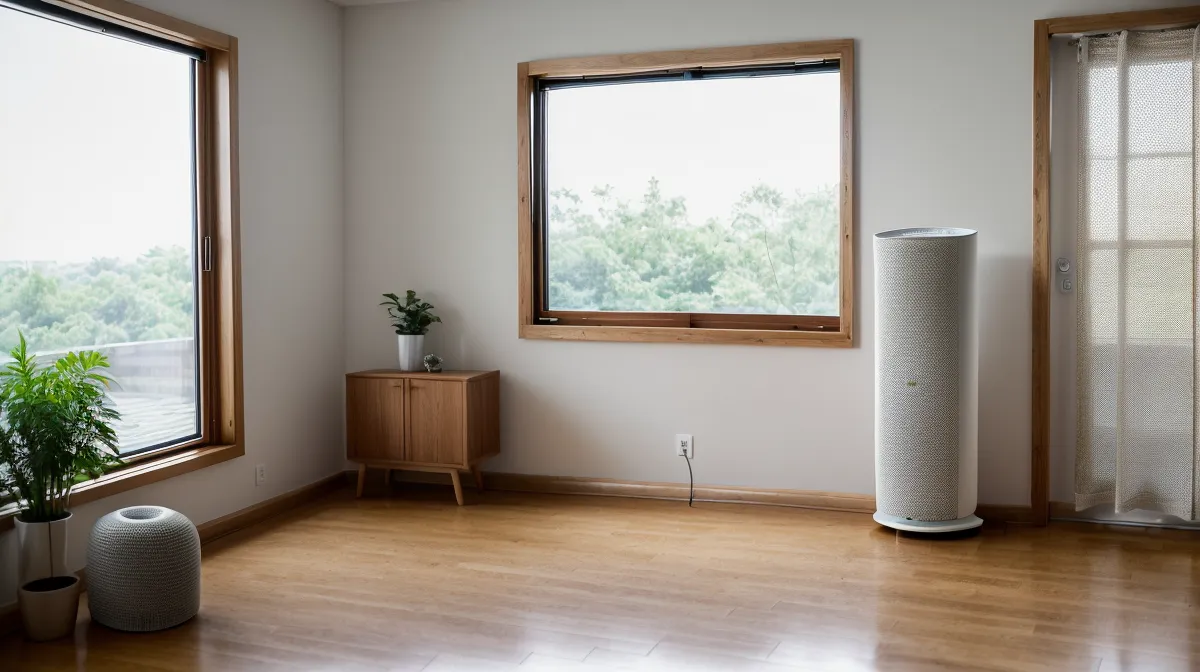
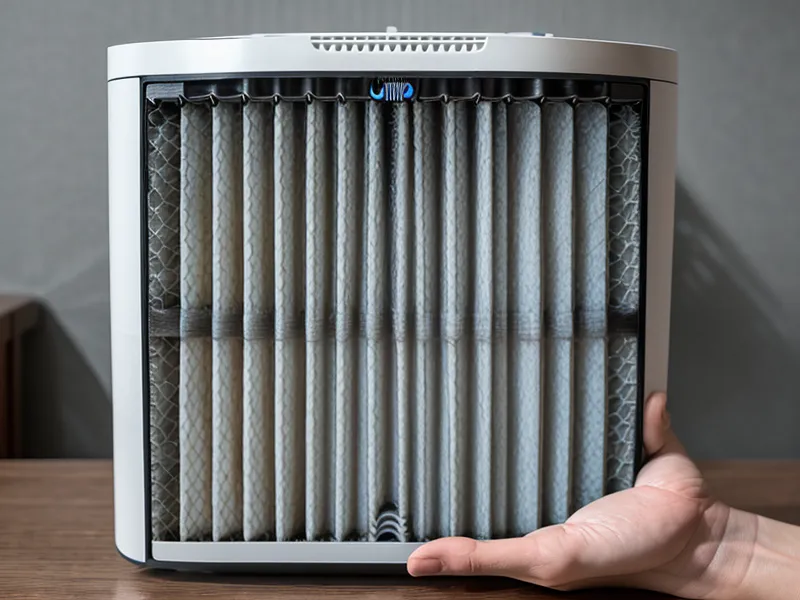
The filter is already out of its housing and pressed up against the kitchen window by the time Murph shakes off from the yard — the fan pitch changed an hour ago, and this is exactly the kind of air purifier maintenance moment where I'd rather see the pet dander clinging to the mesh myself than trust whatever number the app is about to show me.
Quick disclosure before the gray-mesh photos start piling up: some of the gear mentioned here, including this PuroAir, pays me a small commission if you buy through the link, at no extra cost to you. Every note comes from my own kitchen-scale weigh-ins and the dustbin tally I've kept since two shedding rescues took over this house, not from a spec sheet a brand handed me.
A multi-dog home doesn't wait for a six-month calendar reminder, and this HEPA filter starts running on its highest fan setting more often than the manual probably expects, especially once the PuroAir HEPA 14 Air Purifier [Best for Pet Dander] catches the brunt of Murph's undercoat letting go for the season.
The Six-Month Estimate Versus a Two-Dog Bungalow
Manufacturers size that six-month estimate around one average household, not two dogs shedding through an Indianapolis winter. Once Murph's coat blow got going, the mesh went from crisp white pleats to something closer to felted wool well ahead of that schedule. Yusuf across the alley already had the HEPA 14 spec sheet pulled up on his phone before I'd even finished pulling the filter out, and he's usually the one who checks whether a 99.99%-efficiency claim capturing particles down to 0.1 microns actually holds up against independent test data instead of just box copy.
Trusting the App's Percentage or Trusting Your Own Nose
Our old robot vacuum used to die at exactly seventy-three percent in that same corner by the hallway, every single run, long before I thought to question whether its charge estimate meant anything real. The PuroAir's filter countdown taught me a version of the same lesson from the other direction. It isn't gamified into pushing early replacements, which I'll give it credit for, but it's still just a dumb timer. No idea Sam left the back door open during a pollen spike. No idea Beans spent an afternoon scratching himself right next to the intake vent.
Once that percentage drops under twenty, I stop trusting the number and start checking the mesh directly. A visible gray film across the outer layer means the HEPA media underneath is already overwhelmed, whatever the app claims is left. Sam noticed the actual difference before I did — "it doesn't sound like a jet engine anymore," he said, back when sleep mode first went quiet enough for him to watch TV in peace — and that same quiet gets a slightly strained edge once the pleats are packed. I've run the full decibel breakdown on this exact unit elsewhere; the short version here is that the 28 dB sleep-mode reading holds steady even as the filter loads up, so noise isn't the early warning sign. The mesh is.
What a HEPA Filter Actually Costs a Multi-Dog Home
Replacement cost is the part nobody mentions until they're already locked into a brand. The PuroAir's filter is proprietary, with no third-party clone on the market yet, so once you're in, you're buying directly from PuroAir on whatever schedule your dogs actually set — not the printed one. That's the real math: a multi-dog home isn't paying more per filter, it's buying filters more often, and a faster cadence adds up regardless of what the unit itself cost going in. I tried to dodge that cadence for a while by running sticky lint rollers over the couch cushions between every vacuum pass, hoping less loose fur floating around the room would buy the mesh more time. It didn't move the needle enough to notice — the dander that actually clogs a HEPA 14 filter is too fine for a lint roller to catch in the first place.
Beans complicates the math further. He's a senior beagle, and older dogs tend to carry a different dander and skin-flake profile than a husky's undercoat. I've broken that angle down separately in my notes on the Best Air Purifier for Beagle Dander and Allergies in Older Homes, so I won't repeat the full case here.
Where the Air Purifier's Job Ends and the Vacuum's Begins
Pair the purifier with something like the LG CordZero Robot [Editor's Pick] and the filter gets an easier run, since a robot that picks up the heavy stuff before it goes airborne means less fine debris ever reaches the intake. How much easier depends on details that have nothing to do with air quality at all — dustbin capacity decides how much fur gets sealed away before a full bin starts recirculating it, mapping accuracy decides whether the bot even reaches the corner where the shedding is worst, and the suction-versus-battery-life tradeoff on a given model decides how much of that fine debris gets lifted instead of just pushed around. None of that touches the mechanical side of ownership either — obstacle avoidance around a floor scattered with dog toys, low-clearance navigation under furniture, brush-roll tangle resistance, rug-edge entrapment, and cliff-sensor drop detection near open stairs are their own separate maintenance track, and pet-waste avoidance is a headache I wouldn't trust to any bot running unsupervised. The mop-versus-vacuum tradeoff barely factors in here, since wet mopping mostly handles what's already settled on the floor, not what's still floating in it.
Two Households, Two Replacement Clocks
A friend of mine breeds Bernese mountain dogs, and I ran into her at the City Market Indy Winter Farmers Market a few weekends back, complaining about this exact filter problem. Two mid-size dogs shedding through a bungalow is one clock. A household built around a breed with that much double coat runs on a completely different one, and hers needs the mesh checked far more often than mine does even with the same six-month number printed on both boxes. That's the actual comparison worth making before buying anything — not which unit has the better rating on paper, but how many dogs, what size, and what coat type are going to be breathing through it every day.
Is It Time to Swap the Filter
Three checks settle it faster than the app ever will. Any scent at all coming off the top vent means the carbon layer underneath is saturated, not just the HEPA media. A ring of fine dust collecting on the floor around the base means airflow is being pushed out the sides instead of through the mesh, which is its own kind of warning. And if either dog is mid coat-blow, don't wait for a number to confirm the obvious. Swap it.
Where the unit sits in the room changes how fast it reaches that point, though that's a longer conversation than filter timing alone covers. Deep carpet cleaning for heavy shedders runs on its own separate cycle from anything the purifier touches, and it won't rescue a saturated filter either. On the detector side of the house, smoke and CO placement in an older two-story, and whether interconnecting them is worth the extra step, are decisions I made independently of any of this. Dander and combustion sensors don't share a maintenance calendar.
The senior-dog side of this also gets its own deep dive — different skin oil levels, different scratching patterns near the intake — over in PuroAir HEPA 14 for Pet Allergies and Managing Senior Dog Dander, if that's the piece you're actually trying to solve.
Final Verdict for the Two-Dog Household
Don't wait for a blinking light while your allergies do the talking. In a house with more than one dog, the PuroAir HEPA 14 Air Purifier [Best for Pet Dander] earns its keep, but the more efficiently it filters, the faster it fills. That's the trade a HEPA 14 rating makes, and no amount of app optimism changes it. I keep a spare filter in the closet for exactly this reason, since I'd rather swap early than go back to the pre-purifier version of this house. Running it alongside the LG CordZero Robot [Editor's Pick] buys a bit more time between changes, but only a bit. Keep watching the pleats regardless of which robot is doing the floor work underneath it.