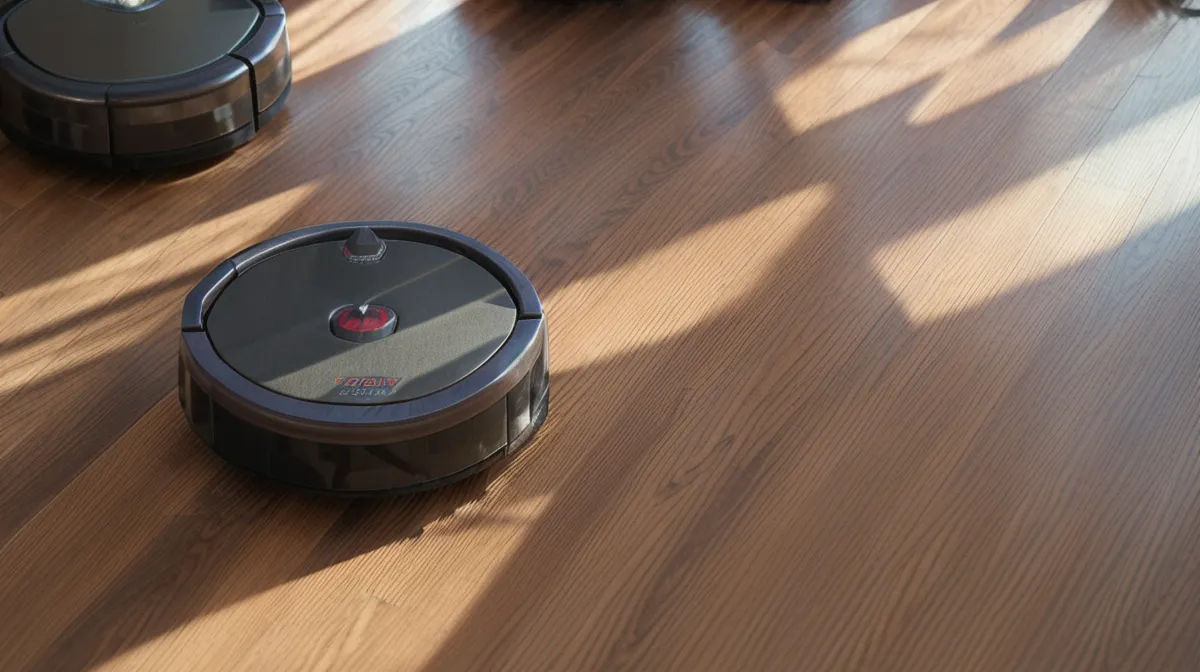
I was halfway through a UX audit in the drafty sunroom—struggling with a particularly offensive navigation menu—when my phone buzzed. It was a 'bin full' notification from the robot vacuum. The problem? It had only been running for ten minutes. I looked at Murph, my husky mix, who was currently shedding a pile of undercoat so dense it could be used to insulate a small garage, and I realized we were entering the danger zone again.
The Graveyard in the Basement
If you walked into my basement right now, you’d see the casualties. There is a Roomba i3 that died on the basement steps back in March 2024, its motor finally surrendering to the sheer volume of pet hair it had ingested. There is a mid-range bot that got eaten by an IKEA rug fringe and never quite recovered its dignity or its suction. This isn't just a hobby for me; it's a survival tactic for living in a 1,200-square-foot craftsman bungalow with two dogs.
Murph’s coat is effectively a physical DDoS attack on any motor I buy. Then there's Beans, my senior beagle, whose dander is like a fine, sticky silt that coats every sensor until the bot starts wandering around like it’s lost in a corn maze. Sam, my partner, has started referring to the vacuums as 'the latest sacrificial lamb.' After the third one bit the dust, I started keeping a running tally on robot-vacuum runs—which rooms get clean, when the bot gives up, and how much hair it actually moves. It’s the only way to justify the spend.
The Kitchen Scale Experiment: Why Your Self-Empty Base is Lying to You
Late last autumn, I decided to stop guessing. I pulled out my kitchen scale—the one I usually use for coffee beans—and started weighing the output of a single run. The results were horrifying. In our bungalow, a single daily pass through the living room and kitchen pulls in enough hair and 'Indiana dust' to fill a standard dustbin twice over. This is where the industry-standard 'self-emptying' feature becomes a trap.
Here is the inner truth most reviewers miss: High-end robot vacuums with self-emptying bases are actually worse for heavy-shedding households. Why? Because they hide the symptoms of a dying motor. When you don't manually empty the bin, you don't see the hair starting to wrap around the brush roll axle or the way a clog is forming in the intake. The base sucks out the loose hair from the bin, but it leaves the tight tangles behind. By the time the bot actually throws an error code, the motor has been straining against a hair-tourniquet for three weeks. I’ve seen it happen twice. If you’re tracking your own bot’s performance, you might notice the decline in my Tracking Tally: Which High-End Robot Vac Actually Survives Two Shedding Dogs? where I log these slow-motion failures.
When Sunlight and Dander Blind the LiDAR
By early March, I noticed the bot was struggling with its maps. The first mapping run in an old house is always a gamble—the floorboards aren't level, and the transitions between hardwood and rugs are aggressive. But this was different. The bot was spinning in circles in the kitchen, despite the floor being perfectly clear. This is the UX equivalent of a broken 'Submit' button that doesn't give you an error message; the bot just sits there, failing silently.
I realized that the LiDAR sensors weren't broken; they were just blinded. In our bungalow, the low-lying sunlight hitting the reflective finish on our oak floors creates a glare that confuses the laser. Combine that with a fine layer of beagle dander on the sensor glass, and the bot literally cannot see where it is going. I spent one humid morning in May cleaning the sensors with a microfiber cloth and realized the 'self-cleaning' features on these $800 bots are a total myth. They can empty a bin, but they can't wipe their own eyes. Even if your bot claims HEPA 13 filtration efficiency of 99.97%, that only matters if the air can actually move through the system without being blocked by a wall of husky fluff.

The Sound of a Struggling Motor
You start to develop an ear for it. There is the standard hum—usually around 60 dB, which is the decibel level of a quiet conversation—and then there is the high-pitched whine. That sensory red flag usually happens when the vacuum hits the thick runner rug in the hallway, the exact spot where Murph spends his entire afternoon. When the motor pitch goes up, it means the brush roll is fighting for its life. I’ve watched Beans, the senior beagle, stoically refuse to move while a confused robot vacuum bumps repeatedly into his flank, the motor screaming as it tries to navigate around his stubborn, 30-pound frame.
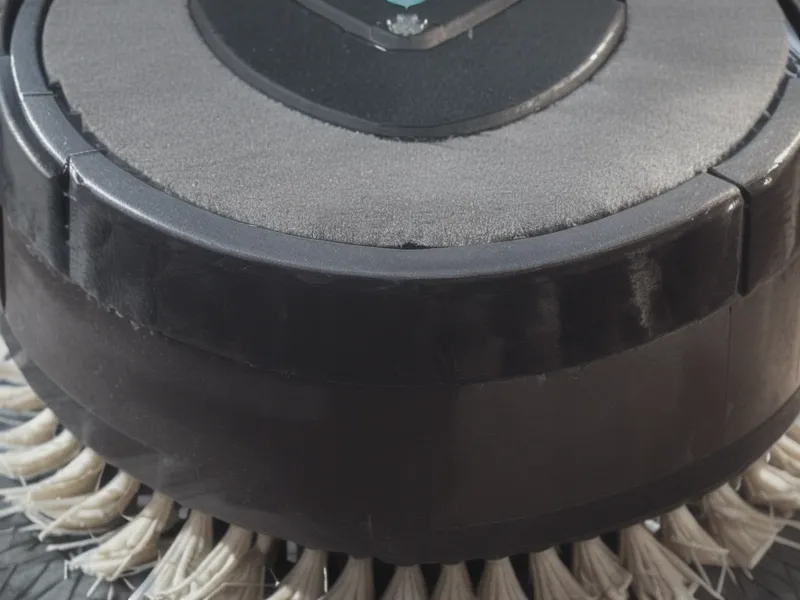
Sam usually shouts from the other room, 'Is it dying again?' and usually, the answer is yes. Most 'pet-pro' models have hair-detangling combs, but they are useless against the axle bearings. Hair doesn't just stay on the brush; it migrates to the ends and wraps around the tiny plastic pegs that hold the brush in place. If you don't pop those bearings out once a week, the friction will eventually melt the plastic housing. This is the kind of maintenance that isn't in the glossy onboarding flow—which, by the way, usually feels like a Sephora checkout flow where they try to upsell you on filter subscriptions before you've even turned the thing on.
A Preventative Maintenance Workflow (That Actually Works)
After about a month of heavy rain in April, the mud and hair combo became a literal sludge. I had to pivot from a 'set it and forget it' mindset to a strict maintenance workflow. If you're tired of manual labor, you might want to look at my Shed-Heavy Household Survival Guide for a breakdown of which bots actually handle this without needing a weekly exorcism. My current routine involves a kitchen scale, a pair of seam rippers, and a total lack of trust in the companion app.
Don't trust the 'Bin Full' sensor. In a husky house, that sensor is usually covered in dust within the first five minutes. Instead, set a timer. Don't trust the 'Tangle-Free' brush roll claims. Every Sunday, I pull the brush out and clear the axle bearings. It takes five minutes, but it saves the $200 motor replacement. And for the love of your floorboards, remember that the first mapping run always lies, especially in a bungalow with settled foundations. You have to babysit the bot for the first week until it understands that the rug fringe is an enemy, not a challenge. It’s a lot of work for a 'convenience' appliance, but until someone invents a bot that can actually handle Murph’s spring blowout, it’s the only way to keep the bungalow from being reclaimed by the dogs.