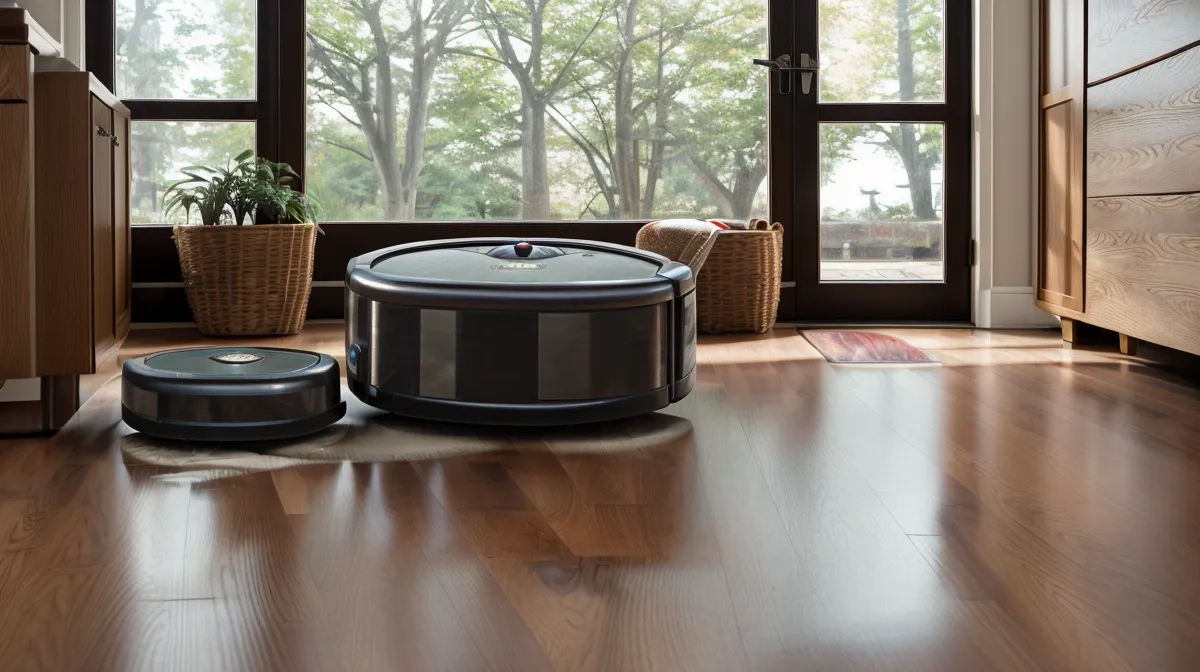
Four passes. That's what it took our Dreame L20 Ultra to lift a fully dried paw print off the tile by the back door — not the single swipe the marketing implies, and not what most robot vacuum review roundups promise. If you're a pet owner wondering whether a suction number on a box predicts good mud cleaning, that's the myth this piece corrects before you spend money on smart home tech built to solve the wrong problem.
Quick disclosure before the mud talk: a few of the vacuum and purifier links below are affiliate links, and I earn a small commission if you buy through them. That doesn't change what lands in the dustbin tally — I bought or ran every one of these units myself, mud and all.
The Suction Number Everyone Gets Wrong About the Dreame L20 Ultra
That 7,000 Pa suction figure is the number every spec sheet leads with, and it's the number I leaned on too when I retired my old Roomba j7+ for this one. Suction pulls up loose fur and grit just fine — it's what explains why the Roomba still earns its keep for something else entirely, steering wide of anything Beans leaves in the yard instead of dragging a wheel through it. Dried mud is a different physics problem. Once it's cured onto tile or hardwood it behaves more like a thin coat of plaster than dust, and no amount of airflow lifts plaster — that takes downward pressure and repeated contact, which is a mop problem, not a suction problem. That's the piece I get into more in my best robot vacuum for a two-dog household notes, and it's the same mop-versus-vacuum tradeoff that decides whether a bot is worth buying for a muddy yard at all.
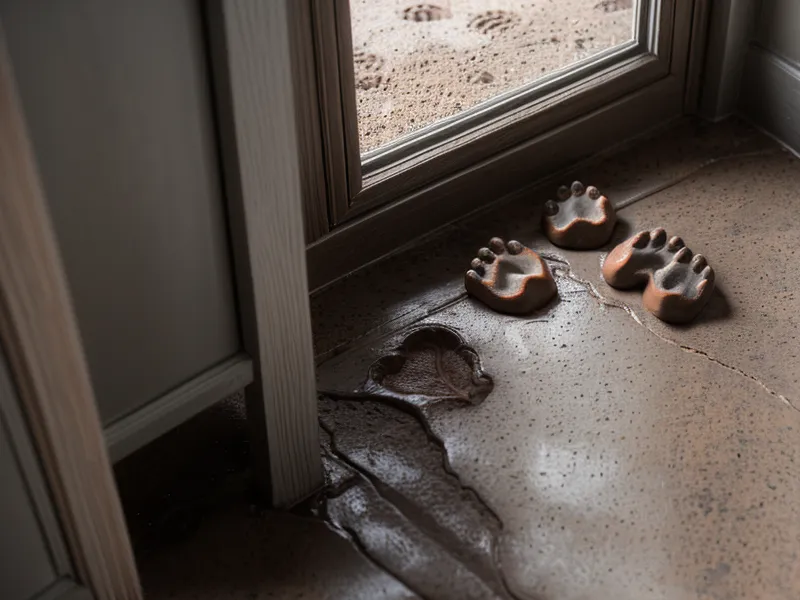
None of this shows up on a spec sheet the way it should. Dustbin capacity gets a bullet point on every product page, but nobody publishes how fast a bin fills scraping dried clay instead of vacuuming carpet fuzz — the two situations fill a bin at completely different rates, which matters more than the liter number alone. What actually decides whether a smart home tech purchase solves a mud problem is the mop hardware, and that's where the Dreame earns its keep.
Why Mop Pressure Beats Raw Suction on Dried Mud
Murph picks up most of his mud on the White River Greenway path, and by the time we're back at the door it's already drying into something the consistency of gray concrete.
My neighbor Reginald Crumpler caught me scraping a print off the tile with a butter knife one weekend and told me, over the fence, that the clay soil around that path holds water differently than the rest of the yard — which is apparently why mud from there sets so much harder than mud from anywhere else on the property.
The bot's two-note chirp when it undocks skips off the oak trim by the front door every run, which is how I know it's started before I even round the corner to check. Sam's reaction the first time he watched the mop pad swing outward to actually reach the baseboard — instead of stopping short like every other bot we've tried — landed somewhere between impressed and suspicious. That MopExtend arm is the real answer to the suction myth: it applies downward, repeated pressure right at the wall line, which is exactly the contact dried mud needs and airflow can't provide. I get into the mechanics further in comparing the best robot vacuum with mop for large dog mud.
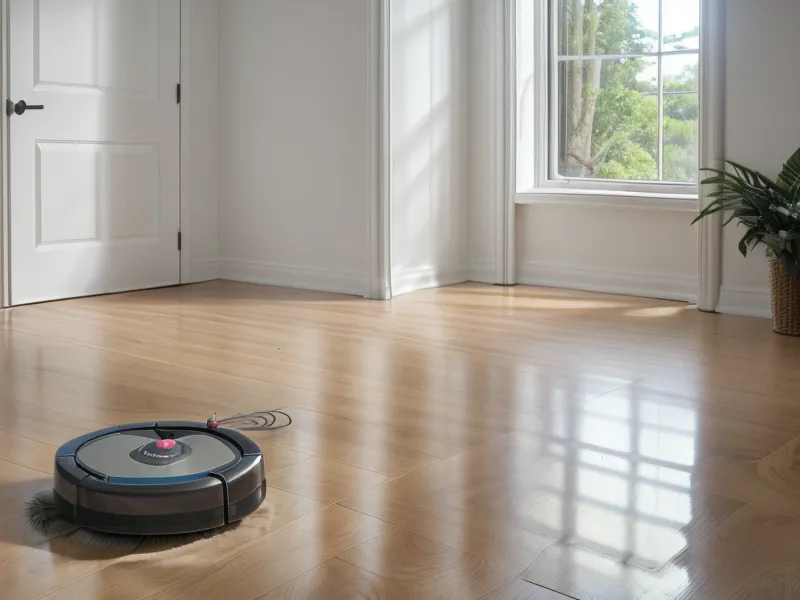
Getting the water flow right took some troubleshooting I didn't expect. On the first big mud run the app just threw a vague water-tank error at me, and it took ten minutes of removing and reseating the clean tank before I realized it hadn't fully clicked into its seal. Before this Dreame, I'd already tried solving the debris problem a cheaper way — swapping one bot in the tally for a bagged model on the theory that a bag would handle heavier debris better than a bin. It didn't. The replacement filters for that thing ended up running more per month than the machine itself cost, which is its own kind of expensive lesson in reading the fine print before buying into a bagged system.
Living With the Noise Floor
The auto-empty cycle is the loudest thing in the house, full stop — it kicks on with almost no warning, no gradual ramp-up, just full volume the second it decides it's time. It's noticeably louder than the PuroAir HEPA 14 Air Purifier we run nearby, which stays close to silent even on its regular setting.
Running that purifier close to the vacuum dock turns out to matter more than I expected — the auto-empty cycle kicks fine dust into the air right as it fires, and where you actually place a purifier relative to that dust source changes how much gets caught versus how much resettles on the floor. The HEPA 14 grade in the PuroAir is a big part of why it catches what the vacuum stirs up instead of just recirculating it, which I get into properly in PuroAir HEPA 14 review for eliminating dog smells.
Is the App as Bad as Everyone Says?
Mostly, yes. The map editor has re-saved itself into a layout that doesn't match our house twice now, which means redoing no-go zones from scratch and hoping it sticks. Mapping accuracy is one of those specs that sounds solved industry-wide, in the Internet of things sense of every device claiming smart behavior, but in practice a bot can still misjudge where the runner rug's edge sits and clip a wheel against it, or head straight for a dog toy left in the middle of the hallway before its camera catches up. It's also the same app that likes to send a 2am notification about a clean cycle nobody scheduled, which is its own special kind of trust-eroding.
Maintenance is the other half of the app-and-hardware relationship nobody advertises. The brush roll on this one wraps long hair faster than any bot we've run — I'm unwinding it every handful of cycles instead of letting weeks go by — which is a tangle-resistance trade I didn't fully appreciate until I was doing it with a butter knife over the sink. None of this is a deep-carpet story, to be clear; the high-pile rug in the bedroom still gets a separate cleaning pass because dried mud on tile and packed-in fur on carpet are not the same job, no matter what one bot's marketing implies.
Weighing the Dreame Against the Rest of the Lineup
People ask fairly often whether the Roborock S8 Pro Ultra just does this better. Its mop-lift-on-carpet trick got a genuine reaction out of Sam, who is usually unmoved by anything vacuum-related, and its mapping locked into an accurate layout faster than most bots we've tested. Neither of those things helps with a caked print on tile, though, and the Roborock's boxier profile doesn't get as low under our sectional as some of the lower-clearance bots in the lineup.
If mud isn't your problem and you just want something that won't quit on hardwood or the bedroom rug, the LG CordZero Robot is the one I'd point you to instead. It trades the mop hardware entirely, but its suction held its charge across a full run in a way that made the suction-versus-battery-life tradeoff a non-issue for us — it simply didn't run out of either before the job was done. For a muddy Indianapolis spring, though, a bot with no mop is solving half the problem at best.
What I'd Tell You Before You Buy
The Dreame still occasionally loses a bandwidth fight with the X-Sense Smart Smoke Detector over the 2.4GHz connection, which is a smart-home coexistence problem more than a vacuum problem — worth knowing before you add a fourth or fifth connected device to an older house's network. Placement matters for that detector the same way it does for a purifier, though that's its own subject. And for whatever it's worth: the bot that finally died on our basement stairs years ago is the reason I still check that a cliff sensor actually stops a unit at the top step before I trust it near ours, dried mud or not.
So here's the actual rule, not the marketing one: suction numbers matter for fresh debris — fur, crumbs, the everyday stuff. Once mud has dried and set, what matters is mop pad pressure and how far the pad reaches toward the edges, not the Pa figure on the box. If your mess is mostly dust and shedding, buy on suction and battery life. If you've got dogs tracking in a yard's worth of clay every spring, buy on mop hardware and edge reach, and expect to spend a little more time on dock maintenance in exchange.