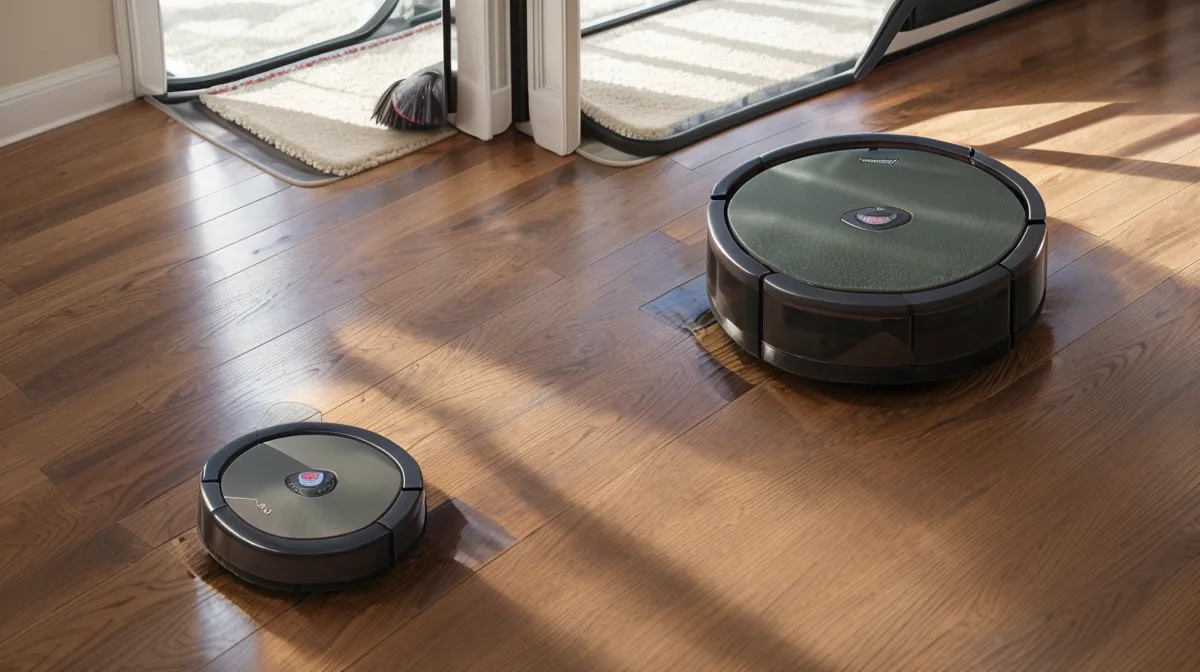
How many robot vacuums does a two-dog household have to burn through before one of them earns a permanent spot by the outlet? I don't have a tidy answer, but the dustbin tally — my running log of gram weights, decibel readings, and app complaints — currently sits at six robot vacuums and three air purifiers, and only one of each has survived Murph's husky shed and Beans's senior-dog dander without getting demoted to the hall closet. This is the actual pet hair management data from that tally: what held up under real robot vacuum testing conditions, what a smart home testing setup looks like in a house built before insulation was a design consideration, and which air quality fix actually calmed the dogs down instead of setting them off.
Quick disclosure before the receipts: some of the robot vacuum and smart-detector links below are affiliate links, and I earn a small commission if someone buys through them, at no extra cost. That doesn't change what makes it into the tally. The dock move that backfired below, the app I uninstalled twice, the bot that needed three passes before it trusted the basement stairs — all of it stays in the writeup whether or not the click pays out.
What Made Me Start Weighing Dustbins on a Kitchen Scale
The habit started because marketing copy about suction stopped meaning anything on its own. Weighing the dustbin on a kitchen scale after nearly every run isn't about decimal-point precision — a bin that's actually heavy tells me more about a run than an app screen that just says "Clean." Underfoot is the other tell: I can walk the hallway barefoot right after a run supposedly finishes and still catch grit against the hardwood, which means the app's confidence and the actual floor don't always agree. Mapping speed plays into the same log. The LIDAR-based units generally need a slower first pass to learn a floor plan than the older camera-only bots did, but they stop wandering into the same dead end after that — which matters more in a house whose layout stopped making sense around 1930.
The Dock Placement Fix That Didn't Fix Anything
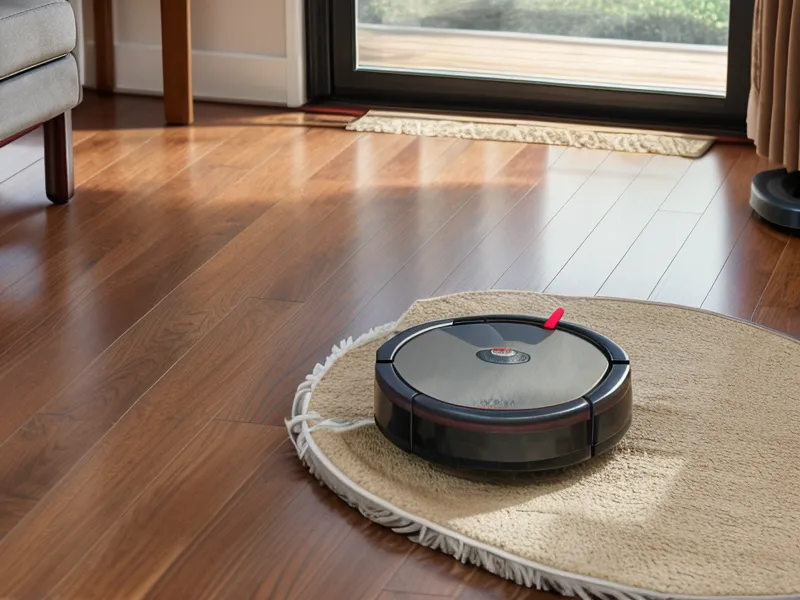
Coverage gaps once drove me to relocate a dock, from the corner by the kitchen to a spot in the middle of the hallway, on the theory that a more central base would shorten the trip to the back bedroom. It didn't. The base and its cord ate up enough hallway width that Sam started catching a foot on it walking to the bathroom at night, and the bot still gave up in the same back corner it always gave up in — moving the dock changed the tripping hazard, not the coverage. It went back to the kitchen corner, foot traffic went back to normal, and the back-corner gap turned out to be about the floor plan, not the dock's address.
The LG CordZero Robot Vacuum: Suction That Doesn't Choke on Two Dogs
The LG CordZero Robot sits at the top of the tally right now, and suction isn't the main reason. Onboarding kept it installed; the app asked for a WiFi network and a room name, then got out of my way instead of running me through the multi-screen setup most of these companion apps default to. During the first heavy shed of the season, the three-stage suction handled the hardwood and the high-pile bedroom rug in the same run, and the bin was close to full when I weighed it afterward with no drop-off in pickup near the end. Sam cared less about the suction and more about the auto-empty base finishing a full week without either of us opening the app to check on it. It's also one of the few bots I've clocked in two-dog household tracking without choking on a clump of Murph's husky fur halfway through a run. The trade-off shows up in the brushroll, which still needs a manual unwind for long human hair every ten runs or so, and in the mapping, which took three full passes before the bot stopped angling toward the basement stairs on its own.
Which Map Locks In Faster, Roborock or Roomba?
If you want to obsess over the data the way I do, the Roborock S8 Pro Ultra will hold your attention longer than any bot has a right to. The iRobot Roomba j7+ leans on brand recognition and a pet-waste avoidance feature that actually worked the one time it mattered. Beans lost an argument with a treat on the living room rug, and the bot rerouted around the evidence instead of smearing it across the hardwood. Roborock's advantage shows up in the mop pad, which lifts on contact with carpet so it doesn't leave a wet stripe on the rug. Sam, watching it work through a spring-cleaning run, said, "Okay, that one actually knows what it's doing." The map stabilized by the second run on the Roborock, while the Roomba needed three tries to get the pantry corner right, which tracks with the basement-adjacent confusion I saw out of the LG in its own testing. Where the Roborock loses ground is the app, dense enough that fine-tuning husky suction power settings eats an evening, versus the Roomba's simpler but clumsier no-go zone editor, which forces a redraw every time the floor plan re-saves itself. I sent a screenshot of the Roborock's settings menu to Colette Morrow, the UX friend I trade bad-onboarding screenshots with, and her read was that the information architecture needed its own onboarding flow. The LiDAR is doing the real work here; it's the reason the map holds up room to room instead of redrawing every wall from scratch.
Cleaner Floors Still Leave the Air Textured
Floors are only half of the pet hair management problem — the air around a husky and a senior beagle gets a texture the vacuum never touches. I added the PuroAir HEPA 14 Air Purifier to the tally after noticing fine dust in the air even on days when the vacuum ran twice. The filter grade is HEPA 14, a step above the HEPA 13 units most big-box stores carry, and the difference showed up fastest during a stretch when both dogs were shedding hard and the bedroom cleared out noticeably faster than it did with the purifier we retired. Placement mattered almost as much as the filter grade — it only pulled its weight once I moved it out of the corner behind the door and into open floor space where the air actually reaches it. Sleep mode is the real selling point: my phone's decibel meter read 28 dB from three feet away, quiet enough that it doesn't set Beans off, which is a low bar this house has failed before. Anyone weighing options for managing senior dog dander will get more out of a purifier than another scented candle.
Why the X-Sense Smart Detector Pairing Failed Twice
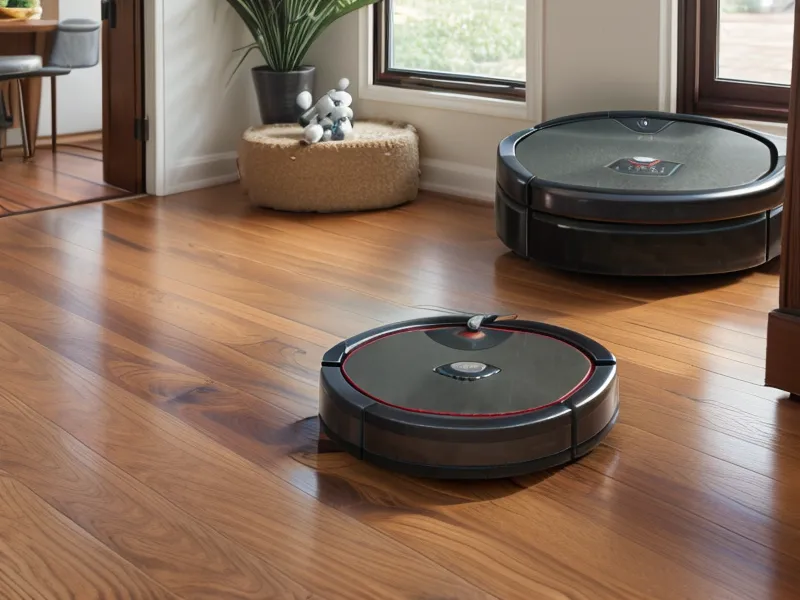
The X-Sense Smart Smoke and CO Detector wasn't part of the original tally; it got added after an old landlord-issued alarm went off over a smoky stovetop and sent both dogs scattering. The app's push notification lands roughly four seconds before the horn actually sounds, which is enough time to silence a false alarm before Murph tries to go through a closed window. Installing three units in the hallway and kitchen took under fifteen minutes each, swapping out decade-old sealed alarms that came with the house. Pairing failed twice before I figured out the router was pushing the detectors onto the 5GHz band — these things want 2.4GHz to get through plaster walls, and once that setting changed, the connection held. The units also talk to each other, so one detector going off in the kitchen triggers the alarm in the hallway too, which matters more in an older two-story layout where a single alarm three rooms away is easy to sleep through. The app itself looks like it hasn't been redesigned since launch, a step down from the LG's onboarding, but the hardware doing its actual job matters more here than a polished screen.
So Which One Actually Earns a Spot by the Outlet?
Six robot vacuums and three purifiers into the tally, the most expensive option hasn't automatically been the best one; it's been whichever one didn't turn cleaning into a second job of app troubleshooting and brushroll surgery. The LG CordZero Robot is still the one plugged in daily, because the suction, the dustbin capacity, and the onboarding all landed in the same range instead of trading off against each other the way most of this lineup does. Households with a floor plan and a dog situation close to mine should start there — not because it's flawless, but because it's the one that's stopped costing an evening every time something needs fine-tuning. The rest of the tally still earns its spot for specific households: the Roborock for anyone who wants to live inside the data, the Roomba for anyone who wants the pet-waste avoidance guarantee and doesn't mind a clumsier app, the PuroAir for the air half of the equation, and the X-Sense for anyone still running alarms as old as the house itself.
If you're done playing "where's the vacuum stuck now" and just want the floors and the air handled, start with the LG CordZero linked above, then decide whether the mop function or the pet-waste guarantee is worth adding a second bot to the tally.
| Product | Rating | |
|---|---|---|
| LG CordZero Robot Editor's Pick | 9.3 | Read More → |
| Roborock S8 Pro Ultra | 9.1 | Read More → |
| iRobot Roomba j7+ | 8.8 | Read More → |
| PuroAir HEPA 14 Air Purifier | 8.5 | Read More → |
| X-Sense Smart Smoke and CO Detector | 8.2 | Read More → |
LG CordZero Robot
Pros
- + Three-stage suction handles heavy husky shedding effortlessly
- + App onboarding is clean and lacks the typical 'scavenger hunt' feel
- + Auto-empty dock actually works for a full week without intervention
Cons
- − Premium price point is a significant investment
- − Brushroll still requires manual hair removal every few weeks