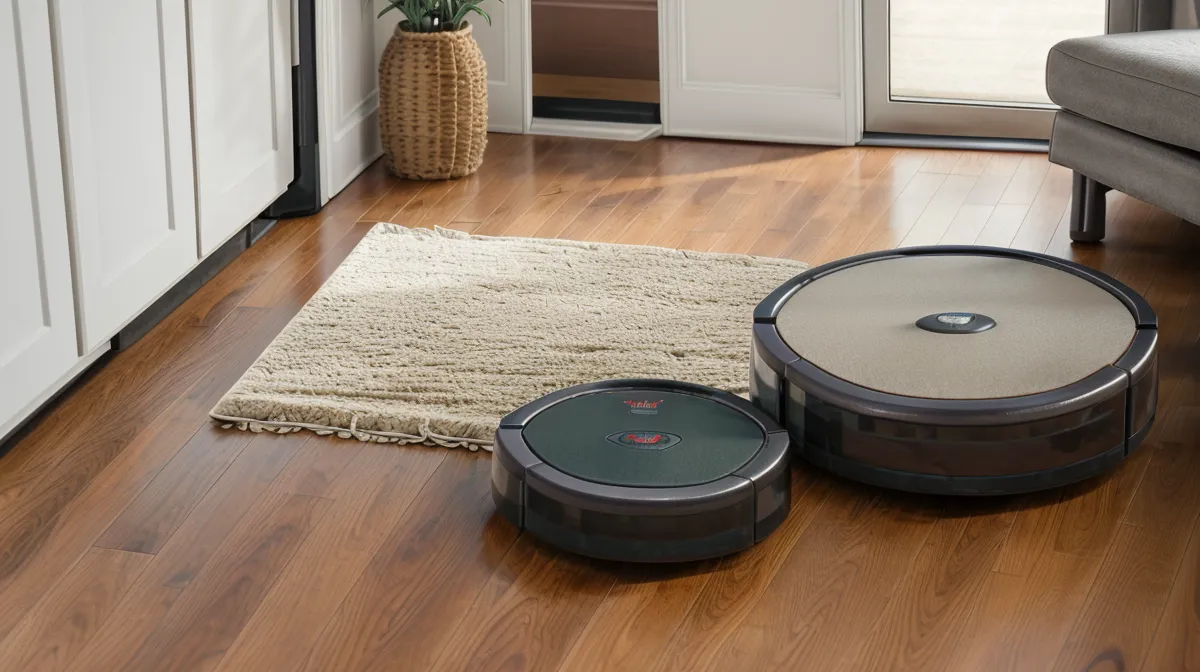
How many robot vacuums does it actually take before you stop trusting the box copy? I'm well past a dozen units into the dustbin tally at this point, and the LG CordZero Robot is the one that's stuck around long enough in this craftsman bungalow to earn its own full write-up — hardwood floors, uneven century-old thresholds, and two shedding rescue dogs included. This is a robot vacuum review built entirely around a house that isn't gentle on any of them.
Quick disclosure before the tally: some of the links below are affiliate links, meaning I earn a small commission if you click through and buy the LG or one of the others mentioned here, at no extra cost to you. Every unit in this piece ran in my own hallway and living room, weighed on my own kitchen scale, so the failures are mine whether or not a link ever pays out.
Sam and I bought this place for the oak floors, then spent two years learning what oak floors do to a robot vacuum's dignity. Murph, our husky mix, sheds enough to reupholster a couch weekly. Beans, our senior beagle, mostly wants a slow-moving object to supervise. Our quarter-sawn floors have these tiny structural gaps that catch dander like a comb, and the last bot to work this house — a Roomba i3 — didn't survive its own trip down the basement stairs. So when the LG CordZero Robot showed up, I wasn't exactly rolling out a red carpet. I've watched too many bots choke on the jump from bare hardwood to the thick runner rug in our hallway, and the LG CordZero Robot had a lot to prove before I trusted it anywhere near the stairs.
Can Any Robot Vacuum Actually Climb a 1920s Hardwood Threshold?
Most review sites don't talk about what I've started calling navigation fatigue — the specific exhaustion of hearing a robot vacuum beep for help for the fourth time while you're mid-sentence on a client email. Older homes don't have level floors. The thresholds between rooms sit higher than anything built after 1960, and for most bots that's a mountain range, not a lip. The mapping-accuracy side of that problem is its own long conversation I've had elsewhere; what matters here is what the CordZero actually did with it.
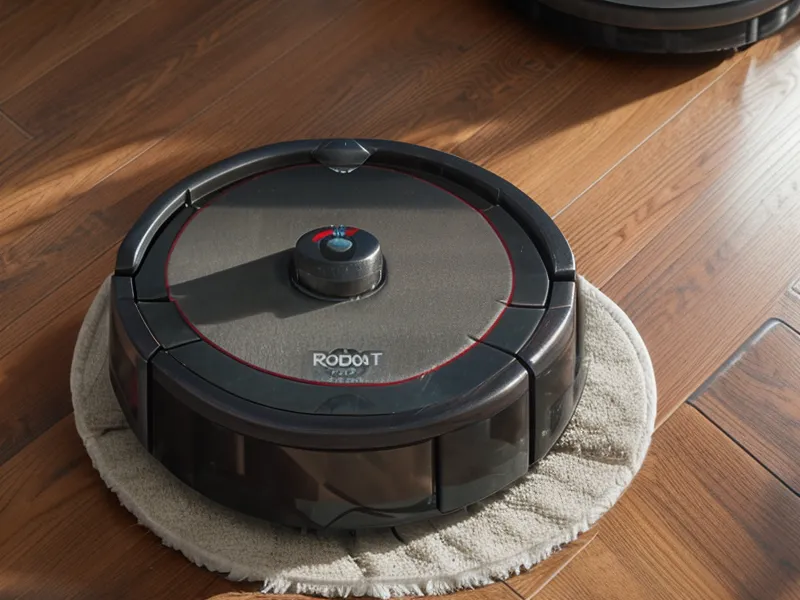
Where the Roborock S8 Pro Ultra paused at the edge of our mudroom threshold like it needed a second to think, the CordZero just rolled over it without slowing down. Reginald, the retired HVAC guy two houses down who trades porch-fence commentary on anything mechanical, caught it crossing that same threshold from his driveway one afternoon and said it sounded "like the wheels actually match the floor instead of fighting it" — coming from a man who spent decades listening to compressors, that felt like real praise.
Sam was the one who put it into words first. He and the dogs had spent that afternoon at Garfield Park Conservatory, so I had the house to myself when the CordZero made its first full, uninterrupted pass through the kitchen. When Sam got home, he crouched down near the baseboards, listened for a second, and said: "It doesn't sound like it's fighting the floor." Which is about as technical as Sam gets, and about as accurate as anyone needs to be.
The Dustbin Tally After Eight Weeks of Husky Season
Eight weeks into running the CordZero daily, the dustbin tally told me more than any spec sheet could. On the heaviest days of Murph's shedding, the auto-empty dock went the better part of a week without clogging — something none of the mid-range bots before it managed in this house. Dustbin capacity is a whole rabbit hole I've measured elsewhere down to the gram; here I'll just say this one didn't quit early.
Before the CordZero, I tried switching to a bagged model for a stretch, figured a sealed bag would beat any bin on containment. It didn't. The replacement filters ended up costing more per month than the bot itself was worth, and I was back to weighing dustbin contents on the kitchen scale within a season.
There's a specific little crackle every time the CordZero's rubber roller lets go of a wad of Murph's undercoat into the bin — not a satisfying sound exactly, more like the sound of a problem getting solved in real time.
The iRobot Roomba j7+ still wins on pet-waste avoidance — it's the one that handled the night Beans lost an argument with a Greenie without me having to step in — but that's a feature I've covered in full elsewhere and won't rehash here.
If your floors lean more toward carpet than century-old oak, my Best Robot Vacuum for Thick Carpet and Heavy Shedding Dogs post is the more useful read — the CordZero holds its own on carpet, but this particular review is about hardwood, and I'd rather send you to the right page than pad this one out.
That caveat exists partly because of a reader named Fabiola Tobin, a middle-school art teacher in Carmel who emailed after a previous long-term review went up. She'd bought a robot vac on a Black Friday deal, got stuck in a return loop with the retailer, and wanted to know if the model she was eyeing next was actually the upgrade the marketing implied. I didn't have a great answer for her carpet-heavy townhouse coming from a bungalow full of oak floors, and that's the whole reason I've started flagging when a review is hardwood-specific instead of assuming it applies everywhere.
The ThinQ App Doesn't Ask for My Blood Type
As a UX writer, I have approximately zero patience for bad onboarding. The LG ThinQ app is fine. Better than fine, actually. No mandatory account scavenger hunt. No permissions screen that reads like a hostage negotiation. It just asked which network to join and got on with it.
I still remember glaring at my phone screen while some other app demanded an email address before it would even render a single room of my floor plan — the CordZero, at least, skipped that particular indignity.
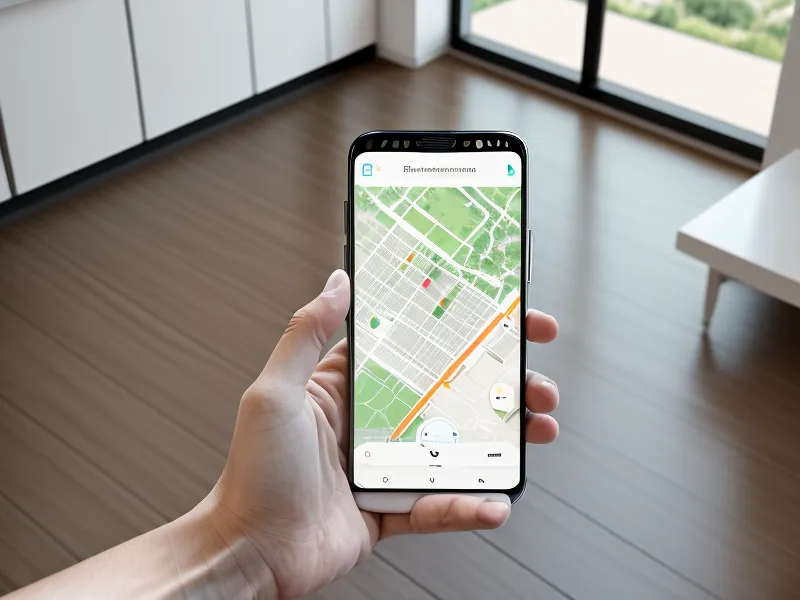
Our plaster walls are thick enough to be Wi-Fi kryptonite, and the CordZero needs a stable 2.4GHz signal to hold its map. I learned that lesson the hard way with the X-Sense Smart Smoke and CO Detector first — forty minutes of swearing at the router before I figured out it refused to see anything but the 2.4GHz band. Where you actually mount those detector units in a two-story house is its own conversation I've had in more detail elsewhere; the short version is that pairing came first, placement second.
The app for the iRobot Roomba j7+ looks more polished, sure, but it nags you about a Premium subscription every couple of weeks even after you've said no twice. The CordZero doesn't do that. It just cleans and gets out of the way.
I broke down that whole app comparison — Roomba's nag screens against Roborock's genuinely overstuffed menu system — in my Roomba j7 Plus vs Roborock S8 Pro Ultra for Pet Hair post, if app rabbit holes are your thing.
None of this touches mopping, either. The CordZero is vacuum-only, so the whole mop-versus-vacuum tradeoff some of the all-in-one docks force on you just doesn't apply to this particular review.
Where the PuroAir Picks Up After the Vacuum Docks
Cleaning a floor and cleaning the air above it are two different jobs, and I don't fully trust any robot vacuum's onboard filter to catch what Murph leaves behind in the finer stuff. That's why we run a PuroAir HEPA 14 Air Purifier in the main living area — not because the CordZero's filtration is bad, but because HEPA grading is its own tier system I've gone deep on in a different post, and exactly where you place a purifier in a room like ours is a separate small science I've covered elsewhere too.
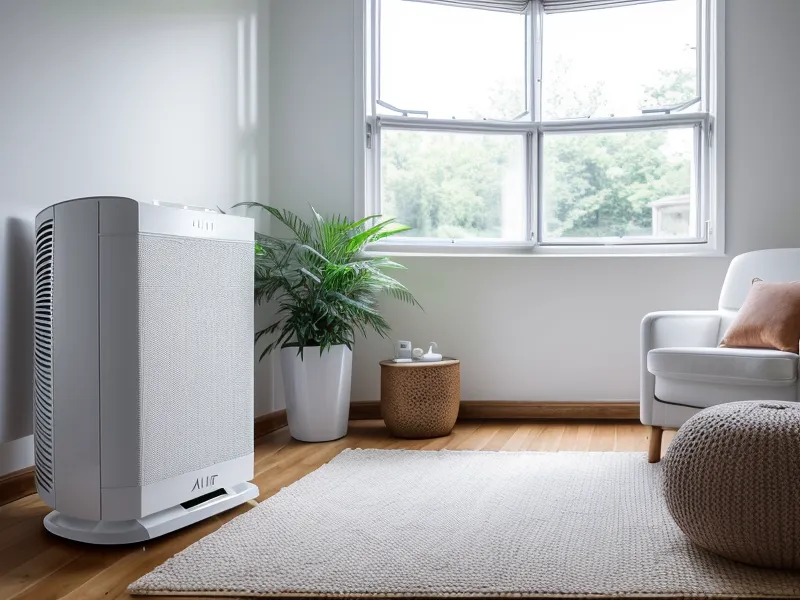
The PuroAir's sleep mode is the quietest thing in this house — my phone's decibel meter read 28 dB three feet away, quiet enough to disappear under normal room noise. After the CordZero finishes a run and the auto-empty dock lets out its noisy little whoosh, the PuroAir is what actually makes the room feel done.
That full decibel breakdown — the CordZero's cleaning roar against the PuroAir's sleep mode — lives in my PuroAir HEPA 14 Noise Level Test for Light Sleepers with Pets post, for anyone who needs the room quiet enough to actually nap through.
Final Verdict: Worth the Premium Over the DTC Bots
After two years and a long string of refurb deals and returns, the LG CordZero Robot is the one that stayed in the living room while everything else got demoted to the basement or the guest room. It handles our thresholds better than the LIDAR-heavy competition, the auto-empty dock hasn't clogged on a single heavy-shedding week yet, and mapping took about three passes before it stopped trying to summit the basement stairs.
The price sits well above the obvious DTC alternatives, and I won't pretend that's nothing. Whether you should weigh suction over battery life is its own tradeoff I've broken down in more depth in the CordZero's dedicated battery-life review; for a bungalow with thresholds like ours, climbing ability mattered more than either number on its own. What actually earns its keep here is the drop in what I've started calling navigation fatigue — not fishing the bot out from under the sectional every twenty minutes.
How the CordZero Stacks Up on Paper
| Feature | LG CordZero | Roomba j7+ | Roborock S8 Pro |
|---|---|---|---|
| Hardwood Gaps | Excellent (High Suction) | Good | Great |
| Threshold Climbing | Best in Class | Good | Moderate (Struggles >0.7in) |
| App Experience | Clean / Low-Nag | Polished / High-Nag | Feature-Dense / Complex |
| Auto-Empty Reliability | High (Doesn't clog on fur) | Highest (Best Seal) | High |
If you're done chasing husky tumbleweeds across your own hardwood, the LG CordZero Robot is the one I'd point you toward first. It's been the steadiest thing to come through this two-dog household in the two years I've been running this tally, and out of everything that's cycled through here, it's the one I still haven't found a reason to send back.