
Would you actually hear a smoke alarm going off one floor down, bedroom door shut, box fan running? That question is the entire case for interconnected smoke detectors in an older two-story home, and most smart-home safety buying guides never bother asking it. I test robot vacuums and air purifiers out of a 1920s craftsman bungalow in suburban Indianapolis, tallying dustbin weights and decibel readings instead of trusting a spec sheet, and that habit is what got me testing an X-Sense interconnected setup against our old standalone units, in a house with two dogs who can't let themselves out.
Quick disclosure since we're already talking about the detectors and purifiers I recommend: some of the product links below are affiliate links, and I earn a small commission if you buy through them, at no extra cost to you. My answer, if you don't want to read the next nine hundred words to get there: yes, interconnected is worth it in a house like this, but not for the reason most people assume. It's not about a louder alarm. It's about whether the alarm that trips is the one you can actually hear.
The Myth: One Loud Alarm Covers the Whole House
The going assumption is that any decent smoke detector does the job — mount it, replace the battery on schedule, move on. "Interconnected" gets treated like a smart-home upsell for people with open floor plans and money to spend, not a real safety difference. In a one-story house with three rooms off a single hallway, that assumption might even hold. Old two-story houses are where it falls apart. Every standalone unit still carries that standard smoke alarm lifespan printed on the back, and swapping one out on schedule feels like due diligence — right up until the one that trips is two rooms and a staircase away from where anyone's actually sleeping.
Old Plaster Walls Change What You Actually Hear
Reginald Crumpler, two doors down, spent decades in HVAC before he retired, and he's part of the reason I own a decibel-reading app at all. He caught me standing in the front hall pointing my phone at the ceiling one afternoon and asked, flatly, what I thought I was measuring. I told him I was checking whether an alarm in the basement would actually carry to the second floor with a bedroom door shut. He wasn't surprised. Old plaster and lath, he said, swallow sound in a way drywall never does, and two floors of distance does the rest.
Sam brought up the same idea walking back from the City Market Indy Winter Farmers Market one Saturday, half-joking that I'd started treating the house like a lab. "You already did this with the vacuums," Sam said. "Why does the smoke detector get a spreadsheet too?" Because a spreadsheet is the only way I trust an answer that isn't just a hunch — and my hunch, standing in that hallway, was that our old standalone alarms were a lot quieter upstairs than they had any business being.
Testing the Difference, Floor by Floor
Before any alarm testing started, our fix for the basement blind spot wasn't even about alarms — it was about dust. I'd tried keeping the handheld Dyson parked at the top of the basement stairs for quick manual runs instead of trusting a robot to make that trip on its own, figuring I'd just spot-check the space myself. Mostly it just sat there collecting its own dust between grabs, which is its own small lesson: good intentions don't cover a space you don't actually walk into every day. Sam caught the real version of that lesson before I did — pointed at a strip of floor under the sectional the robot had rolled straight past, still visibly dusty days later. Nobody had noticed until somebody who wasn't me looked twice.
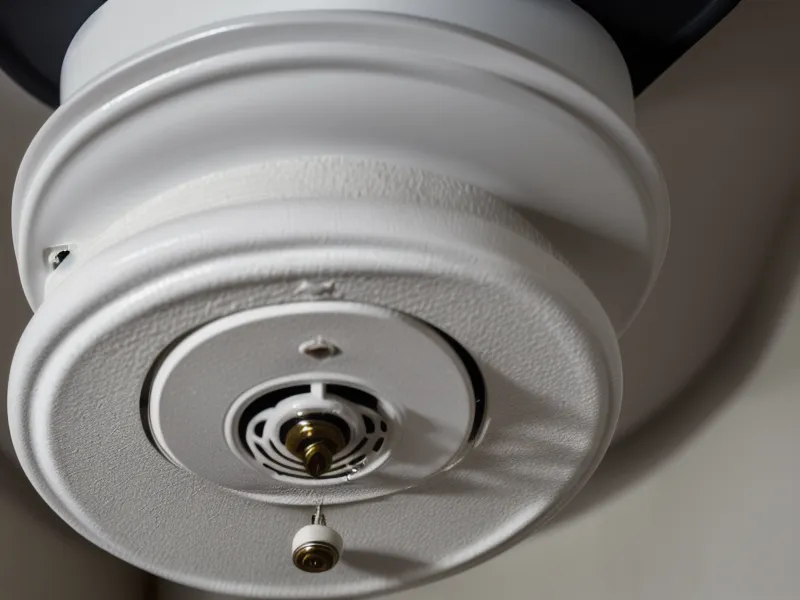
That's the same blind-spot problem an alarm has. You don't know what isn't being heard until somebody who isn't standing in that room tells you. So the standalone units came out, and the X-Sense Smart Smoke and CO Detector set went in — a wireless mesh rather than a wired system, since running new wire behind hundred-year-old plaster wasn't happening without tearing into crown molding I'd rather keep. Installing it kicked up its own cloud of that same gritty plaster dust, which is exactly the kind of debris that goes straight into the running tracking tally I keep on every vacuum that comes through this house — old-house dust behaves nothing like normal household dirt, and it shows up in the numbers.
Why It Matters More With Dogs in the House
Most fire-safety advice is written for people, not the animals who can't open a door if something goes wrong while everyone's out. That's the real gap in most pet-safety advice, which usually stops at knowing your escape route and never asks what happens if nobody's home to use it. Murph and Beans can't call anyone.
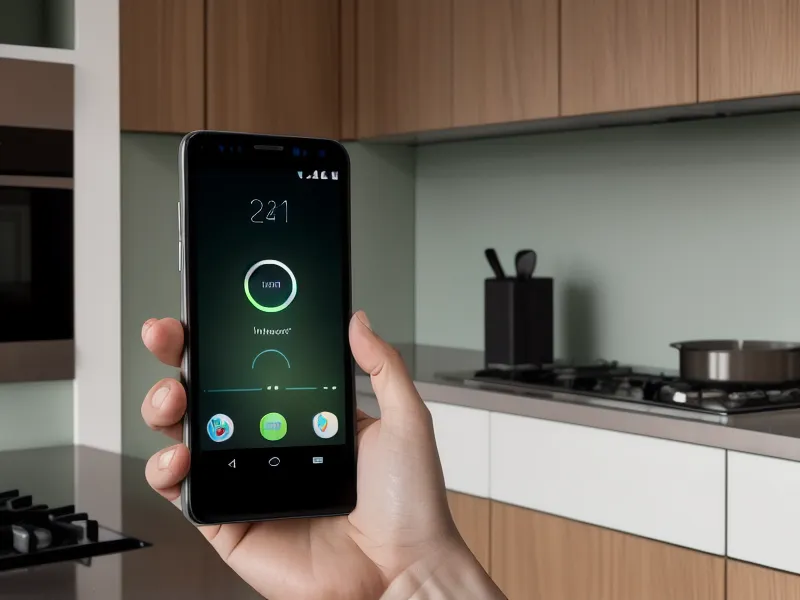
The test case came on a grocery run — Sam and I were both out when the kitchen unit tripped on a pan of something forgotten on the stove. With the old standalone alarm, we'd have come home to a smoke-stained kitchen and two panicked dogs, with no idea anything had happened until the smell hit us at the door. Instead a push notification landed on Sam's phone before we'd even loaded the car, and we were back in under ten minutes. Clearing the air afterward, I reach for the PuroAir HEPA 14 Air Purifier on its highest setting rather than fanning a towel at the ceiling — it pulls smoke out of a room fast enough that the dogs stop pacing before the windows are even fully open.
Getting those notifications tuned right took some fiddling — early on, the app flagged anything short of dead silence as a potential emergency, which meant a notification for normal cooking steam more than actual danger. I went back and adjusted the sensitivity per room after that, and wrote up the specifics of the app alerts separately, since that's a deeper rabbit hole than this post needs. The short version: it's tunable, but nobody hands you a guide for doing it right the first time.
So, Is It Actually Worth It?
Fabiola Tobin, a reader who emailed after an earlier review went up, asked me a version of this same question about her own two-story house in Carmel — was the interconnected version actually worth the switch, or was she fine just replacing batteries on what she already had. She's the type who follows up months after buying something I've mentioned, so I take her questions more seriously than most comment threads. My answer to her was the same one I'd give here: if everyone in the house sleeps on one floor and nobody's ever out of earshot, save your money and keep the standalone units. If there are stairs, closed doors, or anyone — human or dog — who might not hear an alarm from two rooms away, interconnection isn't the upsell. It's the fix for an actual gap.
The X-Sense Smart Smoke and CO Detector is the set that's still on our ceilings. It isn't flawless — the companion app looks like it hasn't been redesigned since 2019, and the hub is one more box on the router shelf — but the coverage argument is what won me over. Not the styling. The coverage. One thing worth knowing before you buy: the hub only pairs on a 2.4GHz network, not 5GHz, and nothing in the setup flow tells you that until pairing quietly fails. Check your WiFi bands before you start, or you'll spend twenty minutes assuming the hardware is broken, the way I did.
None of this is a detour from the running tracking tally I keep on every gadget that comes through this house — it's the same habit pointed at something that matters more than dustbin grams. That tally still covers plenty on the vacuum side: how many grams a dustbin holds before it needs emptying, how fast a bot maps this floor plan against the high thresholds in a bungalow, whether you get real suction or real battery life but rarely both, whether a mop attachment earns its extra noise over just vacuuming, whether a bot actually swerves what Beans leaves on the floor, which HEPA grade pulls dog dander instead of just claiming to, and where a purifier needs to sit in a room to do anything at all. It also covers which brush roll survives the crackle-pop of Murph's undercoat pulling loose instead of jamming around it, which bots get eaten alive by a rug edge instead of rolling over it, whether a bot's drop sensors actually stop it at the top of the basement stairs instead of testing gravity, how it handles a dog toy left in the middle of the floor, how deep a bot gets into carpet pile instead of skimming the top, and which ones even fit under a low sectional without getting stuck. I've also mapped out exactly where in an old two-story a detector set like this actually needs to go, room by room, in a separate post — that's a different question from whether it's worth doing at all, which is the one I set out to answer here.
If you want the pet-hair side of that tally, it's still running over in the latest robot vacuum tests — the husky's undercoat is winning most rounds. The smoke detector side of the tally settled faster than any of the vacuum comparisons ever have: interconnected wins, full stop, in a two-story old enough that one room can be noticeably quieter than the next, no matter what the alarm box promises.