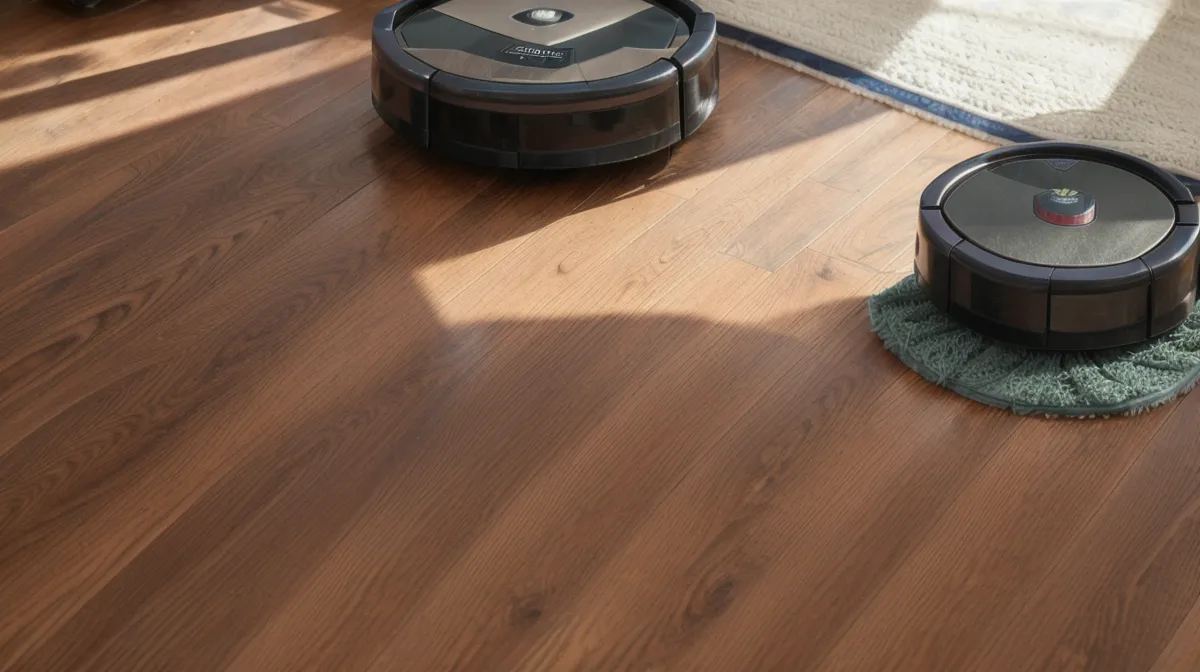
Late one evening, I watched the Roomba j7+ approach a neon-orange rubber chicken Beans left in the middle of the hallway, holding my breath to see if it would initiate a rescue mission or just plow through. It was that specific kind of suburban silence where you can hear the radiator clanking, and then there’s this little robot, humming along, staring down a squeaky toy with its front-facing camera like a standoff in a low-budget western.
Before we dive into the guts of the 'Great Robot Tally' I’ve been keeping since March 2024, a quick heads-up: the links you see here for vacuums or air purifiers are affiliate links. That means I earn a commission if you click through and buy something, at no extra cost to you. I’ve personally lived with these machines in my 1920s bungalow, weighed their dustbins on my kitchen scale, and watched them fail in spectacular ways. I only recommend what I’d tell Sam to buy (and they have high standards for anything that makes noise while we’re watching TV).
The Setup: Why Avoidance Matters in a 1920s Floor Plan
Living in an older home means navigating a floor plan that wasn’t designed for automation. We have narrow hallways, floor transitions that feel like mountain ranges, and a sectional that seems to exist solely to trap electronics. Add in Murph (a husky mix who sheds enough to insulate a small shed) and Beans (a senior beagle with a complicated relationship with the concept of 'outside'), and you have the ultimate stress test. I started my tracking habit after a Roomba i3 met its end on the basement steps, and since then, I’ve been looking for a bot that doesn’t require a pre-clean of the house just to let it run.
The iRobot Roomba j7+ arrived in late October, promising to solve the one thing that keeps most pet owners awake at night: the 'poop-pocalypse.' But for me, the daily friction isn't just about accidents; it’s about the sheer volume of dog chaos. Between the two of them, there is always a frayed rope toy, a plush squirrel, or a stray sock acting as a landmine. Most bots I’ve tested—like the one I wrote about in my tracking notes on robot nav fails—simply treat these as obstacles to be shoved under the radiator.
The Obstacle Gauntlet: Rubber Chickens and Plush Squirrels
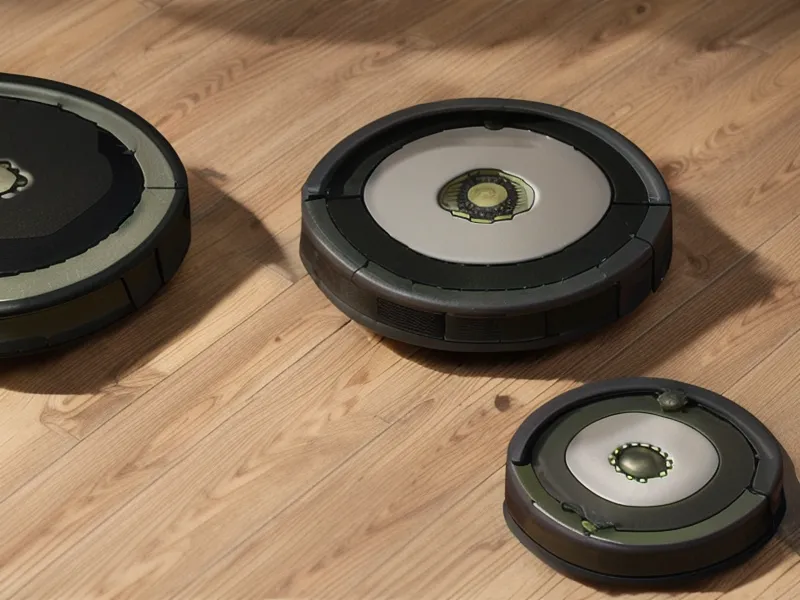
In mid-February, I decided to get scientific about it. I set up a gauntlet. I placed a variety of 'dog chaos' in the bot's path: a frayed rope toy (the kind with the long, stringy ends that love to wrap around brushrolls), a plush squirrel that had already lost its tail, and the high-stakes test—a simulated midnight accident (brown play-dough, because I have limits). Unlike LiDAR-only models, the j7+ uses VSLAM, which means it needs some ambient light to see. If you run it in total darkness, it’s basically flying blind, which is why I keep a few lamps on during its evening runs.
The results were... actually impressive. The bot approached the rope toy, paused, and did a graceful pivot around it. It didn't even graze the squirrel. This is a huge shift from the 'bump-and-run' style of older Roombas. However, I noticed a weird niche issue: pet hair can create static electricity in plastic dustbins. In our dry Indiana winters, the hair clumps together so tightly that the auto-empty base sometimes struggles to pull it all out. I’ve found myself sitting on the kitchen floor weighing dog-hair-filled dustbins on a digital scale, wondering if I’ve reached a new low in my freelance career, only to find the bin was still 30% full after a 'successful' empty.
The Working Breed Problem: When the Dog Stalks the Bot
Here is something you won't find in the marketing materials: high-drive working breeds like Murph change the UI of your home. Murph doesn't just watch the vacuum; he actively stalks it. He will pick up a toy and drop it directly in the path of the moving bot to see how it reacts. Standard avoidance tests fail here because the objects aren't static. The j7+’s sensors are great at identifying a stationary shoe, but when a husky is 'herding' the vacuum into a corner with a tennis ball, the logic starts to fray.
During one run, Murph dropped his heavy rubber bone right as the j7+ was turning. The bot handled the initial avoidance, but because the bone kept moving (thanks to Murph’s nose), the bot eventually gave up on that entire quadrant of the living room. It’s an edge case, sure, but in a two-dog house, edge cases are just 'Tuesday.'
The Mapping Meltdown and the UX Tax
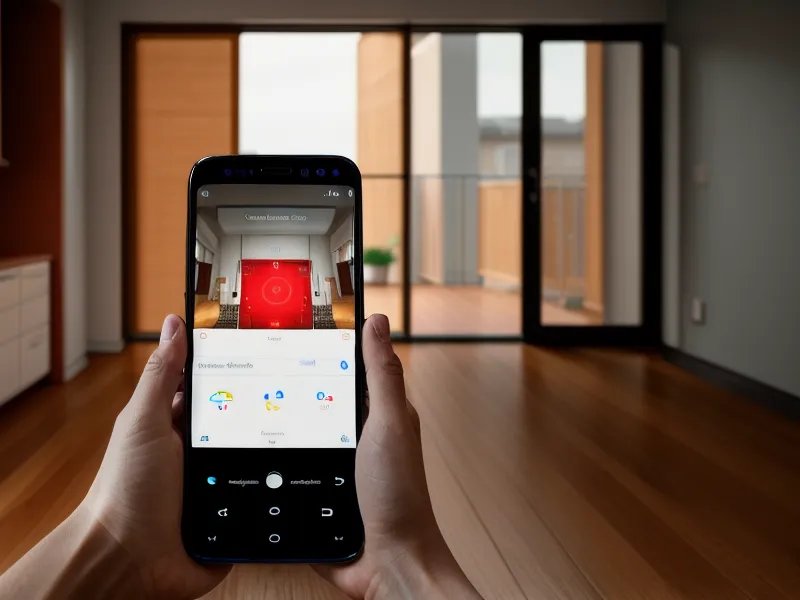
While the hardware smarts are top-tier, the app is where the 'low simmer of fatigue' really kicks in. The iRobot app onboarding feels like it was designed by someone who wants to sell you a subscription first and clean your floors second. The 'subscription nag' for the Premium tier pops up every couple of weeks, even after you’ve declined it twice. It’s the digital equivalent of a salesperson following you around the store asking if you’ve found everything yet.
The real breaking point happened the week after Thanksgiving. I spent forty minutes meticulously drawing a no-go zone around the dogs' heavy ceramic water bowl—a zone that took three tries to get the coordinates right because the map editor is finicky. The next morning, the app 'forgot' the floor plan after a minor Wi-Fi hiccup on our 2.4GHz band. I had to reset the whole thing. I stood there staring at my phone, feeling that specific UX writer's rage where you just want to find the product manager and ask, 'Why is this flow like this?'
Sam walked into the living room to find me literally cheering for the vacuum because it had successfully navigated around a stray sock without eating it. They just gave me this deadpan expression and walked back to the kitchen to make coffee. They don't get the tally. They don't understand the victory of a brushroll that doesn't need a seam ripper to clean.
The Noise Factor: Hardwood vs. Runner Rugs
If you’re used to the quiet hum of something like the PuroAir HEPA 14 Air Purifier (which hits a blissful 28 dB on sleep mode), the Roomba is a wake-up call. On our 1920s hardwoods, the j7+ is loud enough that I have to pause my Zoom calls. But the real kicker is the auto-empty base. It’s a startling, jet-engine roar that kicks in while the rest of the bungalow is silent, followed by the faint, metallic smell of ozone. It lasts for about fifteen seconds, but it’s enough to make Beans bark at the closet every single time.
If you need something that handles hair with a bit more grace and a much better app experience, I’ve been cross-referencing my notes with the LG CordZero Robot. In my latest tracking tally, the LG actually managed a full week without me touching the dustbin, which is a rare feat in this house. It doesn't have the same 'poop promise' as the Roomba, but its mapping didn't melt down when I tried to protect the water bowl.
Final Reflection: Is the j7+ Worth It?
After about a month of daily runs, I’ve reached a conclusion. The Roomba j7+ is a specialized tool. If you have a senior dog like Beans who might have an accident, or a husky like Murph who treats the floor like a debris field, the obstacle avoidance is a genuine lifesaver. You are paying a 'UX tax' in the form of a buggy app and a noisy base, but you’re gaining the peace of mind that you won't come home to a house painted in... well, you know.
If you're looking for pure value and don't care about the poop-avoidance guarantee, the Roborock S8 Pro Ultra is a beast that maps significantly faster, though it costs a premium. But for the average pet owner who just wants the bot to stop eating socks, the j7+ is the one I’d Slack a friend about. Just be prepared to redraw your no-go zones a few times and maybe keep a PuroAir unit nearby to handle the dander the vacuum kicks up into the air.
At the end of the day, I’m still sitting on my kitchen floor with a scale, weighing hair and logging runs. It's not glamorous, but until someone builds a bot that can actually outsmart a bored husky, it's the only way to know which machine is actually earning its keep in this bungalow.