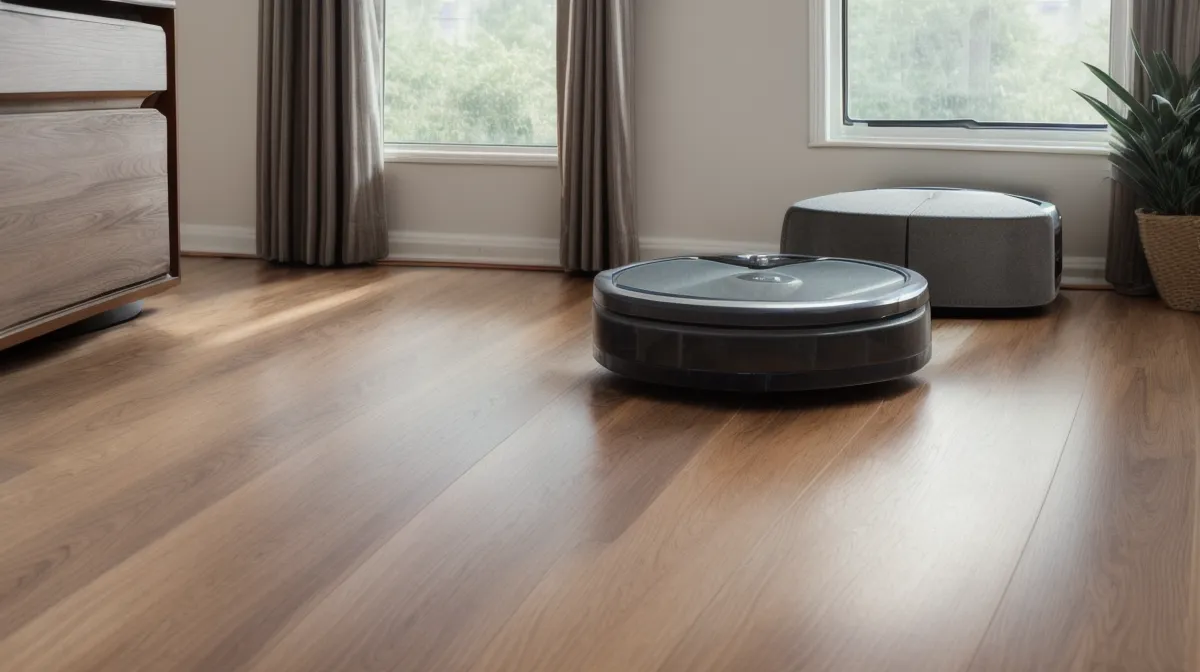
Ten runs. That's roughly how many cycles the LG CordZero Robot's rubber-blade brush roll handles before Murph's undercoat forces a manual unwind, and after running six robot vacuums through this house, ten is the best number I've logged for anything marketed as tangle-free. A standard bristle brush gives up on that same Husky mix's fur long before you'd hit double digits, which is exactly why pet hair solutions built around brush material — not a sticker on the box — are the only ones worth your money for long dog hair.
Quick disclosure up front: the robot vacuum brands and smart-home detectors mentioned below pay me a commission if you click through and buy — the LG, the Roomba, the PuroAir, the X-Sense, and the Roborock all work that way, and it costs you nothing extra. The dustbin tally is from my own kitchen scale, the failures are from my own basement steps, and every recommendation below is what I'd actually tell a friend texting me about a shedding dog.
What 'Tangle-Free' Really Means
No — not entirely, but it means something specific and worth knowing before you buy. Beans, our senior beagle, was never really the problem; his coat is short and stiff and mostly stays in the bin no matter which bot runs the floor. Murph is the actual test. His undercoat is long and fine, and it welds itself into a solid ring around a plain bristle brush within a handful of runs, which is a maintenance chore nobody warns you about at checkout.
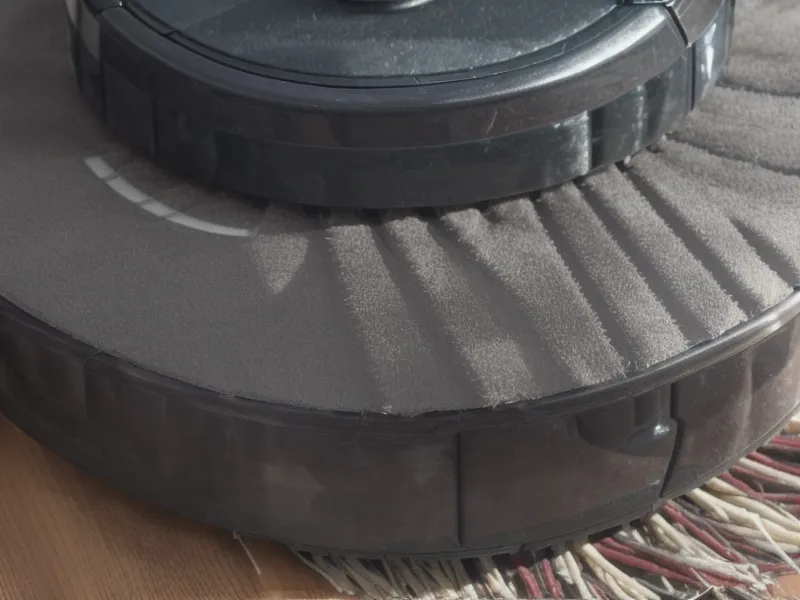
Rubber-blade rollers change that math without erasing maintenance completely; you're trading a weekly scissor session for an occasional rinse-and-wipe instead. Flip a bot over right after it parks and the brush housing still holds a faint warm-plastic heat off the motor; that's when the actual unwinding happens, not in some clean diagram inside an app. My pet hair spreadsheet tracks this by weighing the dustbin on a kitchen scale after every run, and the pattern holds every time I run the numbers: bots with rubber blades come back lighter in the bin and cleaner on the roller than anything running plain bristles.
LG CordZero vs. Rubber-Blade Rivals: The Real Trade-Off
The LG CordZero Robot is the one I'd point a friend to first, and not just for the brush. Its three-stage suction handled the jump from our original hardwood to the high-pile bedroom rug without stalling out, and the auto-empty base went a full stretch without me touching it, the kind of reliability that actually earns the word tangle-free instead of just wearing it as a label. What sold me on the app was what it didn't ask for: no account scavenger hunt, no forced tour, just pairing and a room outline within a couple of minutes. Compare that to one bot still sitting in a closet because its app wanted my email address before it would even show a single room outline on the screen — not after pairing, not after the first run, before I'd seen so much as a floor plan.
Battery life versus suction strength is its own trade-off once you're running back-to-back cycles over a full floor, and that's a different argument than the one about brush tangling, so I'm not collapsing the two here. Mapping accuracy is related but separate too — how many passes a bot needs before it stops treating the basement stairs like a valid destination — and it deserves its own scoring rather than a paragraph buried inside a brush-roll piece.
I still keep the iRobot Roomba j7+ in rotation for one specific reason: its pet-waste avoidance actually worked the one time Beans lost a midnight argument with a treat, and I didn't discover the aftermath smeared across the hallway the next morning. Whether that avoidance holds up across a full season of backyard surprises is a longer test than one incident proves, and it's its own pet-waste-avoidance question rather than a victory lap here. The app nags for its premium subscription often enough that clearing the notification became its own chore, which is the opposite of what tangle-free maintenance is supposed to feel like.
Weighing Dustbin Capacity Against Brush Design
My friend Colette — a UX writer I know who's never short an opinion on dustbin size since her golden retriever Biscotti started blowing coat — texted last week insisting bin capacity matters more than brush material. That's a fair argument, and a different one than the tangle question this piece is answering, so I'll leave the full dustbin-capacity breakdown for its own post rather than squeeze it in sideways. What I can say here: a rubber-blade roller that stays clear longer only helps if the bin behind it can actually hold what makes it through, and the two numbers are worth tracking together even though they're not measuring the same thing.
Beyond Floor Cleaning: Air Quality
Long dog hair isn't just a floor problem — it's airborne the second a vacuum stirs it up, which is why I run a PuroAir HEPA 14 Air Purifier alongside whichever bot is working that day. The gap between a true HEPA 14 filter and the vaguer 'HEPA-type' label on cheaper purifiers is worth its own explainer rather than a footnote here, but the short version is that the grade number actually means something. In sleep mode it reads about 28 decibels on the sound-meter app on my phone, quiet enough that it doesn't set off Murph's something-is-humming anxiety, which matters more in a two-dog house than any spec sheet admits. Where you actually place the unit in a room changes that reading more than the box copy suggests, and I've written up the specifics in my notes on where to place the PuroAir HEPA 14 rather than repeat them here.
Smart-home paranoia extends past the dander, too. We swapped our old detectors for the X-Sense Smart Smoke and CO Detector after enough years of trusting landlord-grade sealed units, and the pairing failed twice before I figured out the units wanted a 2.4GHz signal instead of our router's default band. Once it connected, the notification beat the in-house horn by a few seconds, long enough to kill a false alarm before both dogs lose their minds over burnt toast. Where you actually mount a smart detector in an older two-story place is its own puzzle, entirely separate from anything about brush rolls, and not one I'm solving in a vacuum article.

The Verdict for a Two-Dog House
In my tracking notes on why smart vacuums get stuck, I logged one fix that flat-out didn't work: repositioning a dock into the hallway, on the theory that proximity to the back bedroom would close a coverage gap. It didn't. It just gave Sam something new to trip over on the way to the coffee maker, and the bot still skipped the exact same corner run after run. Coverage gaps are usually a mapping problem, not a dock-placement problem, and no amount of furniture rearranging fixes that.
The Roborock S8 Pro Ultra earned the one verbatim impressed reaction Sam gave any bot in this lineup, because its mop pad lifts itself the moment it senses carpet instead of dragging a wet pad across the rug. Whether a mop pad earns its keep against a vacuum-only run is its own comparison, not the one this article is answering, so that trade-off stays where it belongs, in a different piece. Deep-cleaning a thick carpet is a different job than a daily surface pass, too, and I'm not conflating the two here. How a bot handles Murph's tennis balls without shoving them under the radiator is its own obstacle course, and the clearance under our sectional is a separate navigation problem worth its own write-up rather than a paragraph tacked onto a brush-roll piece.
For a two-dog household dealing with actual long-hair shedding rather than the occasional tumbleweed, brush design is the decision that matters most, and on that specific question the LG CordZero Robot is still the one I'd tell a friend to buy. Rubber blades over bristles, a dustbin that can keep up, and an app that doesn't punish you for wanting a floor plan before you commit — that combination is rare enough that once you find it, you stop auditioning the rest of the field. Sam agrees, mostly because he hasn't had to fish a bot out from under the sectional in longer than either of us can remember.