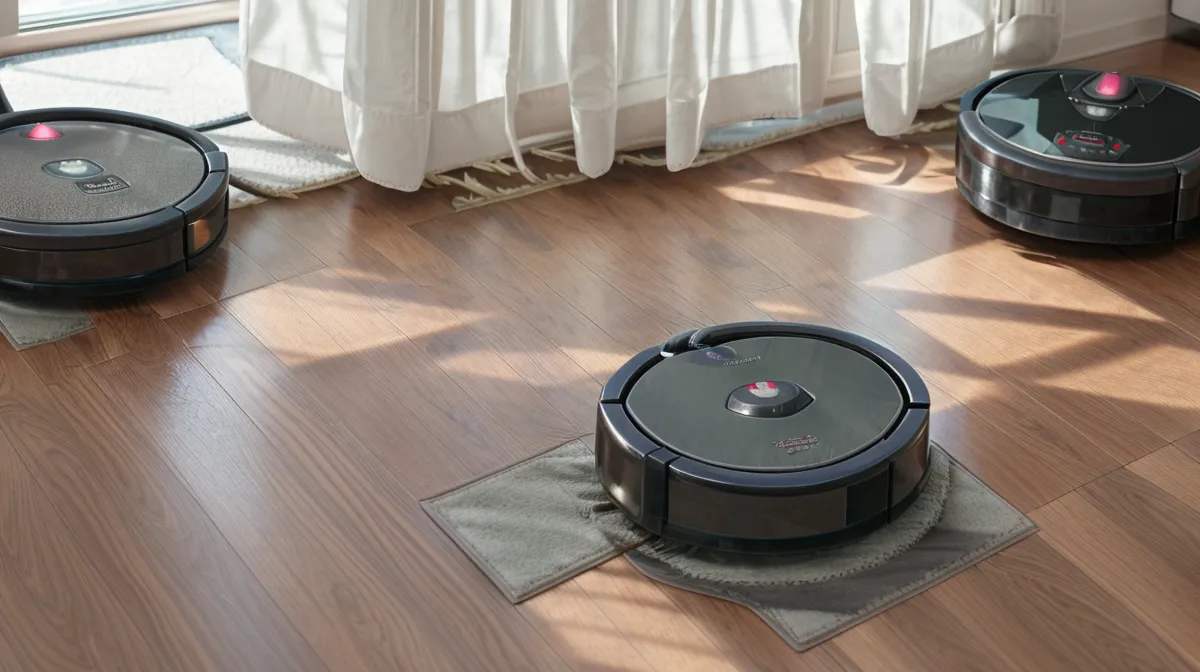
Every bot we've run announces itself with the same short chirp, a bright ping that catches on the oak trim by the front door and rattles for a half second before it fades. A running count I keep on a kitchen scale says roughly a third of those runs still end with the bot stopped somewhere within twenty feet of that same trim, wedged against a threshold, tangled in the hallway runner, or just quietly giving up. That's the honest yield on robot-vacuum hacks in a 1920s craftsman bungalow: not full coverage, just a growing list of exactly where the floor wins. Two years into logging dustbin weights for two shedding rescues, Murph and Beans, pet-hair maintenance in a house this old turns out to be a floor-plan problem before it's a suction problem, which, since I write UX copy for a living, is a framing I probably can't help falling back on.
Where Old Floor Transitions Break Robot Navigation
Each interior doorway in the house sits at a slightly different height than the last, a side effect of a century of settling into the ground, and every bot has to solve that transition using nothing but wheel torque and a downward-facing sensor. The rise is small enough that you'd barely register it through a sock, but it's uneven enough that the same model climbs the kitchen threshold clean on one run and spins its wheels in place on the next, because the angle of approach shifted by an inch. Manufacturers lean hard on LiDAR-guided mapping to solve exactly this kind of problem, and in a newer build with square corners, it probably does. Mapping accuracy gets marketed as a universal fix, but in a bungalow with settled floors, the map is only ever an approximation of a doorway that doesn't hold still the way the software assumes it will.
The low sectional in our living room adds a second version of the same problem. It sits a few inches off the floor at most, which means some bots can't get under it at all, and the ones that can find a way in usually can't find a reliable way back out, its own quiet failure mode that no low-clearance-navigation spec on a box ever prepares you for. Obstacle avoidance gets sold as one feature, but it's really two separate jobs, noticing that a chew toy or a dog bowl exists, and then deciding what to do about it, and most bots we've tracked are only genuinely good at the first one.
What Is the Dustbin Scale Actually Measuring?
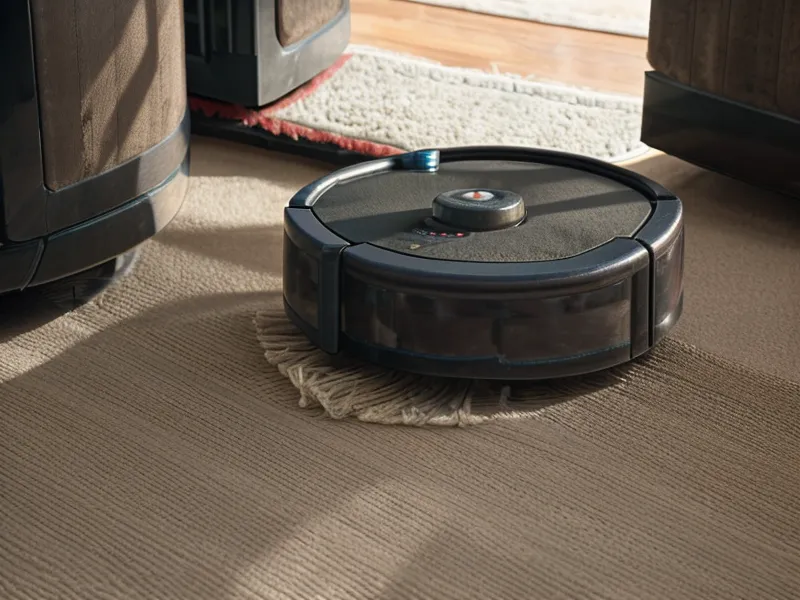
Early on I got tired of guessing whether a 'Max Suction' mode did anything, so I started weighing dustbins on a kitchen scale after every single run: the dustbin tally, now two years deep. The question was never whether a bot picked up dirt; it was whether the loud, careful, mapping-heavy bots actually outperformed the cheap ones that just bounce around the room at random. Noise readings, taken rough with a decibel meter app, sit around 70 on bare hardwood and climb louder crossing the runner rug. Suction-vs-battery is the trade-off nobody puts on the box: the bots that hunt hardest for debris are also the most likely to die mid-run before they finish, and more than once the cleaning report has stopped at seventy-three percent complete, battery flat, bot motionless in the same corner of the hallway, not a different room, not a coincidence, the same stretch of floor every time.
One expensive mapping bot spent twenty minutes negotiating around the dog toy basket and came back with about 12 grams of debris. A cheaper bot that doesn't map anything, that just bounces off furniture and tries a new direction, returned 28 grams cleaning the exact same rooms. Dustbin capacity is the number nobody reads on the box until they already own the bot, and it decides whether you're emptying a 600 milliliter bin every other day or a 300 milliliter one every single run. Brenley Hessler, who trades floor notes with me on r/robotvacuums, runs the same mapping bots on laminate, and her numbers land lower across the board: about the cleanest proof I've got that hardwood with century-old gaps between boards holds more debris than a flatter, newer floor ever will.
The App UX That Makes a Stuck Bot Worse
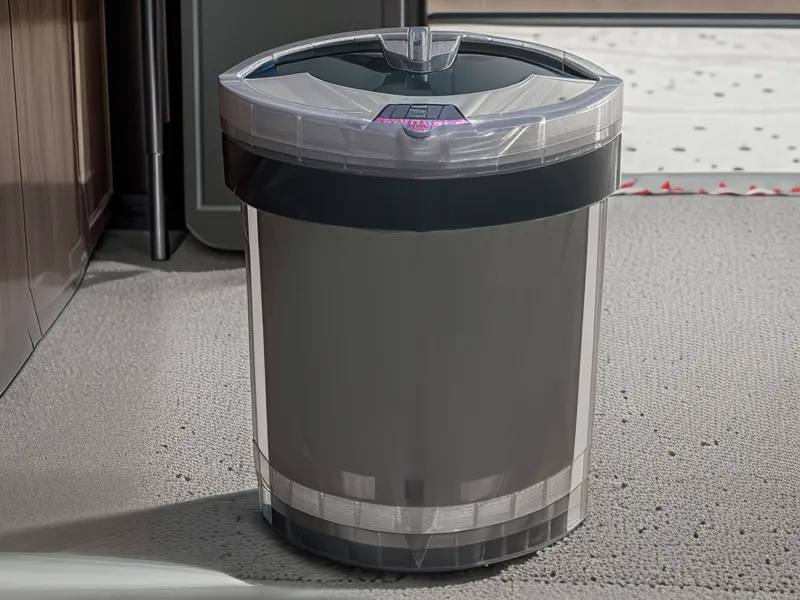
Companion apps are where the real fatigue lives. Onboarding for the mapping bots feels like a checkout flow designed to sell three add-ons before it lets you buy the one thing you came in for, and I've had an app insist the bot was trapped in a dark room while it sat in full Indianapolis sunlight. I drew no-go zones around the basement stairwell and the dog bowls in the ECOVACS app more times than I can count, and more times than I can count, the app quietly reset them on its own, no warning, no prompt, the zone just gone by the next run. That's not a mapping problem. That's a UX failure with a vacuum attached to it.
The most instructive failure wasn't software at all. A distorted map that looked like a Rorschach test sent me checking firmware versions, rebooting the router, re-syncing the account, none of it fixed anything, because the actual cause was a single shed husky whisker draped across the bot's infrared cliff sensor, convincing it the hallway floor ended in a drop. No amount of cloud computing fixes a whisker. Sam watched the app reset that same no-go zone for the third night running and said only, "Tell me when it actually holds," which is about the size of it.
Low-Tech Fixes That Beat Firmware Updates
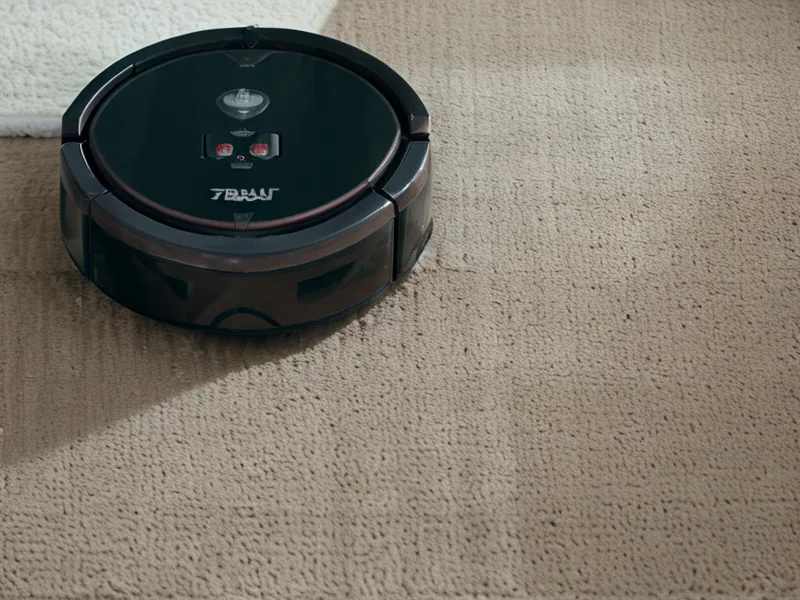
A few foam strips and a strip of Command tape on the worst hallway transition have done more for actual floor cleanliness than any firmware update we've installed. High-efficiency filtration doesn't matter if the bot never reaches the room where the dust lives in the first place: the filter inside most of these is rated HEPA, which sounds like one fixed standard until you start comparing grades between models, and that comparison is a rabbit hole for a different piece entirely.
None of this touches carpet deep-cleaning, because we don't have carpet, just the one runner in the hallway; a robot vacuum was never going to replace an actual deep clean on rugs, that's a different appliance and a different job entirely. We don't run a mopping bot either; hardwood and two dogs make the mop-vs-vacuum decision its own trade-off worth making on purpose instead of by default. Pet-waste avoidance is one feature I've never had to test personally, since Murph and Beans do their business outside, but readers have written in about bots that handled that particular obstacle badly.
Old houses carry their own placement puzzles beyond the vacuum, too. Our X-Sense detector pinged once at 3 a.m. for a candle that wasn't even lit, which taught me that smoke and CO detector placement in a century-old floor plan is its own separate project. Where you'd put a companion air purifier matters just as much, and in a house with this many doorways and room transitions, that placement question deserves more thought than most people give the vacuum question.
Pick Your Bot by the Floor, Not the Spec Sheet
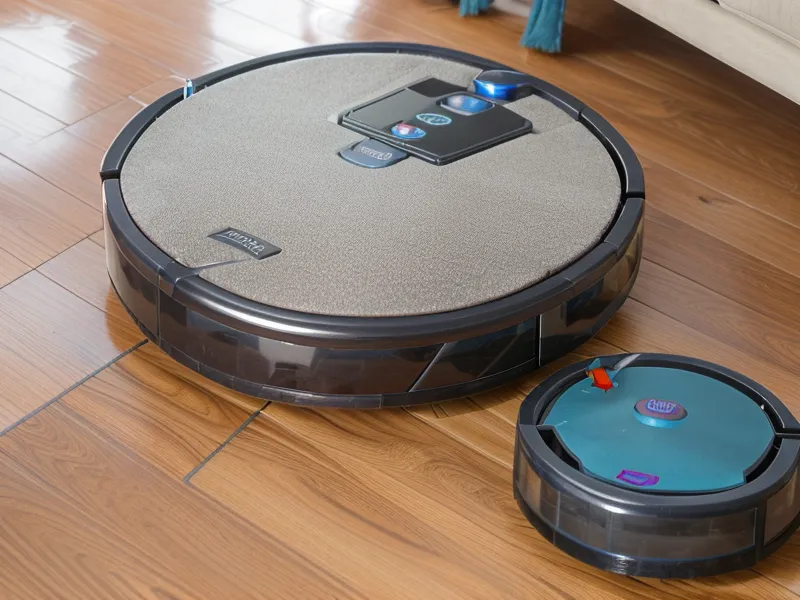
A high-end mapping bot is, in a cluttered old house, sometimes the wrong purchase entirely. A bot that doesn't know exactly where it is doesn't get confused when a chair moves or a dog drops a toy in its path, it just hits the obstacle and tries a different direction, the same low-tech logic that's kept a bot running here since a Roomba i3 died on our basement steps and started this whole tracking habit in the first place. If your floor plan involves dog toys, rug fringe, and doorways framed before drywall was standard, that dumb persistence can outperform a bot that stops to reconsider its map every time something looks unfamiliar.
I got into more of this trade-off in the great robot vacuum faceoff, where the pattern held again: paying more bought a machine that expected more babysitting, not less. Before spending real money on a bot promising 'AI obstacle avoidance,' the actual decision rule is simple: measure your worst threshold, note where your low furniture sits, and count how often you'd need to redraw a boundary the app might not keep anyway. My 5-question checklist for high-end vacuums walks through exactly that before you commit to a model your floor plan can't actually support.