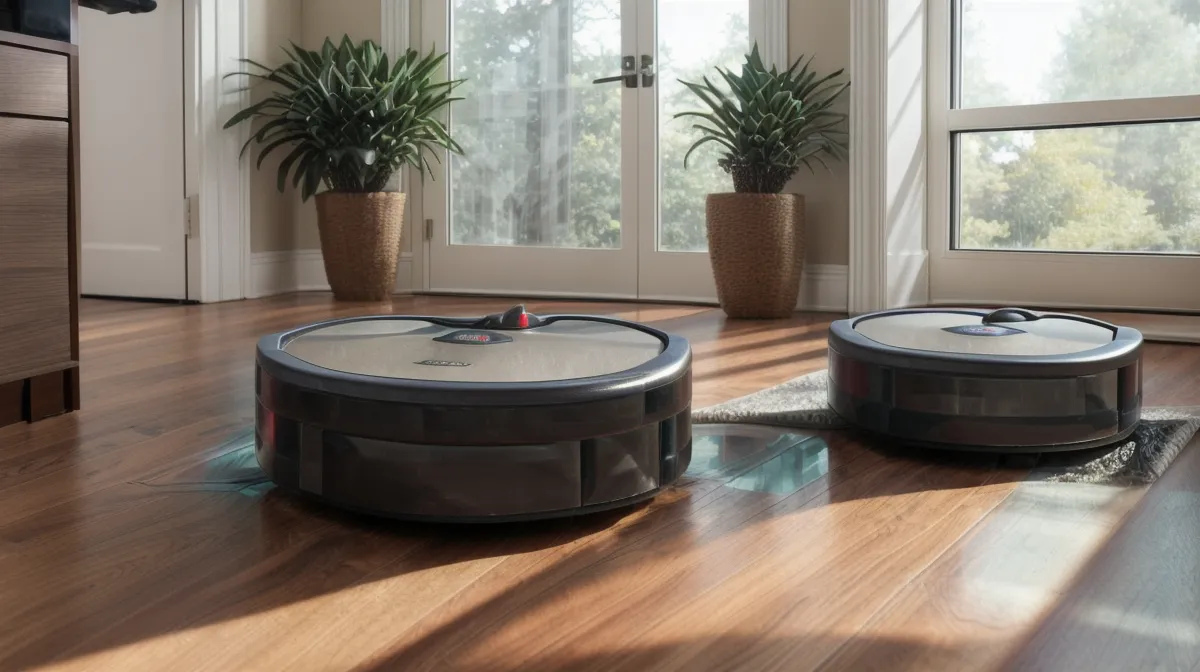
Week seven of the dustbin tally, the dock for my iRobot Roomba j7+ let out its usual error beep — the little red light flashing at the base like it always does when something's jammed in the bin — and Beans didn't even lift her head from the kitchen floor. Seven weeks earlier, that same beep would've had both dogs and Sam checking the hallway to see what died. By then it had become background noise, filed somewhere between the dishwasher cycle and the furnace kicking on. That's become the actual measure of robot vacuum reliability I care about now: not the spec sheet, but whether the failure noises still register as news.
Quick disclosure before the bin drama: the robot vacuum brands and smart-home detectors linked in this piece pay me a commission if you buy through one of these links, whether that's a Roomba, a Roborock, or something else in the tally. None of that changes what I write here — the numbers come from my own kitchen scale, the failures come from my own basement stairs, and the recommendations are what I'd actually tell Sam or a friend texting me at 11pm asking which one to buy, at no extra cost to you, same deal as every review on this site, this Roomba j7+ review included.
What Started This Whole Tally? A Dead Roomba on the Basement Stairs
Back in March 2024, our old Roomba i3 met its end at the bottom of the basement stairs, the kind of dumb, avoidable death that turns a mild inconvenience into an actual project. Since then I've logged every run, every jam, every "please clear my path" alert, and yes, I weigh the dustbins on a kitchen scale, because I got tired of trusting a marketing claim about suction that nobody could verify from the box.
Murph and Beans make the floor a genuine battlefield — Murph blows his husky undercoat hard enough, twice a year, to overwhelm a standard half-liter bin in a single lap around the living room, and Beans just leaves a steady trail of beagle crumbs behind her all day. If you want the full breakdown, that's what the Two Dogs and a Bungalow Stress Test is for — most of these bots are engineered for a tidy condo, not a hundred-year-old floor plan with two shedding rescues in it.
Pet Hair Cleanup and the Sound the Dock Makes When It's Working
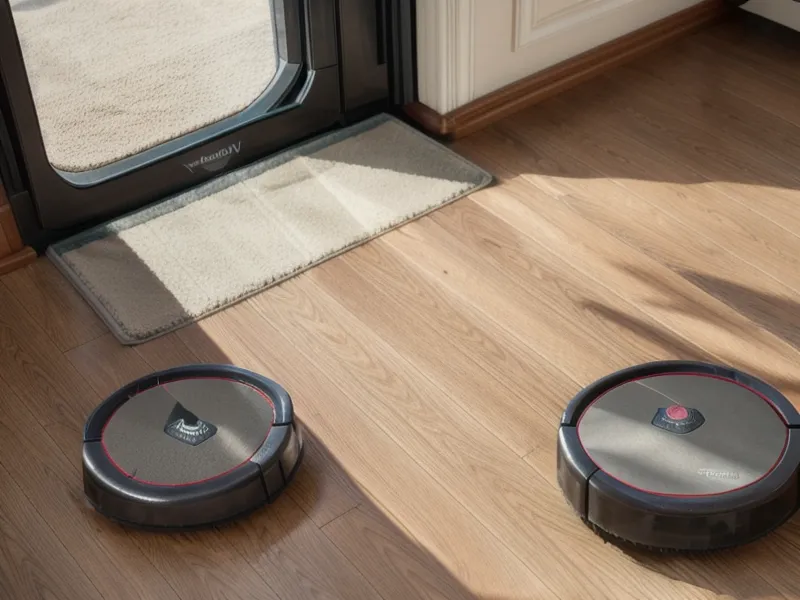
The j7+ has a sound signature you learn fast: a sharp thwack-shush when it docks, the base unit yanking everything out of the bot's internal bin in one aggressive pull. Loud enough that Beans retreats to the kitchen every time, but efficient, and weirdly odor-free compared to what I expected going in. Of the five self-emptying bases in the tally, this one seals the tightest; no dander mist drifting back into the hallway air after a cycle.
To keep the air breathable once shedding season really gets going, I run a PuroAir HEPA 14 Air Purifier a few feet from the dock. It's quiet enough in sleep mode — a steady 28 dB on the iPhone NIOSH SLM app, measured a few feet away — that it doesn't bleed into my Slack calls, which is more than I can say for the Roomba dock mid-cycle. There's more on that setup in my notes on managing senior dog dander here.
What the Self-Empty Bin Actually Handles Without Jamming
The real test for the self-empty bin isn't a single dramatic night, it's the cumulative husky undercoat load across a full week, and on that front it hasn't jammed on me once — no matter how much fur gets pulled in, the seal holds and the base clears it in one pull. It did handle a genuine pet-waste scare exactly once too, avoiding a mess after Beans got into something she shouldn't have overnight, camera and all, which is a nice bonus but not really what I'm testing it for here. That kind of SLAM tracking is part of why I still trust iRobot's hardware, even when the app makes me want to scream. The Roborock S8 Pro Ultra has fancier mapping. Sam was genuinely impressed the first time he watched its mop lift itself over the bedroom rug, "okay, that one's actually smart," he said, which is not a sentence he says about smart-home gear, but for pure bin reliability against dog hair specifically, the j7+ is still what I reach for.
Redrawing the Same No-Go Zone, Again
As a UX writer by trade, the iRobot app makes me want to write a very long, very annoyed message to whoever owns that product roadmap. Onboarding is fine, almost pleasant, kind of a checkout-flow-at-a-beauty-store energy. Mapping persistence is where it falls apart. I moved the dock two inches once, just enough to clear a floor vent, and the bot lost the plot completely. Sam was the one who noticed, actually, he'd wandered into the kitchen for coffee and clocked it. "It's been doing that for twenty minutes," he said, watching the bot circle the same table leg for the fourth or fifth time.
Every time the app re-saves its understanding of the room, which happens more than it should, I have to redraw the no-go zone around the dogs' water bowls from scratch. It's a classic case of software trying to be smarter than it is and just becoming a chore instead. Brenley Hessler, a regular in the r/robotvacuums thread where I post my numbers, actually flagged a companion-app update that wiped everyone's scheduled cleaning maps before I'd even noticed mine was gone. I ran into a related mess testing the ECOVACS Deebot X2 Omni. I'd draw a no-go zone around the water bowls, the app would confirm it saved, and then the next map update would silently reset it, no warning, no changelog. If you want something that just stays connected without the constant re-litigation, my X-Sense Smart Smoke and CO Detector has been the opposite experience: a rough pairing over 2.4GHz at setup, then nothing, no drama, just a ping if something burns.
The Subscription Hiding Inside a "One-Time" Purchase
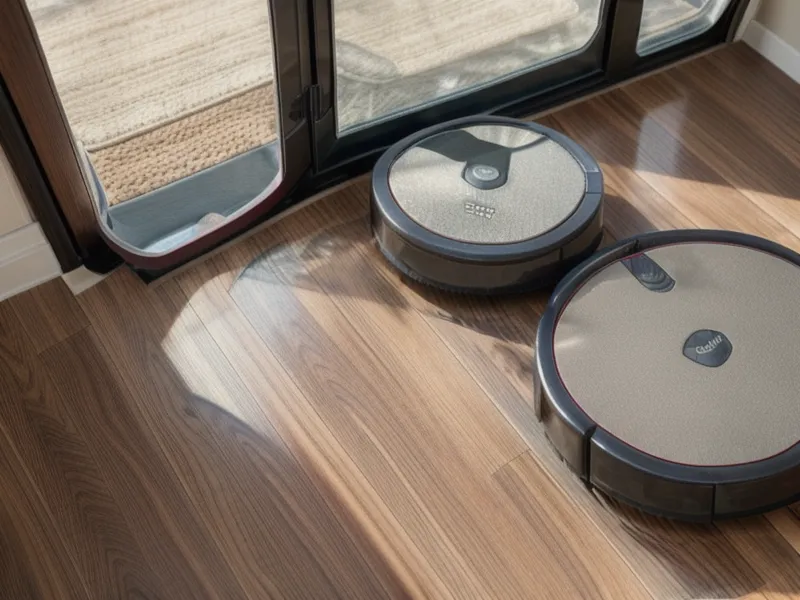
Here's the part the glossy review sites skip: the j7+ is basically a subscription wearing a one-time-purchase costume. The self-emptying bin itself rarely jams, even against Murph's tumbleweeds of husky undercoat, but you're locked into proprietary disposal bags to make that work. Across the run from late autumn through this summer, I've gone through a lot of them. Generic replacements exist and they're cheaper, but they tend to leak dust at the seams, which defeats the entire point of paying for a sealed system.
The LG CordZero Robot is the strongest argument for leaving the Roomba ecosystem entirely. Its auto-empty base ran a full week in our house without a single manual intervention, the bin itself runs noticeably larger than the Roomba's, and the app onboarding was the least painful of everything in the tally, no account scavenger hunt before it'll even show you a room map. Still, the Roomba wins the messy-dog test specifically, because its dual rubber brushes resist hair-wrap in a way the LG's traditional brushroll doesn't; that one still needs unwinding by hand every ten runs or so.
How It Handles Husky Fur, Beagle Crumbs, and a Hundred-Year-Old Floor
On the husky-shedding front, the j7+ has handled a full coat blow without the base station choking, and the suction pulls hair out of the long rug runner down our hallway better than I expected going in. That runner has become the real stress test, more than the open hardwood ever was. Beans' contribution is a steady scatter of crumbs rather than a seasonal event, and the j7+ clears something like 95% of it on the first pass, which is the number that actually matters more than any marketing copy about suction.
Old floor transitions are where things get physical: our thresholds run high in a few doorways, and the j7+ climbs them more reliably than the i3 ever did, though it still occasionally gets high-centered on the marble lip into the bathroom. The sectional in the living room is its other nemesis. There's only a few inches of clearance underneath, and the bot either skips that whole strip of floor or gets partway under and has to reverse out, sensors chirping the entire time. Maintenance runs about ten minutes a week: cutting wrapped hair off the side brush, wiping down the cliff sensors so it doesn't wander around acting like it's lost in fog.
So, Should You Buy the Roomba j7+ for Smart Home Maintenance?
If your single biggest fear is a dog-and-rug catastrophe while you're out of the house, the iRobot Roomba j7+ is still the one I'd point you toward. Obstacle avoidance is the best in the tally, and the self-empty bin is the most reliable performer I've logged against high-volume pet hair. It's not the sharpest mapper, and the recurring bag cost is a real line item, not a footnote, but it's the bot I trust most on a day when nobody's home to babysit it.
For anyone weighing deep-carpet cleaning and an actual working mop over pure mess-avoidance, the Roborock S8 Pro Ultra makes more sense, budget allowing. Mop versus vacuum is a genuinely different bet depending on what your floors need. For my hallway runner and my two shedding rescues, the j7+ stays docked here for now, mostly because I don't want to redraw one more app's no-go zones this month. The full numbers are in my Two Dogs and a Bungalow comparison if you want the suction-versus-battery breakdown too.