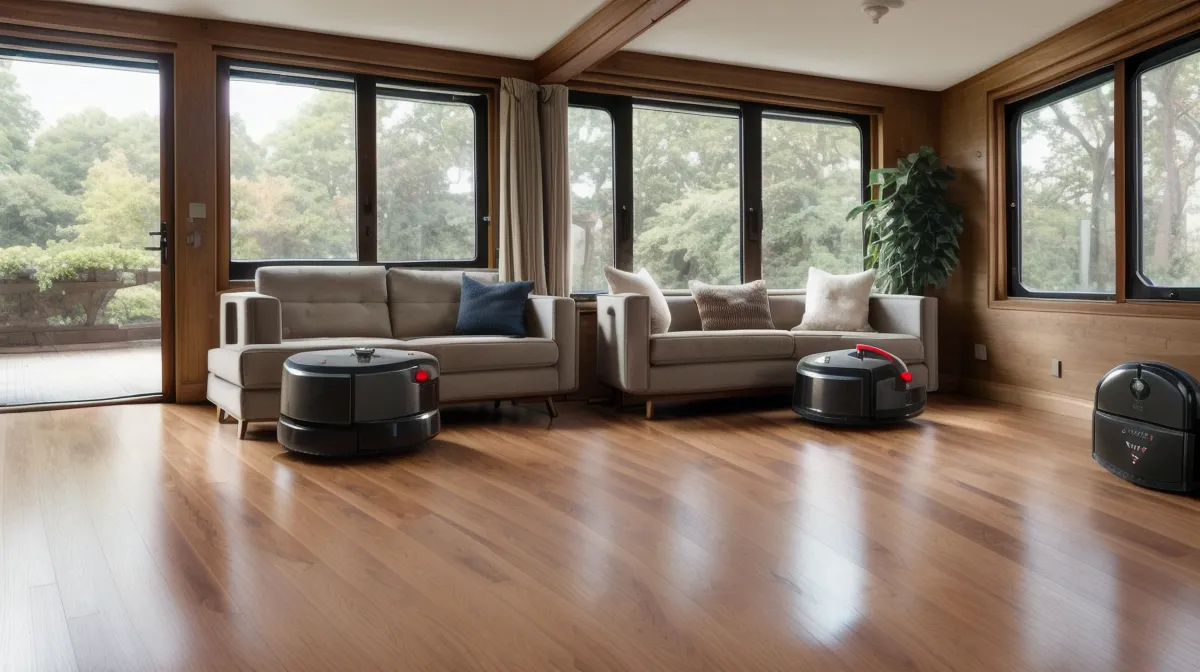
I reached a point where I stopped rearranging my furniture and admitted the machine should be the one adjusting to you. My answer, after enough robot-vacuum setup attempts to fill a spreadsheet, is that staging the floor for a first mapping run isn't worth the effort: let the map fail, then build the setup around the failure instead of the fantasy the app hands back an hour later. That's the short version for anyone weighing mapping tips against a stack of pet-hair-management promises and smart-home-basics tutorials written for houses with square corners and no dog in them.
Two approaches get pitched to new owners of a Craftsman bungalow or any house of that vintage, and they produce very different starting points on the same floor plan. One says tidy the space, give the sensors a clean read, and trust the map that comes back. The other says leave everything alone, let the bot wander into every dead end the house has to offer, and treat the failures as the real map. Only one of those holds up past the first few runs in a house built long before floor plans assumed a robot would ever cross them.
The Two Approaches to Setting Up a Robot Vacuum's First Map
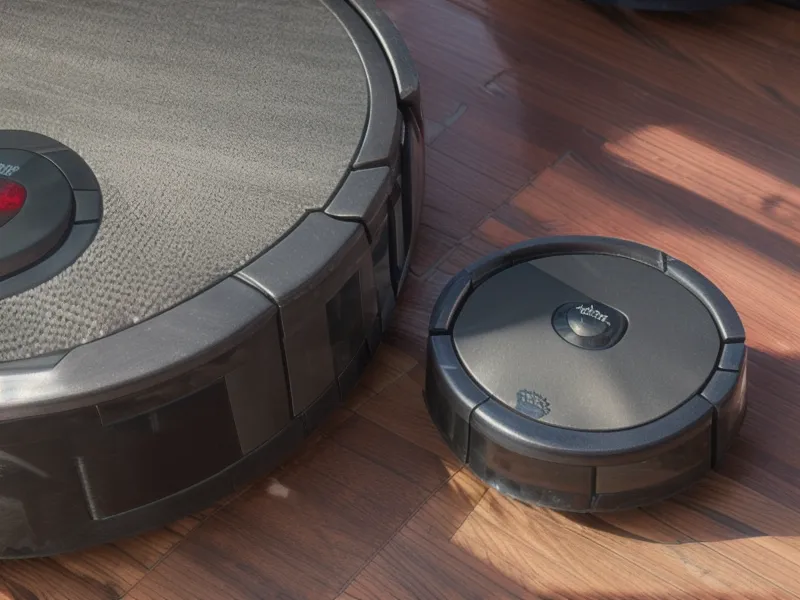
The staged version is the one every companion app quietly assumes you'll run. Clear the floor, square up the chairs, let the unit finish its exploration pass without incident, and the map that comes back looks confident. Clean lines, defined room edges, no hesitation marks anywhere. Older houses don't hold still long enough for that confidence to mean much. Cast-iron floor registers sit proud of the boards, threshold strips separate nearly every room, and the obstacle-climb limit on most units, somewhere around 20mm, is a hard ceiling in a house where a single transition strip can be taller than that. Exactly how a unit behaves near reflective chair legs, or whether its cliff sensors panic at a shadow instead of a real drop, is its own rabbit hole. That specific failure mode gets the full treatment in my notes on why 'smart' vacuums still get stuck in old houses, so I'll leave the mechanics there. Stage the floor once and the map is already wrong by the second run.
Staging the House Buys You Nothing
Murph's shedding season is what pushed me to test the staged approach hardest. Doubling the cleaning frequency seemed like the obvious fix: run the bot twice a day instead of once, on the theory that more passes would out-pace the fur before the sensors had to deal with any of it. The brush roll gave out in six weeks. Two runs a day wear through a roller far faster than the fur accumulates on its own, and the map didn't get any smarter for the extra passes, it just got tired hardware underneath it. If tangling and wear turn out to be the actual failure mode rather than mapping accuracy, that's a different fix entirely. The best robot vacuum with a tangle-free brush solves that problem directly instead of asking a unit to run twice as often.
What Does a Failed Run Actually Teach You?

Letting the first run fail sounds passive, but it isn't. It means watching where the bot actually gives up, not where you assumed it would. Beans slept straight through the night the dock's light switched to a steady red blink and the error chime cycled twice before anyone got up to check on it. That's the moment the failure state stopped being an event and turned into background noise, and it's what convinced me the error log is more honest than the "Exploration Complete" banner in the app ever is. A map built from that kind of failure holds up in a way a staged one doesn't, because it already accounts for the parts of the house that were always going to cause trouble.
Read the Failure Zones Before You Draw Boundaries
Yusuf, my neighbor across the alley, is the type who pulls up a manufacturer's spec sheet before he'll trust an ad's claims, and when I mentioned letting a bot fail on purpose instead of tidying up for it, he wanted the exact obstacle-climb number in millimeters rather than my general read on it. That instinct is closer to right than staging ever gets you. The failure zones a house actually has matter more than any spec sheet number, and the only way to find them is to watch a run go wrong instead of preventing it.
Not every obstacle belongs to mapping in the first place, and separating the categories matters. A toy left in the wrong spot is an obstacle-avoidance problem, not a navigation one, and no amount of pre-run tidying fixes a unit that generally struggles to recognize objects. Low-clearance furniture is its own category too: some units are simply too tall to attempt a given gap, which is a hardware ceiling no amount of remapping solves. Grouping all of that under "the map is bad" is how people end up blaming the wrong feature and buying a second unit with the exact same limitation.
The Trade-Off, Plainly
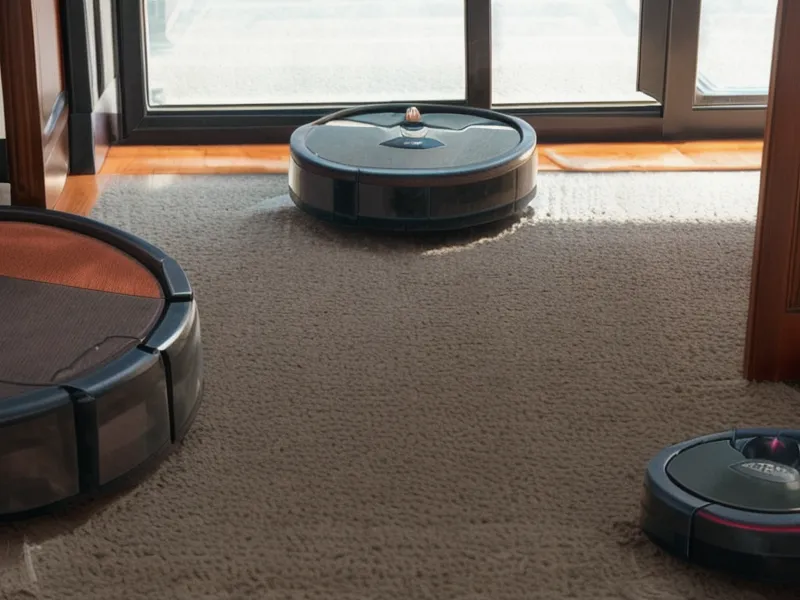
Stage the house when a fast first read matters more than accuracy and redrawing the no-go zones every week or two doesn't bother you, because a staged map is quick and clean but stops matching the house within days. Skip the staging when boundaries that actually hold matter more, because a failed first run costs a morning of a bot bumping into furniture, not a month of resetting virtual walls that never fit the real traffic pattern. The dustbin tally backs this up in a roundabout way: runs mapped from a failed version consistently pick up more debris in one pass than runs cleaning around a staged map's blind spots, since the sensors have stopped guessing by then.
None of this settles the suction-versus-battery trade-off, which is its own argument entirely and has nothing to do with how a unit maps a room. It doesn't settle the mop-versus-vacuum question either. That trade-off gets the full walkthrough in my manual for pet owners who are sick of mopping, since a hard floor that needs real mopping isn't solved by a unit that's still negotiating a threshold strip. Mapping accuracy is the narrow question this piece answers, and the answer holds regardless of which unit ends up working the hallway: let the first run lie to you honestly, then fix the boundaries around what actually happened instead of what the app promised.