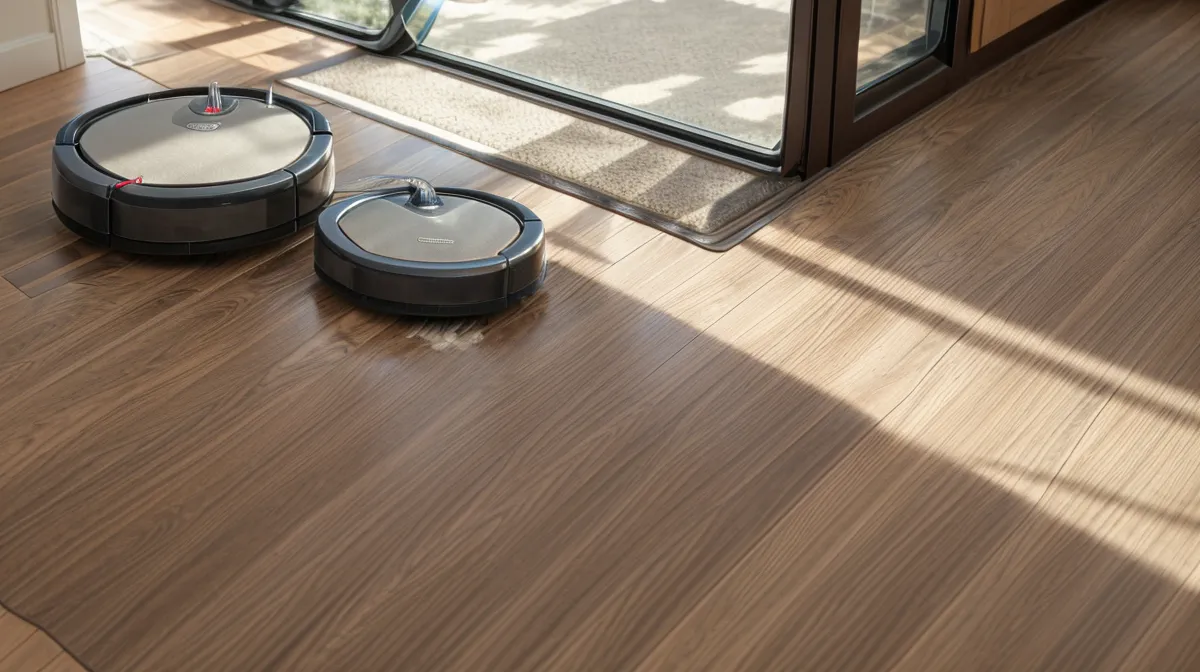
A robot vacuum's brush roll can look completely clean and still be the exact reason the whole run failed. That's the short version of two years spent writing robot vacuum reviews and running air purifiers through this bungalow with Murph and Beans, and it's the answer to the question other husky owners ask me most: does 'tangle-free' actually mean tangle-free? No. Everything below is what people ask once I say that out loud — about pet hair cleaning, about the apps, about the smart home maintenance nobody mentions on the box.
The Dustbin and Filter Questions I Get Asked Right After
People always ask about dustbin size next, and the internal capacity is its own comparison across bots that I've tracked separately rather than repeating the full breakdown here — the short version is it fills faster than any spec sheet suggests once real shedding starts. Filter grade gets the same treatment: HEPA filtration matters for trapping dander, and which grade is worth paying for is its own rabbit hole, but neither one is really what decides whether the fur ends up in the bin or wound around an axle. That part comes down entirely to the brush roll.
Does 'Tangle-Free' Actually Mean No Tangles?
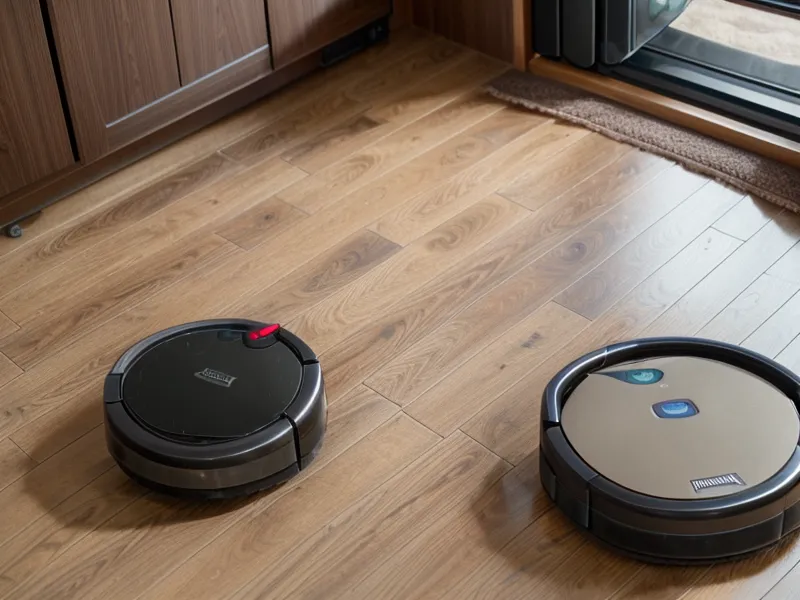
Short answer: no, it means the tangle moves. I've pulled apart enough 'tangle-free' rubber rollers now to trust the pattern completely — the roller itself stays visibly clear because the bristles that used to catch hair are gone, and the hair has to go somewhere, so it goes straight to the side bearings instead. One afternoon I flipped a bot over expecting a clean roller and got exactly that: smooth, no visible fur, until I popped the end cap off and found a solid felted ring wound so tight around the axle it had started to friction-melt the plastic housing. That's not a tangle-free brush roll. That's a brush roll with the tangle relocated somewhere you can't see without a screwdriver, or in my case, a seam ripper pulled straight out of my sewing kit, because it turned out to be the only thing in the house sharp enough to cut the ring free without gouging the casing.
Sam watched me do this yet again and finally said, 'At what point does the robot start paying rent.' Fair. Beans does his sharp little clack-clack across the floor chasing the thing while it runs, which is its own test of whether a bot's obstacle sensors register a slow-moving dog differently than a stray chew toy — a comparison I'll leave for a different post, since camera-based obstacle avoidance is a whole separate question from whether the roller survives the fur once the bot's already past the toy. The one moment that gets Beans's ears up every time isn't the vacuuming at all; it's the dock's self-empty cycle kicking on late in the evening, a short mechanical inhale that cuts through however quiet the house has gotten by then.
Why Pet Hair Cleaning Comes Down to the Roller, Not the Suction Rating
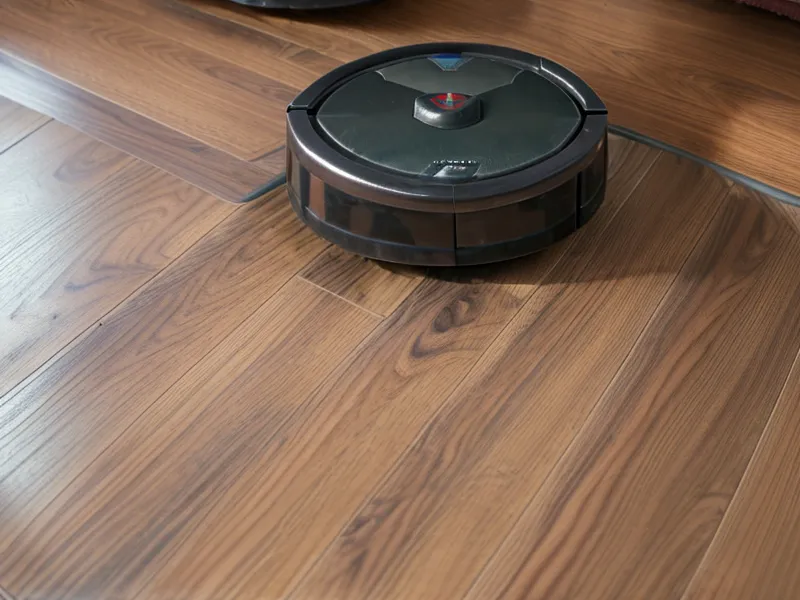
Most buying guides rank robot vacuums by suction power, measured in pascals, as if that number alone decides whether pet hair cleaning actually works. It doesn't, not once the bearings are involved. A motor pulling hard through a choked intake is just spinning and burning battery — the suction rating on the box assumes clean air paths that stop being true within the first few runs in a house with two shedding dogs. What actually predicts whether a bot keeps up is how easily the side caps pop off the brush roll; if clearing it needs a screwdriver, I've stopped trusting that bot no matter what the spec sheet promises. Suction versus battery life is its own trade-off worth comparing on paper, but a tangled brush roll drags both numbers down before either one becomes the thing that decides your day.
A Cheap Robot Vacuum Is Only Worth It Without Rugs or Pets
Once, chasing a deal, I bought the cheapest robot vacuum I could justify, priced low enough that I wouldn't feel bad if it died within a month. It lasted one run. We've got a rug with IKEA fringe, and that bot's brush roll wound itself into the fringe so completely in a single pass that I had to cut sections of the trim just to get it free. Nothing about that roller design accounted for real fringe, real fur, or a real household. It was built for a demo carpet in a bright warehouse somewhere, not this floor. So: a bargain robot vacuum can work fine for someone with hardwood, no rugs, and no pets. With a husky shedding into every corner and a rug that actually has fringe, roller design matters more than price, and the cheap ones stay cheap because that's the part that got cut first.
Some of the pricier bots throw in extras that have nothing to do with brush rolls at all: a mop attachment, a sensor that steers around pet waste in the yard. Whether a mopping hybrid is worth the trade-off is a different comparison than the one I'm making here, and it's not one I'd trust to solve fur specifically, since wet fur just smears. Poop-avoidance cameras matter enormously for some households and not at all for mine, since Murph and Beans do their business outside the fenced yard, so that feature has never once factored into which bot survives here.
Why Does the Bot Keep Losing the Dock in an Old House?
Old plaster walls are brutal on the 2.4GHz signal these bots rely on for their maps, and more than one has simply frozen mid-hallway, signal gone, with no idea how to find its way back to the dock. Mapping accuracy under ideal conditions is a whole separate comparison — I've run that test with cleaner walls elsewhere — but in a house like this, the map is only as good as the weakest wall between the bot and the router. Getting a bot under low furniture is a related but different problem again, more about clearance sensors than Wi-Fi signal, and I keep that test separate too.
The companion apps make all of this worse, something I've tracked in detail in the tracking tally. One update wiped a fully-trained floor map because the app decided three days without a cloud sync meant starting over, and I spent an evening watching the bot relearn a living room it had already mapped twice. I sent a screenshot of the onboarding flow — the account creation, the location-permission prompt, the dashboard full of toggles with half-translated labels — to Colette, a UX colleague I trade app complaints with, and she said she couldn't identify the primary button on the first screen without hovering over all four of them. That's not a robot vacuum problem. That's a product decision somebody signed off on.
The Detector, the Purifier, and Everything Else People Ask About
Detector placement is its own can of worms, and not just for vacuums — ours once decided a completely unlit candle sitting on a shelf was a fire at three in the morning, chirping until Sam stumbled downstairs to check it. Where you mount a detector, and where you place an air purifier in the same room, both change what the device actually catches or notices, and neither question has anything to do with brush rolls, so I answer them in their own posts instead of folding them in here. Deep carpet cleaning is a similar tangent — a robot vacuum was never built to shampoo anything, no matter how well the roller performs, and that's a different job entirely.
Stop Trusting the Suction Number and Start Checking the Bearings
If there's one thing worth checking before buying anything marketed as tangle-free, it's whether the end caps on the brush roll come off by hand. Pop the cap, look at the bearing, and if there's already a ring forming after the demo run in the store, that's the ring you'll be cutting out with a seam ripper every few weeks at home. The suction rating, the app rating, the box copy about anti-tangle technology — none of it predicts that one detail, and that one detail is the entire difference between a bot that keeps up with a husky and one that just moves the mess to a spot you can't see. I've got a longer breakdown of how different models handle an older floor plan specifically in the 'Two Dogs and a Bungalow' stress test, if the bearings check out and you want the rest of the picture.