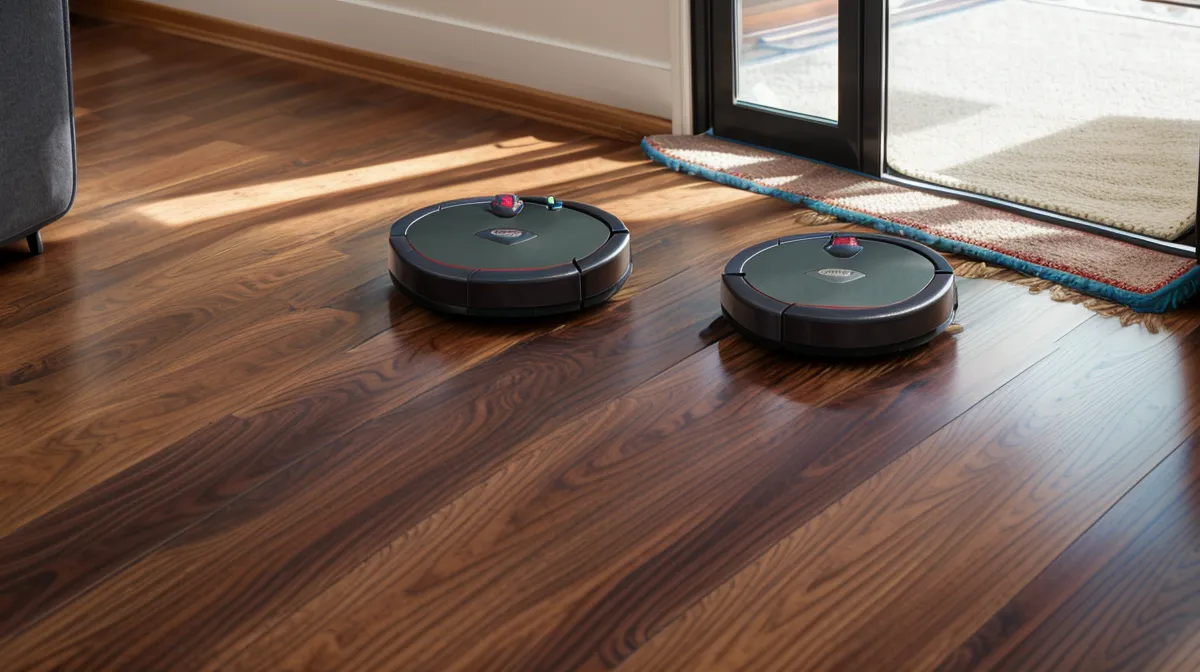
Late one evening, I found the robot spinning its wheels on a mahogany transition strip like a turtle on its back, the red 'stuck' light mocking my attempt at a clean floor. This wasn't a cheap unit. This was the one that promised 'AI-driven obstacle avoidance,' yet it was currently losing a fight against a piece of wood that has been in this house since 1924. Sam walked by, looked at the frantic blinking, and just said, 'I think it’s having a panic attack.' He’s not wrong. Our bungalow is basically the final boss of smart-home environments, and after ten months of tracking every failed run in my spreadsheet, I’ve realized that the smarter these things get, the dumber they act in a house with original trim and two rescue dogs.
The UX Writer’s Guide to Floor-Plan Friction
I started the spreadsheet back in March 2024 after my old Roomba i3 met its end on the basement steps. That bot was simple. It had a cliff sensor that usually worked, but it finally missed a step and committed mechanical suicide. At the time, I was annoyed because its 0.4 liters bin capacity meant I was emptying it three times a day anyway. But after testing a string of high-end replacements, I’m starting to miss its blunt-force trauma approach to cleaning. Using my UX brain on a floor plan is second nature—I look for friction, dead ends, and confusing 'onboarding' for the bot. My bungalow is a series of small, walled-off rooms connected by thick mahogany transition strips that produce a specific, high-pitched plastic 'clack' every time a robot hits them. If I hear that sound more than four times in a minute, I know the bot is stuck in a logic loop.
The problem is that most modern LiDAR systems are designed for open-concept condos in Seattle, not drafty Indiana homes with 1920s architecture. When the bot encounters our sectional, it doesn't just clean under it; it treats the dark void beneath the sofa like a portal to another dimension. I’ve logged runs where a five-hundred-dollar machine spent twenty minutes trying to figure out if a stray dog toy was a pile of 'pet waste' or a structural pillar. Meanwhile, Murph is sitting on the rug, shedding enough 'husky glitter' to build a third dog, and the bot is too busy overthinking the furniture legs to actually vacuum.
Husky Glitter and the Senior Beagle Factor
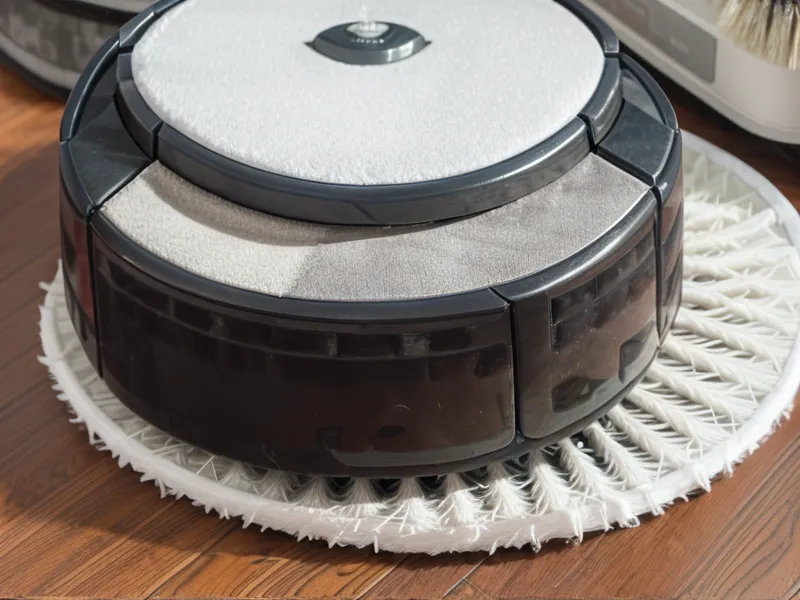
Murph is a husky mix, which means we live through a standard Siberian Husky shedding cycle twice a year—essentially a four-month blizzard of white fluff. Then there’s Beans. He’s a senior beagle, somewhere in the 20 to 30 pounds range, and he has reached an age where he simply refuses to move for technology. If the robot bumps into him, he just sighs. This creates a massive data problem for the bots. One rainy afternoon in November, I watched a high-end unit approach Beans while he was napping. The bot’s 'AI vision' identified him as a permanent obstacle, mapped him as a wall, and then never returned to clean that four-square-foot patch of floor for the rest of the week.
The apps are even worse. The onboarding for the latest 'flagship' model I tested felt like a Sephora checkout flow where they keep asking for your birthday and skin type before you can just buy the damn lipstick. I had to uninstall the app twice just to get it to recognize my 5GHz Wi-Fi, and even then, it treated me like a captive audience for its 'premium' cloud features. I don’t want a 'cleaning report' that looks like a Spotify Wrapped; I just want the dog hair gone. This is where I started noticing the 'scared' behavior. These expensive bots are so terrified of getting stuck or damaging furniture that they leave a two-inch gap near the baseboards. In a house with dogs, that two-inch gap is exactly where the hair drifts. It’s like the bot is doing 90% of the work but leaving the most visible 10% for me to do with a broom anyway.
The Turning Point: Why 'Advanced' Nav Fails on Carpet
Here is the contrarian truth I’ve landed on after ten months of tracking: stop buying the most expensive navigation models if you have a lot of area rugs or carpet. During a humid week in July, I realized that the bots with the most 'advanced' obstacle avoidance were actually performing the worst on our runner rugs. The sensors are so sensitive that they see the slightly raised edge of a thick pile rug and think it’s a physical barrier. I watched one bot approach our dining room rug, stop, pivot, and leave. It thought the rug was a wall. A cheaper, 'dumber' bot would have just rammed into it, climbed over, and actually cleaned the crumbs Sam dropped during lunch.
The more sensors you add, the more 'false positives' the bot generates. It’s the same reason I get a 3am ping on my phone for a motion sensor because a moth flew past it. On a hardwood floor, LiDAR is great. On a 1920s floor plan with varying textures, rug fringes, and transition strips, it’s a liability. Last month, I noticed the high-end bot was avoiding the kitchen entirely because I’d moved a trash can two inches to the left. The map didn’t align with its internal 'truth,' so it just gave up. That’s not a smart home; that’s a high-maintenance roommate. I’ve written about this before in why your robot vacuum keeps choking on your area rugs, but seeing it happen daily across different models really solidifies the frustration.
The Reality of the Heavy Lift
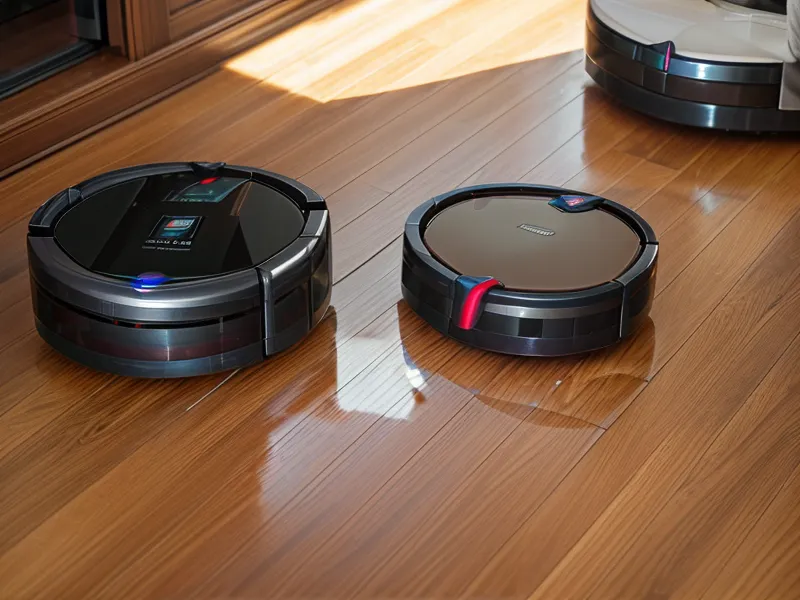
There is a physical toll to 'smart' cleaning that nobody talks about. It’s the heavy, awkward weight of a dead robot against my hip as I lug it back to the dock for the third time in a single afternoon. You’d think for the price of a mid-range laptop, these things could find their own way home. But when the dustbin gets clogged with a mix of husky hair and beagle dander, the bot just stops. It doesn't always tell the app why. It just sits there, a plastic puck of disappointment. I’ve started weighing the debris on my kitchen scale just to see if the HEPA filter efficiency—claimed to be 99.97%—actually matters if the intake port is jammed with a clump of fur the size of a squirrel.
Sam has stopped asking if the floors are clean. He just asks, 'Which one is in timeout today?' We’ve reached a point where the 'good enough' threshold is all that matters. A bot that gets 80% of the hair but never gets stuck is infinitely more valuable than a bot that gets 99% of the hair but requires me to rescue it from under the sectional every twenty minutes. In my tracking tally of which high-end robot vac actually survives, you can see the sheer number of 'intervention' events I’ve logged. It’s eye-opening how much babysitting these 'autonomous' devices actually require.
Final Notes from the Spreadsheet
Late last month, I finally decided to retire the model that kept getting eaten by the rug fringe. I realized that my bungalow doesn't need 'AI.' It needs a vacuum that isn't afraid of a mahogany strip. If you’re living in a house with character—meaning floors that aren't perfectly level and dogs that shed according to the moon cycles—be wary of the marketing hype around 'precision mapping.' Precision mapping often just means the bot is precise about what it refuses to clean. If you're looking for a more holistic approach to the mess, I've put together a shed-heavy household survival guide that covers both the floor and the air, because let’s be honest, the hair that doesn't end up under the sectional is currently floating in your coffee.
At the end of the day, I’m just a UX writer who wants a product that does what the button says. If the button says 'Clean,' I shouldn't have to go on a search-and-rescue mission at 10 PM because the bot got 'confused' by a shadow. We’re still waiting for the model that can handle a 1920s Craftsman without a nervous breakdown, but until then, I’ll keep the kitchen scale ready and the spreadsheet open. Murph and Beans aren't going to stop shedding, and I’m certainly not going to stop tracking which bot fails them next.