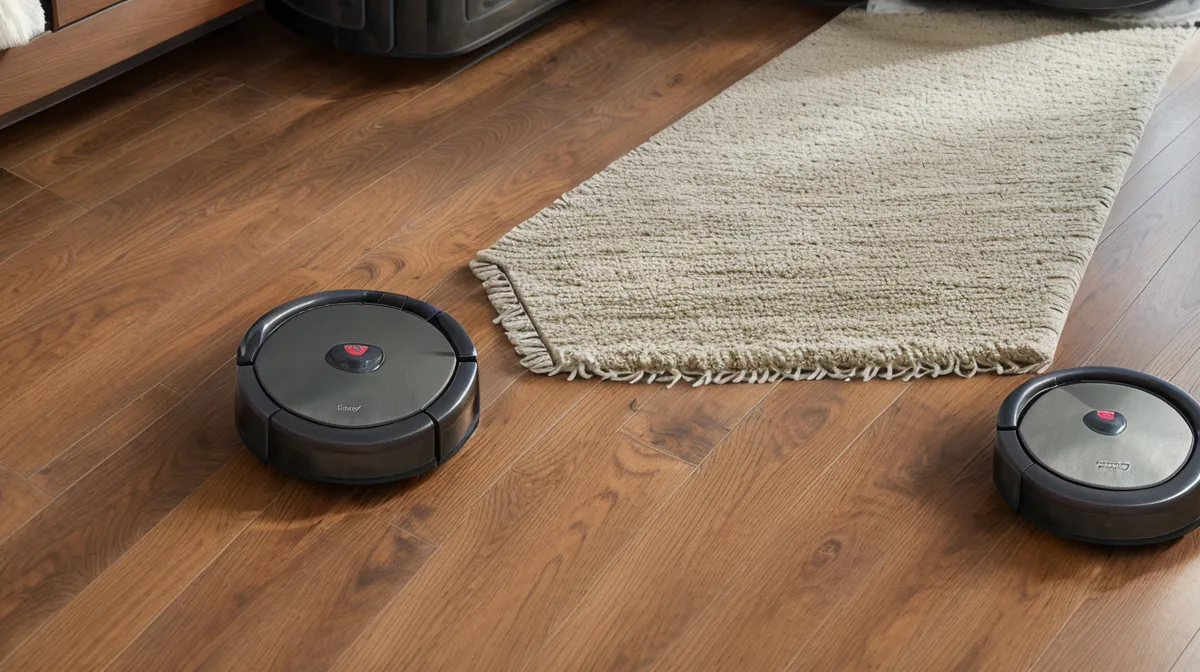
Late one evening last winter, I found myself sitting on the craftsman basement steps staring at the 'red ring of death' on my old Roomba i3. It wasn't just stuck; it was done. Murph, my husky mix, just stood there shedding in solidarity while I realized my running dustbin tally—a spreadsheet I’d kept since March 2024—was officially over for that unit.
Heads up before you read further: the robot vacuum brands and smart-home detectors I link to here send me a commission if you click through and buy through one of my links. So yes, I earn a commission when you grab a Roomba or a Roborock from one of these pages at no extra cost to you—I won't pretend otherwise. The dustbin tally is from my own house, the failure stories are from my own 1920s bungalow, and these picks are what I'd point a friend to whether or not the link paid out.
The UX of Dog Hair and Dead Vacuums
After years of returns and refurb deals, I realized my UX-writer brain was over-analyzing the friction. I needed a bot that wouldn't choke on a senior beagle’s dander or a husky’s seasonal blowout, especially in a house with original 1920s floorboards and a very low-clearance sectional. Most robot vacuums treat pet hair like an edge case, but in this house, it's the primary user flow. Murph 'blows his coat' twice a year, and Beans, my senior beagle, has reached that age where his dander is basically a fine architectural powder.
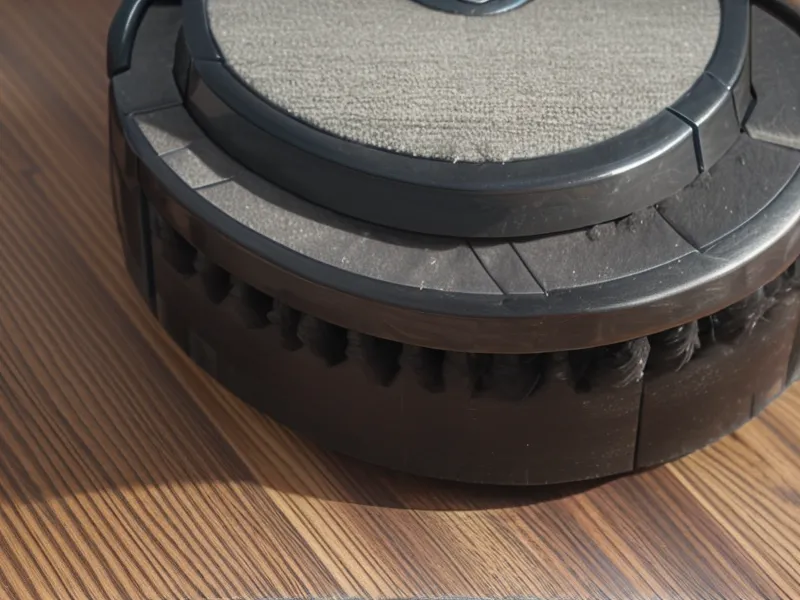
I’ve spent months tracking robot nav fails, and the common thread is always the app. Most companion apps treat the buyer like a captive. I’ve seen onboarding flows that feel like a Sephora checkout—endless account creation, newsletter opt-ins, and permission requests just to make the thing spin. When the i3 died, I decided to try the LG CordZero Robot. Unlike the Roborock or the Roomba j7+, the onboarding felt like it was actually designed by a human who values their time. No account scavenger hunt, just a quick setup while Sam watched the mop-pad-lift on the other bot we were testing.
The 5GHz Faraday Cage Incident
Mid-November brought the first real test. I spent twenty minutes trying to pair our new X-Sense Smart Smoke and CO Detector to the 5GHz Wi-Fi band before realizing our 1920s lath-and-plaster walls were basically a Faraday cage. It’s a classic smart-home failure mode I didn't account for. I eventually had to drop the network down to the 2.4GHz frequency band just to get the hub to talk to the detectors. If you’re living in an older home in suburban Indy, just save yourself the headache and stick to 2.4GHz for your IoT stuff.
The LG CordZero didn't care about the walls, though. Once it was on the network, it just worked. I watched it map the living room, and for a second, I had that familiar inner monologue: 'If this thing gets stuck under the sectional one more time, I am going back to a broom.' But it didn't. It navigated the tight space between the couch and the heavy runner rug without the usual 'Help, I am trapped on a cliff' notification that used to wake me up at midnight.
March Thaws and Senior Dog Realities
The first big thaw in March is always the hardest on our floors. Muddy paw prints meet shedding season. This is also where the unique needs of a senior dog come in. Beans has some incontinence issues, and if you’ve ever seen what a robot vacuum does to a wet mess, you know it’s a 'burn the house down' level of catastrophe. While I love the suction on the LG, I keep an iRobot Roomba j7+ around for the basement because its pet-poop avoidance actually works. It's the only bot that hasn't tried to paint the floor with Beans's accidents.
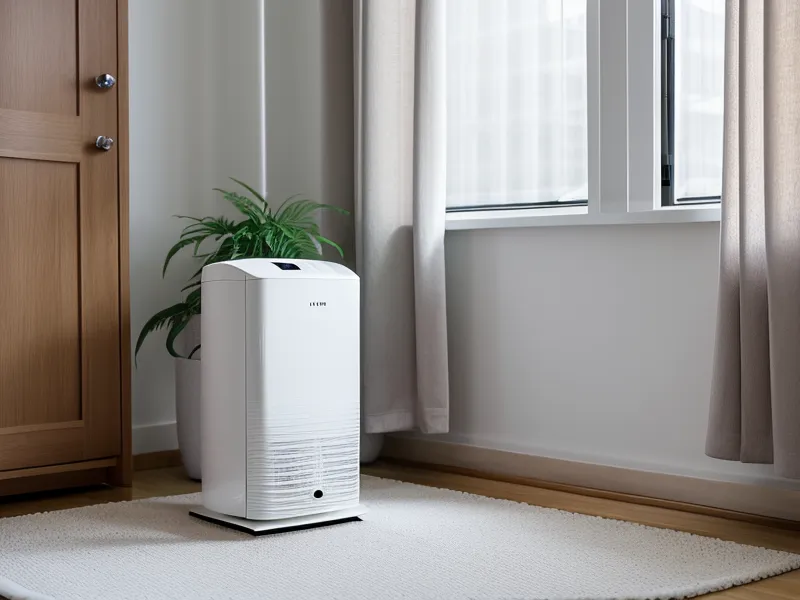
To handle the dander that the vacuums kick up, I added a PuroAir HEPA 14 Air Purifier to the living room. It's a medical-grade HEPA 14 filter, which is a step up from the standard HEPA 13s you see everywhere. I was skeptical, but when I checked the noise level via my phone, it was hitting a steady 28 dB in sleep mode. It’s quiet enough that it doesn't trigger Murph’s 'the house is attacking us' bark reflex. You can see more about my setup in my latest tracking tally.
The Metallic Thud of Success
By a rainy Tuesday in July, I was deep into the LG trial. The real test wasn't the suction; it was the auto-empty dock. I waited for the inevitable 'bin full' alert that usually hits after three days of Murph-hair. It never came. The week ended, and the dock had actually handled the volume without a single manual intervention. The LG uses a Three-stage suction system that seems to compress the hair better than the old i3 ever did.
Every time it finishes a run, there’s this distinct, metallic thud of the LG docking itself, followed by the five-second roar of the auto-empty suction that always makes Beans tilt his head. It sounds like progress. Even Sam, who usually tunes out my vacuum rants, was impressed by how the mop-pad lift handled the transition from the hardwood to the rug in the hallway. We also tested the Roborock S8 Pro Ultra, and while its mapping is incredibly fast, the LG’s dock felt more reliable for the sheer volume of husky fur we deal with.
The Final Tally: Late August Reflections
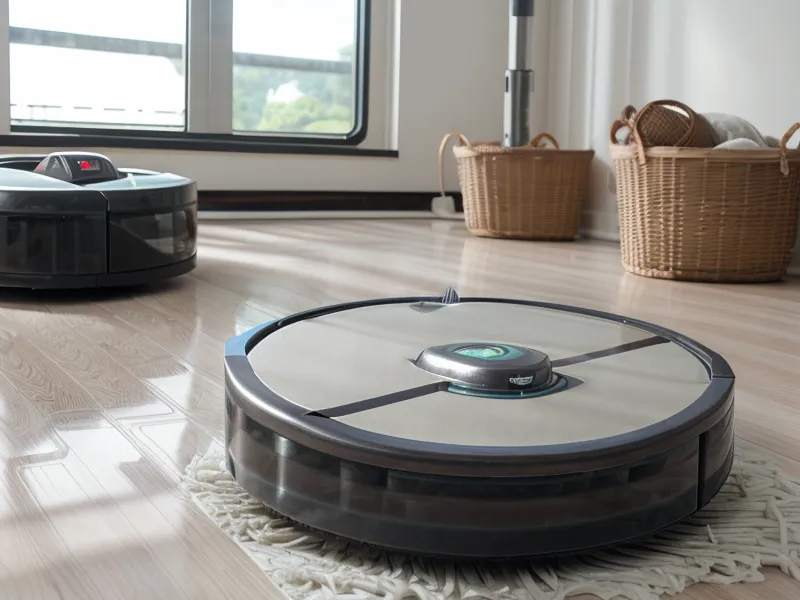
I’m not an IoT consultant, but weighing dustbins on a kitchen scale doesn't lie. By late August, the LG CordZero had officially climbed to the top of my spreadsheet. It’s not perfect—I still have to cut hair off the brushroll about once every ten runs because my own long hair wraps around the ends—but it’s the first time I haven't wanted to Slack my friends a warning before they hit 'buy'.
If you have a house full of shedding rescues and walls that hate Wi-Fi, stop over-complicating it. The LG handles the fur, the PuroAir handles the dander, and I finally get to sit on my basement steps without looking at a dead robot. If you're ready to stop being a slave to your vacuum's dustbin, I'd seriously consider the LG CordZero as your next daily driver. Your kitchen scale (and your husky) will thank you.