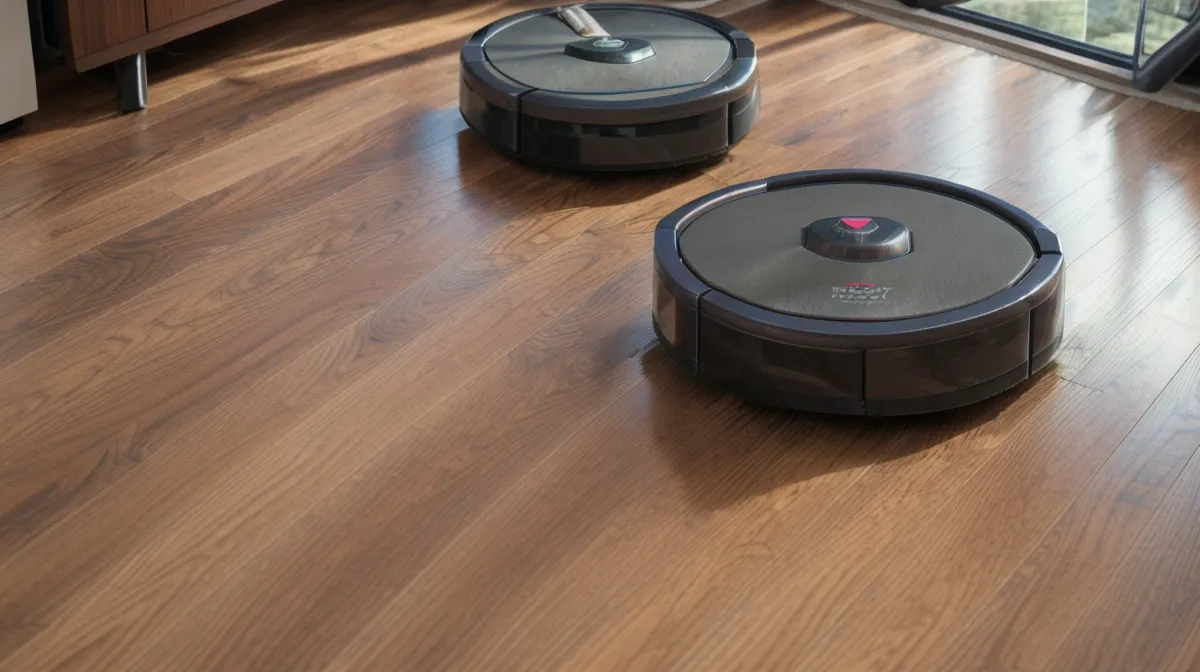
The LG CordZero finishes a full week without me touching the dustbin. The Roborock S8 Pro Ultra, for all its mapping smarts, needs emptying far sooner in the same two-dog house, extra sensors and all. That gap is exactly what a real robot vacuum comparison should catch instead of a spec sheet, and it's the same smart-home UX instinct that makes me distrust an app before I trust the hardware under it. I've logged every run since my old Roomba i3 died trying to climb the basement steps, and two years into the automated cleaning data I call the dustbin tally, the pattern holds steady: pet hair solutions live or die on boring details, not the feature list.
Quick disclosure before the questions start: a few of the links below are affiliate links, and I earn a commission if you buy through one, at no extra cost to you. I'm a UX writer, not a lab tech, so everything named here has actually lived in this bungalow with Sam, Murph, and Beans rather than sitting on a review-unit shelf somewhere.
LG CordZero vs. Roborock S8 Pro Ultra: A Robot Vacuum Comparison for Two Shedding Dogs
Short answer: the LG CordZero Robot wins on the day-to-day math, and the Roborock S8 Pro Ultra wins on any single feature you'd show off to a guest. Our layout tests both of them hard — high-pile rugs in the bedroom, a sectional with maybe three inches of clearance that swallows obstacle sensors whole, and enough husky undercoat to challenge a commercial HVAC filter. The LG's three-stage suction handled the jump from hardwood to thick rug without choking, which answers the carpet question I get asked most: yes, one bot can clean both surfaces well, but only if it actually ramps power when the wheels sense the pile change, not just when you tell it to. Mapping took the LG three full passes before it stopped trying to climb the basement stairs, while the Roborock locked in the same floor plan by run two — the one place its extra sensors clearly earn their keep. Suction and battery life pull against each other too: push the motor harder and the runtime drops, a separate trade-off from anything mapping-related, and one worth checking before you assume a longer spec sheet means a longer run. Sam noticed the noise difference before I logged a single decibel: he took a work call in the next room while the LG ran on the rug setting, something the old i3 never allowed.
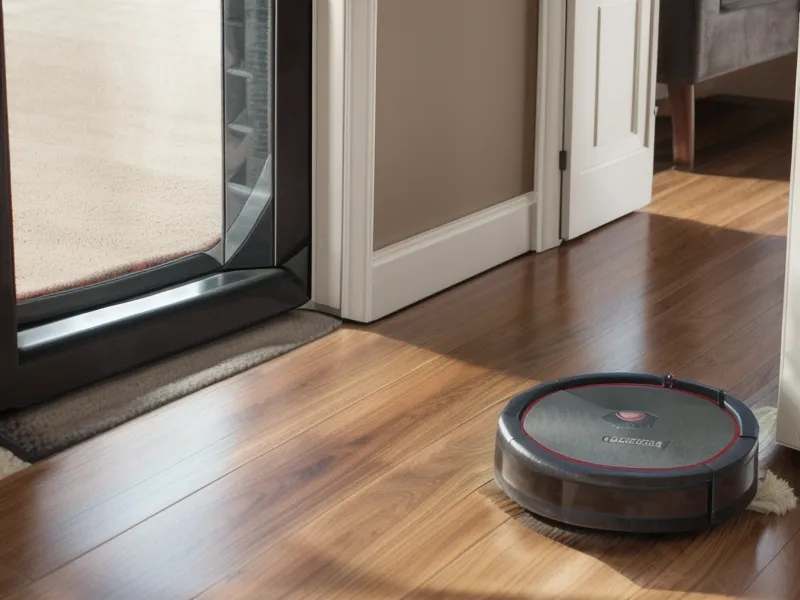
The Roborock's mop-lift is the one feature that actually impressed him. "Okay, that's actually smart," he said the first time it lifted clear of the hallway runner instead of soaking it. The app, though, is a different story. Dense enough to be its own hobby. Most days I want a button that says clean the mud, not a five-layer mapping editor. If you've got a low sectional or bed frame with tight clearance like ours, that low-clearance question decides which bot actually works in your house — not the suction number printed on the box. The LG's dustbin also runs the full week I mentioned before it needs emptying, which matters more day to day than most buyers expect until they're the one doing the emptying.
How Often Does the Brush Roll Actually Need Unwinding?
More than the marketing suggests. On the LG it's roughly every ten runs, once Murph's undercoat and my own hair visibly stall the roller. I tried running the bot twice a day for a stretch, figuring more passes would mean less buildup between unwindings. Instead the brush roll wore out in about six weeks, which taught me that frequency doesn't beat design when it comes to tangle resistance. There's a small crackle when his undercoat finally lets go of the rubber roller, almost like static, and that sound tells me more about how a bot actually handles fur than any spec sheet does. If long hair and heavy shedding are your real problem, my full writeup on a robot vacuum built around a genuinely tangle-resistant brush is worth reading before you assume every so-called pet-hair model handles it the same way.
Precise Mapping Comes With a Data Tradeoff
Precision costs something, and it's rarely money. The pricier bots use cameras and LiDAR to steer around Murph's chew toys before they hit them, which is the obstacle-avoidance question most people actually mean when they ask if a bot is smart. Getting that right requires constant photo verification pinged back to a server somewhere, so a bot that confidently ignores the sectional's skirt is usually also a bot with a fairly detailed picture of your floor plan. My neighbor across the alley, Yusuf, runs a similar setup on tile floors with one short-haired cat, and it's a useful contrast: his mapping locks in almost instantly since there's no rug edge or stair lip to confuse it, while ours resets more often than I'd like. Mapping accuracy turns out to be a floor-plan problem before it's a sensor problem. Sam moved the dock to the other side of the kitchen last month without mentioning it, and the LG spent its next run remapping the entire house from scratch, like it had never seen the place before, a decent reminder that even a smart map is only as stable as the humans walking around it.
Adding an Air Purifier and a Smart Smoke Detector to the Mix
In a two-shedding-dog house, a purifier is actually necessary on top of the vacuum, because the floor and the air are two separate problems. The PuroAir HEPA 14 Air Purifier runs around the clock in the living room, which is where Murph naps and sheds the most, so placement mattered as much as the spec sheet when I picked a spot for it. It uses a true HEPA 14 filter, a grade that's genuinely uncommon at this level, and on the noise side my iPhone's NIOSH SLM app read 28 decibels on sleep mode from three feet away, quiet enough to disappear into the room. The filter-replacement schedule is honest in the app instead of pushed early to sell more filters, though the filters themselves are proprietary, so that ongoing cost is worth factoring in before you buy.
Smart smoke detectors are a different kind of headache. Pairing the X-Sense Smart Smoke and CO Detector ate a rainy Tuesday morning because it needs a 2.4GHz band and our router kept bouncing everything to 5GHz on its own. Once it was up, the app flagged a slightly over-toasted bagel about four seconds before the horn went off, which was enough time to silence it before the dogs started howling. Placement mattered here too — ours sits in the hallway between the kitchen and the bedrooms, close enough to catch both rooms fast. We're only running one unit right now, not an interconnected set, so a false alarm in the kitchen stays a kitchen problem instead of setting off every detector in the house, which is its own trade-off worth thinking through before buying a multi-pack.
Will a Robot Vacuum Actually Dodge a Pet Accident?
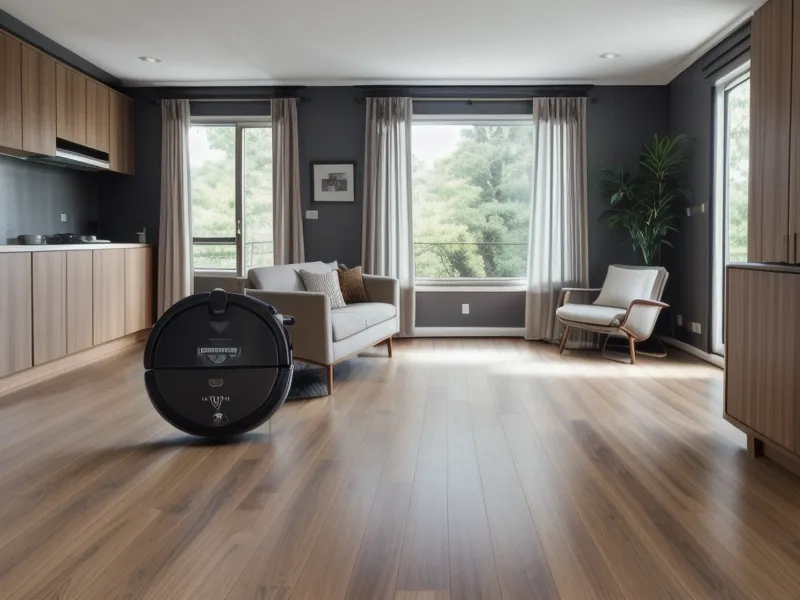
Yes, and this is the one place brand recognition actually earned its reputation instead of just riding on it. Beans is a senior beagle, and some nights the walk to the back door is one room too far. When that happened in late August, the iRobot Roomba j7+ spotted the mess and steered around it completely instead of grinding it into the runner rug, which is the pet-waste question that matters more than mapping speed or app polish ever will. The same bot's drop sensors keep it off the open basement stairwell by the kitchen, the exact spot that killed my old i3, so reliable cliff detection isn't a nice-to-have in a house with an ungated stairwell — it's the difference between a bot that survives its first month and one that doesn't. Rug edges are a separate failure mode entirely: a runner or a fringed edge can trap a wheel or a brush roll in a way flat hardwood never will, and no amount of avoidance tech fixes that once a bot's already caught. The j7+'s dustbin runs smaller than the LG's, meaning more emptying for the same square footage, and the app still nags about a premium subscription I've declined more times than I can count. For a full breakdown of how the self-emptying base holds up over time, I wrote separately about how reliable the Roomba j7+ self-emptying bin actually is for dog hair.
The Bot I'm Still Running After Two Years
After two years of testing, I keep the LG CordZero plugged in, mostly because it balances suction against an app that doesn't fight me for control. It doesn't mop, and that's a real trade-off worth naming out loud: a vacuum-only bot stays lighter and less fussy than one juggling a water tank and a mop pad, but you're accepting that hardwood corners and grout lines stay dry no matter how often it runs. If mopping genuinely matters in your house, weigh that against the upkeep the Roborock's self-cleaning base adds, rather than assuming more features automatically means a cleaner floor. For the full spreadsheet behind all of this, including every model that didn't make this list, there's my Shed-Heavy Household Survival Guide. Otherwise, if you're ready to stop being the primary vacuum in your own house, grab the LG CordZero and let the dock handle the emptying instead of you.
| Product | Rating | |
|---|---|---|
| LG CordZero Robot Editor's Pick | 9.2 | Read More → |
| iRobot Roomba j7+ | 8.8 | Read More → |
| Roborock S8 Pro Ultra | 8.5 | Read More → |
| PuroAir HEPA 14 | 8.2 | Read More → |
| X-Sense Smart Detector | 7.9 | Read More → |
LG CordZero Robot
Pros
- + Three-stage suction handles high-pile rugs and husky fur without choking
- + App onboarding is incredibly smooth - no 'account scavenger hunts'
- + Auto-empty dock actually works for a full week in a two-dog house
Cons
- − Premium price point is several hundred dollars above budget models
- − Brushroll still requires manual hair unwinding every week