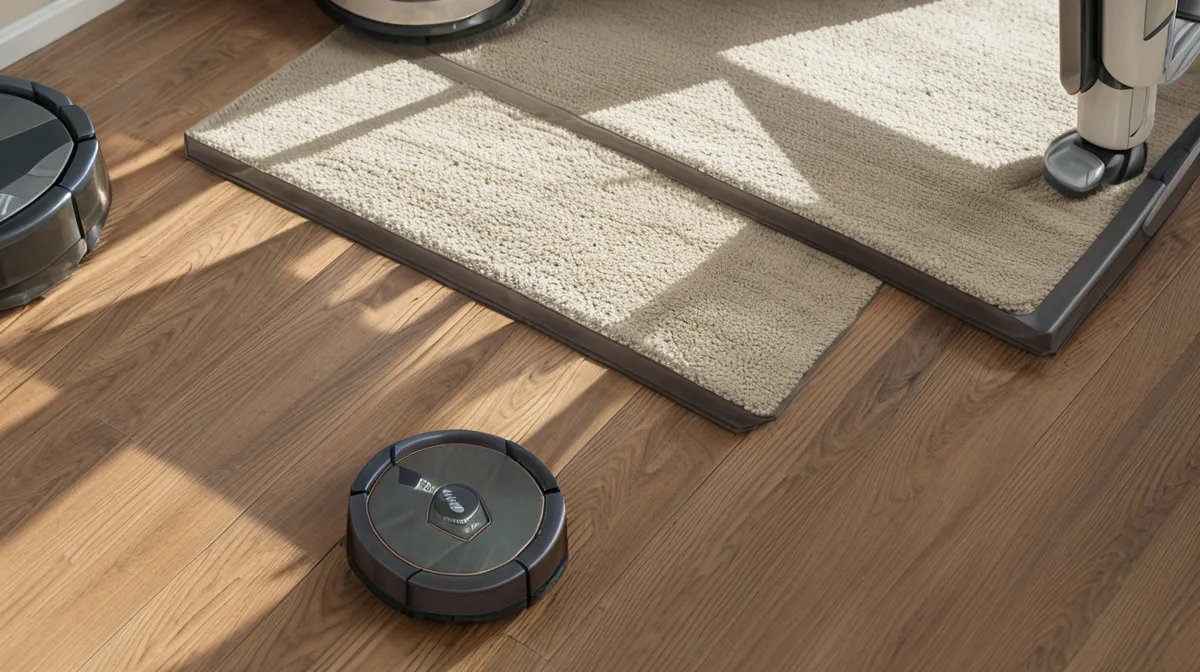
Late one evening last May, I watched Murph—my husky mix who is essentially a sentient dandelion—shake off a cloud of fur in the living room light. It looked like a snow globe of domestic failure. I looked down at my phone, at the spreadsheet I’ve kept since March 2024 when my old Roomba i3 took its final tumble down the basement steps, and realized my manual tally of vacuum runs had reached a breaking point. I was done weighing dustbins on a kitchen scale just to prove a point to myself. I needed a winner.
Quick heads-up before we get into the weeds: if you click a link and buy one of these vacuums or sensors, I earn a commission at no extra cost to you. I’ve personally tested every one of these in my own 1920s bungalow, mostly funded by my own returns and refurb hunts. My spreadsheet doesn’t have a bias, even if my tired brain does. If a brand sends me something to test, I’ll be the first to call it out.
The Bungalow UX: Why Most Robots Fail the Floor Plan
Living in a craftsman bungalow in suburban Indianapolis with two dogs is a specific kind of chaos. You have the original hardwood floors that show every speck of dander, the high-pile runner rugs that act like Velcro for Beans’s senior beagle hair, and the sectional sofa that has apparently been engineered to trap any robot taller than four inches. For a UX writer, this isn't just a cleaning problem; it’s a navigation and interface nightmare.
Most people think a robot vacuum is about suction power. It’s not. It’s about navigation precision versus time. In my tracking tally of the last six months, I’ve noticed a measurable trade-off: higher navigation precision requires significantly longer initial mapping sessions. If you want a bot that doesn't eat the fringe on your IKEA rug, you have to be patient. The lower-tier bots might start cleaning in five minutes, but they’ll be calling for help from under the coffee table ten minutes later. The LG CordZero Robot falls firmly into the 'precision' camp, which meant Sam and I had to spend a whole Saturday morning watching it meticulously sniff every corner of the house before it was allowed to run solo.
The Shed-Off: LG vs. Roborock vs. Roomba
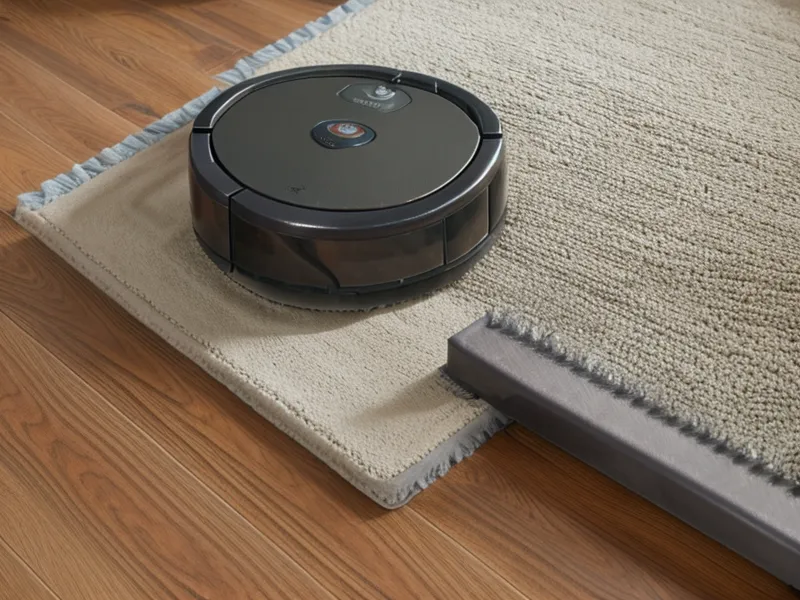
By late spring, the shedding season was in full swing. I was running a three-way test between the LG, the Roborock S8 Pro Ultra, and my existing iRobot Roomba j7+. Each one has its own personality, and not all of them are pleasant. The Roomba, for instance, has an auto-empty base with a specific jet-engine roar. Every single time it finishes a cycle and starts emptying, Beans lets out a mournful beagle howl that sounds like he’s being haunted. It’s loud enough that I actually checked it with my iPhone NIOSH SLM app—it’s a jarring spike in an otherwise quiet house.
Then there’s the Roborock. I have to give it credit: the mop pad lift feature is incredible. On a rainy Tuesday in July, after the dogs had tracked in half the backyard, I watched the Roborock transition from the kitchen tile to the living room rug. The look of genuine shock on Sam’s face when the bot successfully avoided a forgotten dog toy and lifted its mop pad in one fluid motion was worth the price of admission. However, the Roborock app is a mess. It’s feature-dense to the point of being its own learning curve—it feels like trying to navigate a complex SaaS dashboard when all you want to do is clean up some kibble.
The LG CordZero Robot eventually pulled ahead because it handled the transition from hardwood to high-pile rugs without a single 'stuck' notification for three months straight. In the world of UX, we talk about 'frictionless' experiences. The LG is the closest I’ve found. Its three-stage suction actually pulled Murph’s husky wool out of the rug fibers rather than just skimming the top. In my Shed-Heavy Household Survival Guide, I noted that the LG's dustbin auto-empty was the only one that didn't clog when faced with a week's worth of beagle dander.
The Air Quality Battle: Picking Up What the Vacs Kick Up
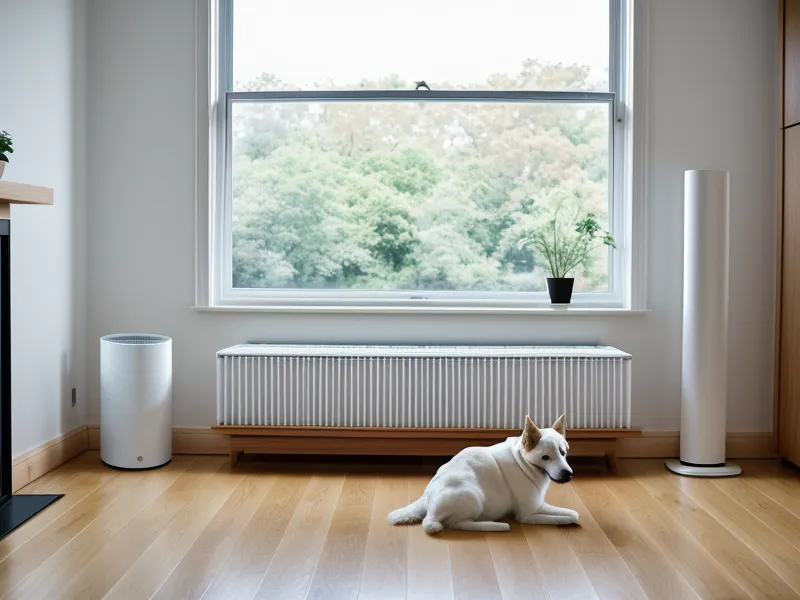
Around mid-summer, I realized that the vacuums were only half the battle. Every time the bots ran, they’d kick up fine dust that made me sneeze through my afternoon Slack meetings. I added the PuroAir HEPA 14 Air Purifier to the hallway, and it was a game-changer. Most purifiers use HEPA 13, but the HEPA 14 grade in the PuroAir is rated to capture 99.99% of particles. It’s medical-grade stuff that actually catches the dander the vacuum misses.
The best part? The noise floor. When I’m working, I can’t deal with a hum that sounds like a refrigerator. The PuroAir in sleep mode registered at 28 dB on my decibel meter—basically a whisper. It’s the perfect companion to a robot vacuum because it cleans the air while the bot cleans the floor. If you’re struggling with pet allergies in a small home, you should definitely check out my notes on the best HEPA air purifiers for pet dander.
The UX of Setup: A 2.4GHz Tragedy
I can’t write a review without complaining about app onboarding. It’s the law. While the LG app was relatively painless, I had a complete meltdown trying to pair the X-Sense Smart Smoke and CO Detector. Like almost every smart home device, it requires a 2.4GHz Wi-Fi band. My mesh system kept trying to force it onto 5GHz, which the detector hated.
I spent twenty minutes sitting on the floor, getting increasingly frustrated, before I realized I had to walk to the far end of the backyard—where the 5GHz signal finally dropped off—just to force my phone onto the 2.4GHz band so the pairing would take. It was ridiculous. Once it was set up, though, the X-Sense became a staple. It replaced the old landlord-issued alarms that used to chirp at 3am. Now, if I burn toast, the app notification hits my phone four seconds before the horn starts, giving me just enough time to silence it before Murph and Beans start a neighborhood-wide panic.
The Final Tally: Which Bot Earns the Permanent Spot?
After six months of daily runs—from the late spring shedding peak to the mid-September dust—the winner is clear. If you have a house that’s more dog hair than floor, you need the LG CordZero Robot. It’s the only one that didn't require me to perform surgery on the brushroll every three days. Yes, the mapping takes a while to get right, and yes, it’s a premium price, but the lack of 'help me' pings on my phone while I'm trying to work is worth every cent.
The Roborock S8 Pro Ultra is a technical marvel, and if your house is mostly hard floors with lots of mud, that self-cleaning mop is a dream. But for the pure rug-and-fur struggle of a husky owner, the LG is more reliable. It doesn't treat you like a captive in its app, and it doesn't make the dogs howl like they're in a horror movie. My spreadsheet is finally closed, the tally is done, and for the first time since March 2024, I can actually see the wood grain on my floors.
LG CordZero Robot
Pros
- + Handled a mix of hardwood and high-pile rugs without getting stuck once in three months
- + The auto-empty bin actually manages a full week of husky fur without clogging
- + The app interface is surprisingly clean and doesn't nag you for subscriptions
Cons
- − Initial mapping takes much longer than cheaper 'bump-and-go' models
- − The premium price is a steep jump if you don't have heavy shedding dogs