A robot vacuum that hits 72 decibels on hardwood and one that stays near normal conversation level are not solving the same problem for a home office. One just relocates the noise somewhere you can still hear it, the other actually lets you work through it. That gap is the whole decision when you're choosing a robot vacuum with a desk in the house, and most robot vacuum reviews never say which side of it a given model lands on.
Quick disclosure up front: some of the links below — the LG CordZero, the PuroAir HEPA 14, the Roomba j7+ — earn a commission if you buy through them, at no extra cost to you. Every noise figure here came off a decibel meter app on my phone, and every fur weight came off a kitchen scale, logged into the same running tracking tally I keep on every bot that's crossed this bungalow's floors.
Quiet Technology Still Needs Suction to Back It Up
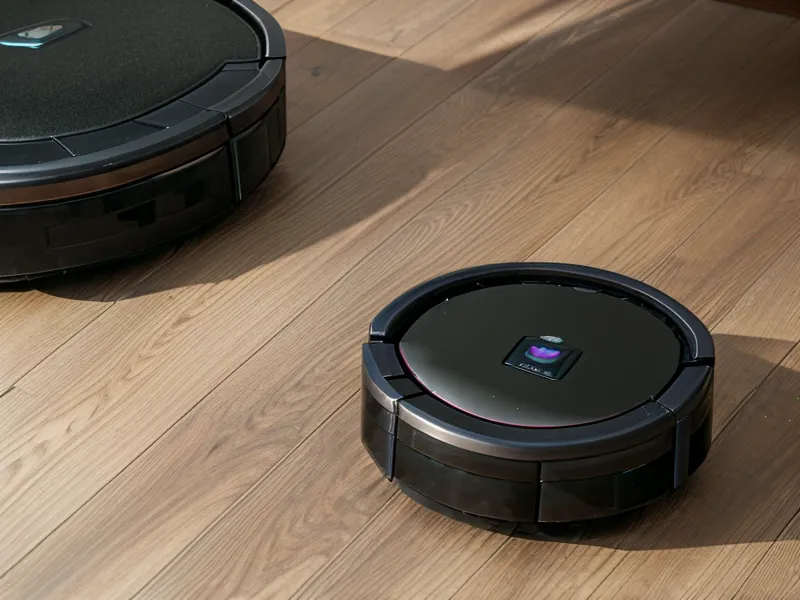
A bot that drops its motor speed to hit a lower decibel number is easy to sell as quiet technology, and it's also the most common trick in the category — suction and battery life trade against each other on nearly every model, so a lower hum often just means a longer runtime to cover the same square footage. Running the LG CordZero Robot on its lowest of three suction stages through a stretch of heavy shedding, my kitchen-scale weigh-ins showed almost 30 percent less fur collected than on the standard setting. Quieter, yes, but at a real cost in what actually left the floor. Sam noticed the trade differently: he glanced up mid-typing one afternoon and asked, "Wait — is that thing even running?" It was already halfway down the hallway, just moving less dirt per pass than the louder setting would have.
Why Your Home Office Floor Plan Decides the Decibel Reading
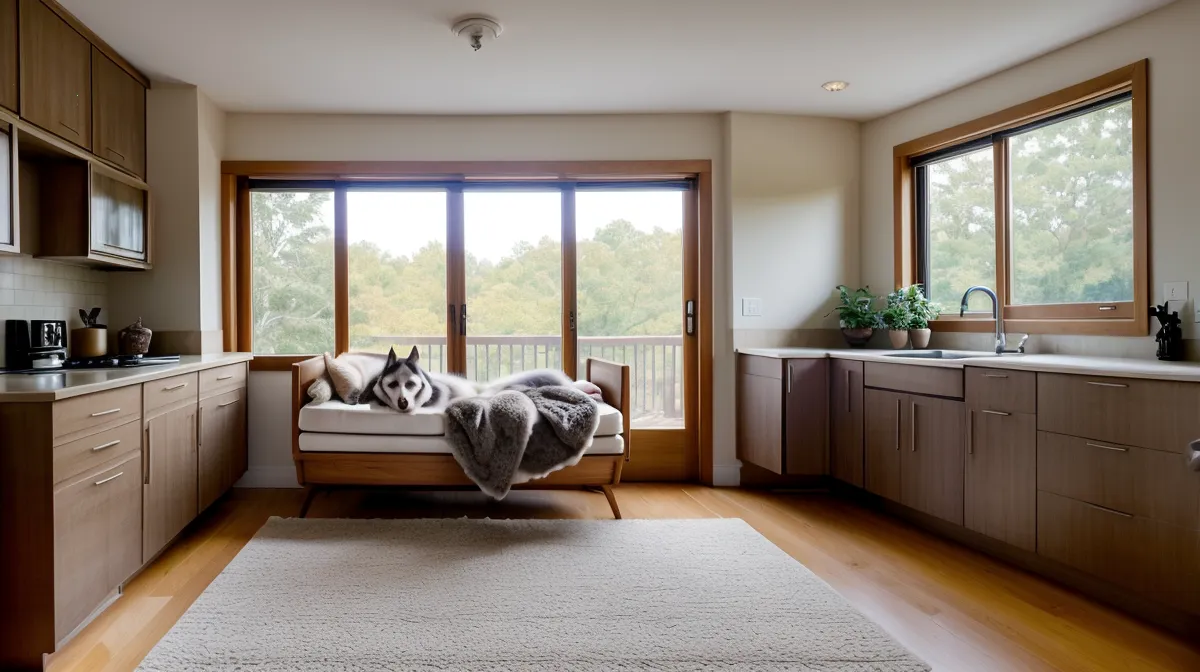
Hardwood and rug do not sound the same under a robot vacuum, and if your desk sits anywhere near the hallway, that difference matters more than the spec sheet's single decibel number. Any bot picks up pitch the moment it crosses from bare wood onto a runner. More resistance, more motor effort, more noise bleeding into a call. Rug edges are also where cheap navigation shows itself: a fringe or a loose edge can stall a bot mid-run entirely, no noise complaint needed because the run just stops there. Low-clearance furniture adds a second failure mode: a sectional or platform bed can trap a bot that keeps tapping a table leg with its bumper, over and over, before it finally gives up and reverses. Actual carpet, rather than a runner, raises a separate question about deep-pile cleaning that's worth checking before assuming a quiet bot is also a thorough one. None of this shows up in a showroom demo running on empty tile. It shows up the day the bot meets your actual house, mud included, after Murph drags half of the Broad Ripple Park dog trail in on his paws.
Check the App Before You Check the Specs
Every companion app in this category asks for more setup than it should. Account creation before you can even start a clean. Region selectors that don't include the one you're in. A permissions screen requesting access nothing about vacuuming should need. That's the gripe every one of these apps earns eventually, quiet bot or not, and it gets worse on budget models where 2.4GHz pairing fails outright and you're left rebooting a router just to get a bot to show up on the map. Mapping accuracy is the one spec worth cross-checking against real reviews rather than the box, since a bot that redraws its floor plan every other run will re-trigger every no-go zone you'd already set. Obstacle avoidance matters just as much in an office as anywhere else. A bot that swallows a charging cable mid-run costs more focus than one running a few decibels louder ever would. And with a dog in the house, pet-waste avoidance is worth confirming before the bot ever runs unsupervised, because that's a mess no amount of quiet fixes.
Where the Small Stuff Adds Up: Dustbins and Brush Rolls
My friend Colette — a fellow UX freelancer with a golden retriever of her own named Biscotti — has strong opinions about dustbin capacity, and she's right that a small bin turns into a chore multiplier in a two-dog house regardless of how quiet the motor is. That's pet owner life: more fur means more emptying, full stop. Brush-roll tangle resistance is the other quiet-killer nobody markets directly, since a roll wound tight with hair spins slower and works harder, which raises the noise floor even on a model rated well below the LG's numbers. Cliff-sensor reliability sounds like a footnote until it isn't. Leaving the basement door ajar without thinking about it once was enough to watch a bot's front wheels stop dead right at the top stair, sensor doing the one job that actually mattered that day. Not every bot earns that kind of trust cheaply, either: the least expensive one ever brought into this house got tangled in the IKEA rug fringe on its very first run and never recovered enough to finish a floor again. I didn't keep it long.
Building a System, Not Just a Bot
Mopping is the other trade-off worth naming honestly: a combo mop-and-vacuum unit adds noise and complexity for a task that, on hardwood, a vacuum alone mostly handles. Worth it if wet mopping happens weekly, skippable if it doesn't. Filtration is a separate lever entirely. Running a PuroAir HEPA 14 Air Purifier in the office corner shows why the grade matters: HEPA 14 filtration catches far more of the fine dander a vacuum stirs up and never fully collects, which means the vacuum has less to compensate for and can run its lower, quieter suction stage more often. Placement changes the result more than people expect, too. An air purifier tucked behind a monitor or under a desk recirculates a fraction of what one sitting in open floor space does, and that's covered in more depth in the PuroAir HEPA 14 for Pet Allergies piece. Smoke and CO detector placement is a different system entirely, but the same logic applies: a detector only helps positioned where it can actually do its job, not just where the outlet happens to be.
None of that replaces obstacle handling when things go wrong, which is where the iRobot Roomba j7+ earns its keep despite running louder than the LG. Its avoidance behavior is the reason it doesn't need supervision in a room with cables, dog toys, and a sectional that doesn't leave much clearance underneath. A vacuum that's dead silent but stuck under furniture every other run interrupts more meetings than a slightly louder one that just finishes the job.
Weigh the decibel number against how a bot earns it: a quiet mode that finishes a room only slightly slower than standard is worth choosing, one that needs twice the runtime to compensate usually isn't. Check obstacle avoidance and cliff-sensor reliability before suction stage count, since a stuck bot interrupts a workday more than a loud one ever will. Treat the vacuum as one piece of a system that includes filtration and dustbin size, not the whole solution on its own.