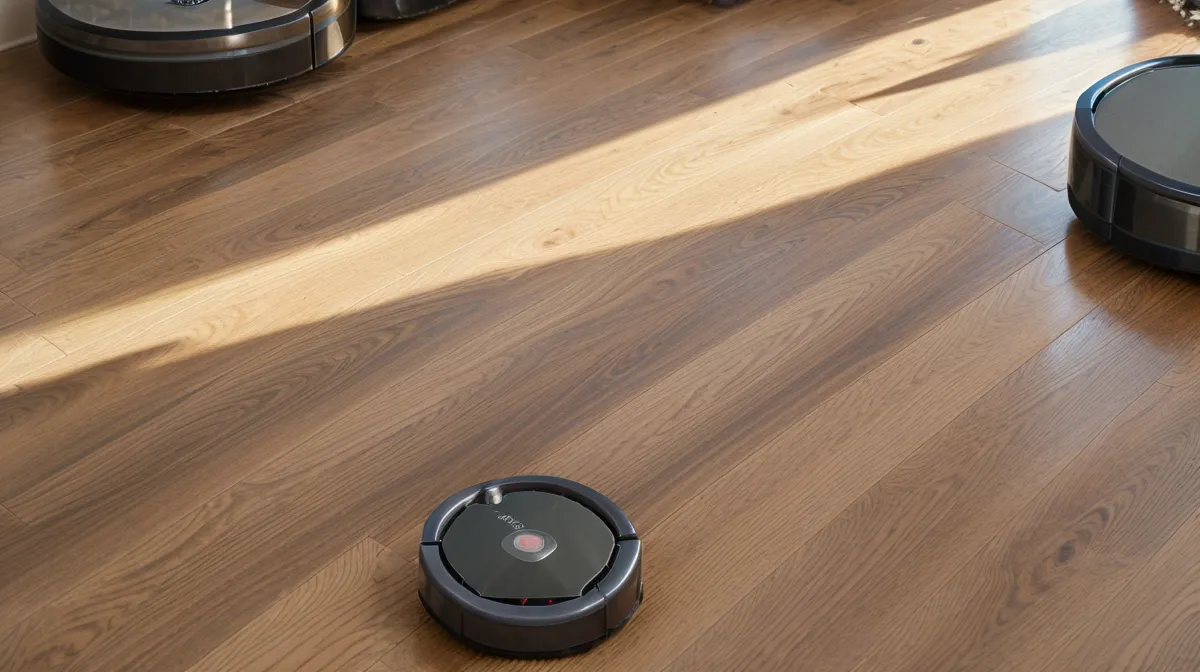
Late one evening, I watched a top-tier vacuum approach the black border of our living room rug, stop dead, and start spinning in panicked circles as if it were teetering on the edge of the Grand Canyon. There was no drop-off. There was no staircase. There was just a flat, wool rug and a robot having a full-blown existential crisis on a Tuesday night. Sam looked up from his book, watched the bot pirouette into oblivion for the third time, and just sighed. "I thought this was the smart one," he said. I didn't have the heart to tell him that even the 'smart' ones are basically just flashlights with wheels when it comes to dark patterns.
Since I started my dustbin tally back in March 2024—right after that old i3 took a terminal tumble down the basement steps—I’ve realized that robot vacuum ownership is less about 'set it and forget it' and more about becoming a part-time hardware technician. We live in a 1920s craftsman bungalow in suburban Indianapolis, which is a fancy way of saying we have a lot of dark wood trim, high-contrast rugs, and a floor plan that seems designed to confuse anything with a motherboard. Add Murph (our husky mix) and Beans (our senior beagle) into the mix, and you have a recipe for constant sensor failure.
The Physics of the 'False Cliff'
To understand why your expensive floor-robot is currently trembling at the edge of your IKEA rug, you have to understand infrared sensors. Most of these bots use cliff sensors that function by sending out a pulse of infrared light at a specific infrared sensor wavelength, usually around 880 nanometers. The bot sends the light down, expects it to bounce back immediately, and calculates the distance. If the light doesn't return, the bot assumes there is no floor and stops to avoid a fall.
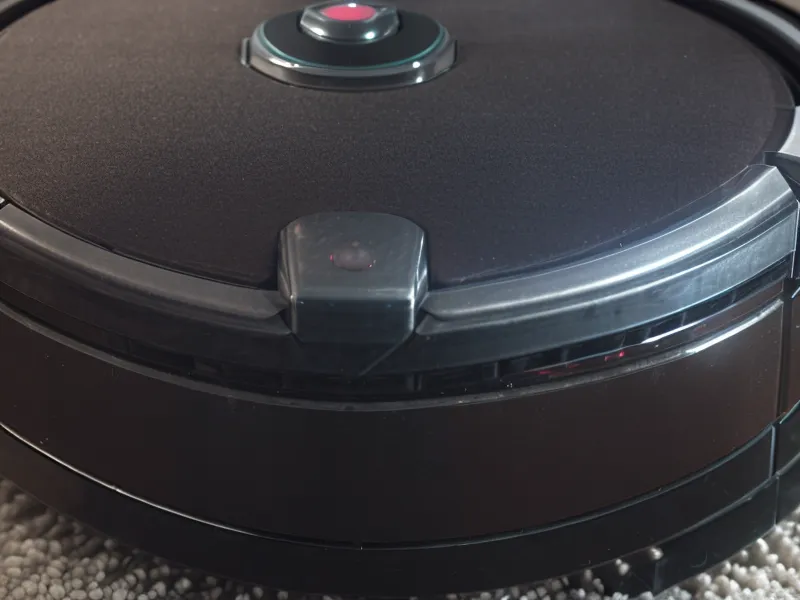
The problem? Dark surfaces—especially that deep, ink-black border on my living room rug—absorb light rather than reflecting it. To a robot, your stylish area rug looks like a bottomless pit. This became painfully obvious mid-February when I noticed the bot was leaving an island of white husky fur right in the center of the room. Murph was blowing his coat, and the husky fur was congregating exactly on that black rug border because the bot refused to cross it. It’s the ultimate UX failure: the very technology meant to save the bot from the basement stairs is preventing it from doing its only job.
I spent one rainy afternoon last May trying to recalibrate the mapping, thinking maybe the standard IoT frequency band of 2.4 GHz was causing some lag in the sensor reporting. It wasn't. It was just basic physics. The bot isn't being stubborn; it's literally blind to the floor because the rug is eating its light pulses.
The UX of Maintenance Fatigue
While most experts praise robot vacuums for efficiency, they actually increase total cleaning time for homeowners by necessitating obsessive pre-vacuum decluttering and constant maintenance of floor layouts. I’ve found myself spending twenty minutes 'bot-proofing' the house before I even hit the start button. I’m picking up Beans's squeaky toys, moving the dining room chairs so the bot doesn't get trapped in a 'leg forest,' and double-checking that the rug fringe isn't going to cause another 'tangled brush' notification on my phone.
There is a specific kind of frustration that comes with kneeling on the floor with a Q-tip and rubbing alcohol, desperately cleaning sensors that weren't actually dirty, just confused by a rug pattern. I did this in early April, convinced that a layer of Indianapolis limestone dust was the culprit. It wasn't. The sensors were pristine. The bot just hated my decor. This is where the app experience usually falls apart, too. Trying to set a 'No-Go Zone' over a dark rug border is a nightmare in most companion apps—the interface usually feels like a Sephora checkout flow where they keep trying to upsell you on filters instead of letting you just draw a straight line on a map.
The Blindfold Method and the Tinfoil Dance
After about three weeks of shedding season, I reached my breaking point. The gritty feeling of Indianapolis limestone dust and white husky fur trapped in the deep black fibers of a rug the robot refuses to touch was driving me insane. I decided to try the 'blindfold' method. This involves covering the cliff sensors with white paper or tinfoil so the infrared light reflects back constantly, telling the bot that the floor is always there.
Warning: if you do this and you have stairs, your bot will eventually commit suicide. Since our bungalow has a clear door to the basement, I felt safe enough to experiment. I used the app's mapping features to replace the physical cliff logic with digital boundaries. However, even then, the bot struggled. Most high-end units have a threshold climbing limit of 20 millimeters, and while my rug isn't that thick, the combination of the 'blindfold' and the rug's texture made the bot think it was constantly hitting a wall.
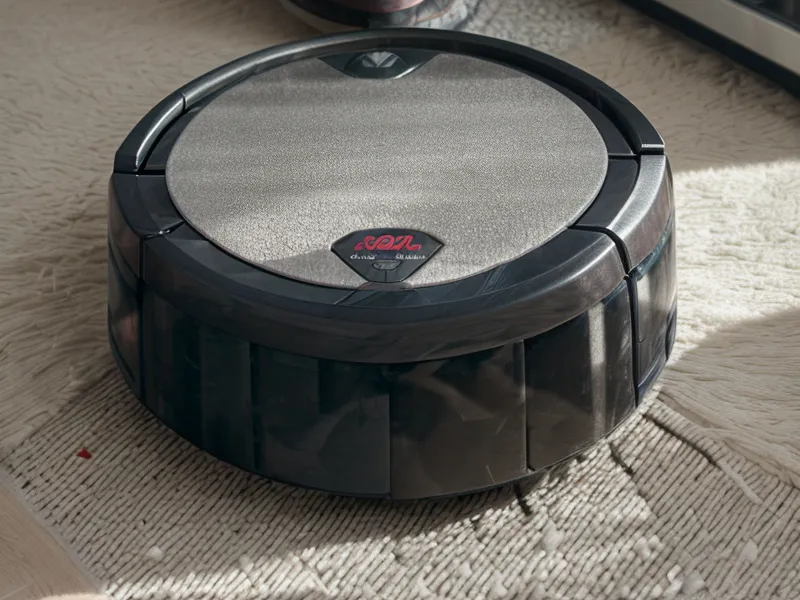
I eventually landed on a hybrid approach: I cleared the sensors and spent an hour meticulously mapping 'No-Go Zones' that were slightly offset from the black borders. It’s not perfect, and I still have to hit the edges with a handheld vac, but it's better than watching the bot spin in circles. If you're struggling with this, you might want to read about why your robot vacuum keeps choking on your area rugs to see if it's a physical obstruction or a sensor ghost.
Is the Convenience Worth the Babysitting?
Until IR sensors can distinguish between a black wool rug and a 1920s staircase, we’re stuck doing this aggressive app-mapping dance. I’ve logged every failure in my tally, and the 'false cliff' error is currently the third most common reason I have to go 'rescue' a bot from the middle of an empty room. It’s a reminder that these devices are tools, not magic. They require a level of environmental management that most marketing materials conveniently leave out.
Sam recently asked if we should just go back to a standard upright. I looked at the pile of Murph's fur that the bot actually *did* manage to collect today and shook my head. It’s a flawed system, but it’s my flawed system. We’ve just accepted that the living room rug will always be a point of contention between the dog hair and the robots. Just don't expect the bot to be 'smart' enough to know the difference between your carpet and a bottomless pit without a little bit of human intervention.