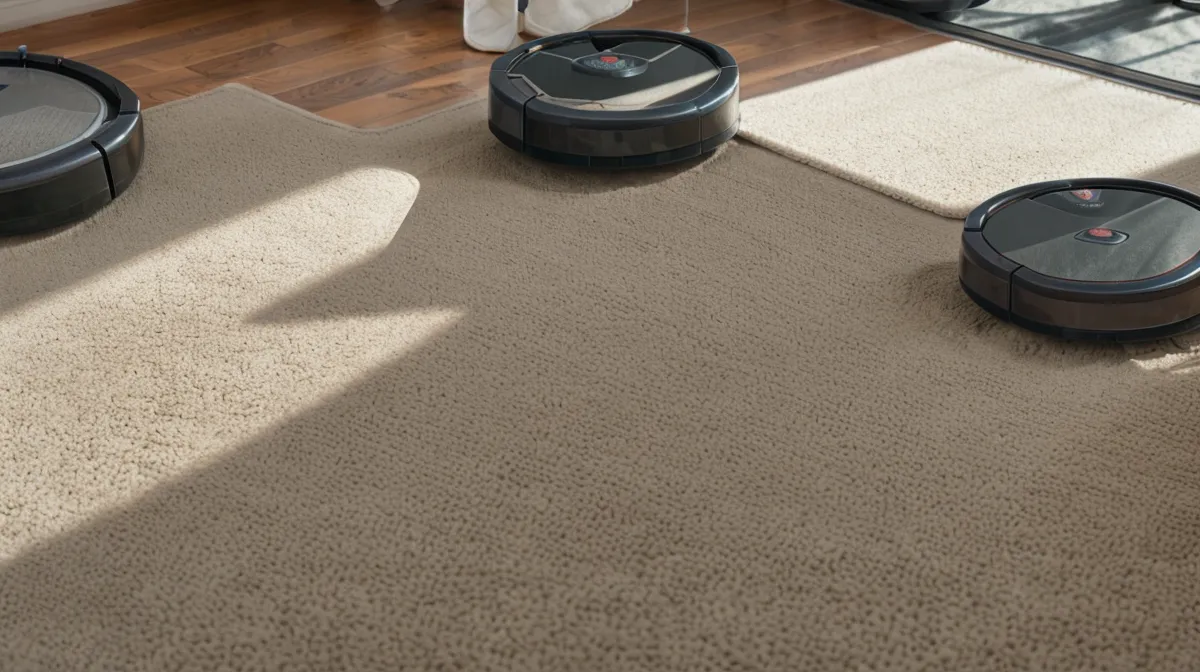
One slushy Tuesday in February, a literal tumbleweed of husky fur drifted past me while I was on the couch, making me realize my old basement-bound Roomba was never coming back to save me. It had died on the steps weeks prior, and in the interim, Murph (the husky mix) and Beans (the senior beagle) had effectively reclaimed the hardwoods for the animal kingdom.
Before we dive into the spreadsheet I’ve been keeping since that day, a quick heads-up: I earn a commission if you grab a vacuum or detector through the links in this post, at no extra cost to you. I’ve personally weighed the dustbins and untangled the hair from every model mentioned here, so these picks are based on what actually survives my 1920s bungalow, not a marketing deck. If a brand sent a unit to test, I’ll call it out, but mostly this is funded by my own obsession with not living in a fur-carpeted house.
I started a spreadsheet in March 2024 to track how many times a bot could actually finish our floor plan without getting high-centered on the rug or trapped under the sectional. Our house has those classic 1920s transitions—thick thresholds and area rugs that act like tank traps for anything with small wheels. I’m a UX writer by trade, so I can’t help but notice when an app makes me jump through hoops just to set a no-go zone. I’ve spent the last seven months, from late winter 2025 through late summer 2026, pitting the heavy hitters against each other to see which one actually earns its keep.
The Contenders: Navigation vs. Brute Force Suction
In early spring shedding season, the air in here gets thick enough that you can almost see the dander in the afternoon light. That’s when the testing really ramped up. I was looking for a bot that didn't just map well, but actually had the physical clearance to handle our rugs. Many robots treat high-pile rugs as a "cliff" and just refuse to clean them. If you’re struggling with this, I actually wrote a piece on why your robot vacuum keeps ghosting your area rugs and how to fix it.
The LG CordZero Robot immediately stood out because it didn't try to over-engineer the onboarding. While the Roborock app felt like a feature-dense learning curve that required a PhD in networking, the LG was refreshingly straightforward. It uses a three-stage suction system that actually pulled Murph’s undercoat out of the runner rugs without stalling. Most bots just flick the hair around; the LG actually swallows it.
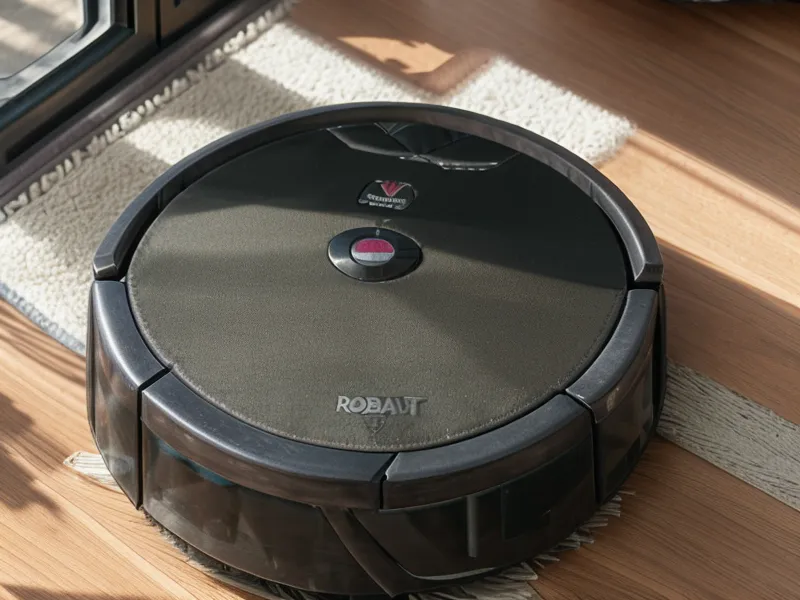
However, we have to talk about the Roborock S8 Pro Ultra. This is the bot that earned a rare nod of approval from Sam. One afternoon, he actually looked up from his book when the Roborock hit the carpet and we heard the mechanical whir of the mop pad lifting up. It’s the only bot in this list that doesn’t get the rug wet while it’s in "mop mode." The mapping is surgical—it locked in the floor plan by run two, whereas the iRobot Roomba j7+ took three runs just to realize the dining room existed.
The Tradeoff: Precision vs. Privacy
Here’s the thing I noticed after about a month of daily runs: the higher the navigation precision, the more the bot seems to rely on the cloud. The Roborock is a mapping genius, but it’s constantly pinging the mothership. If you’re sensitive about local data privacy, there’s a clear tradeoff here. You’re trading a bit of your home’s data for the fact that the bot actually knows where the sectional ends. The LG feels more like a local appliance, while the Roborock feels like a silicon-valley guest in your hallway. For a deeper look at this specific battle, check out my notes on the LG CordZero vs Roomba husky shedding test.
The "Subscription Nag" and the Midnight Pet Disaster
By that humid week in July, the Roomba j7+ finally had its moment of glory. Beans, our beagle, lost a midnight argument with a Greenie, and the results were... not great for the floor. The Roomba’s pet-poop avoidance actually worked. It detected the mess and steered clear, saving us from a literal "poop-pocalypse."
But the UX? It’s exhausting. The iRobot app has this constant "subscription nag" for their Premium tier. It shows up every couple of weeks even after you decline it twice. It feels like a roommate who never pays rent but keeps asking to borrow your Netflix login. Also, the no-go zone editor is a nightmare—it forced me to redo the boundaries twice when the map auto-relearned the floor plan after I moved a chair. It’s the kind of friction that makes me want to just go back to a broom. I’ve documented more of these failures in my tracking notes on robot nav fails.
Clearing the Air: The PuroAir HEPA 14
While the robots were fighting the hair on the floor, the PuroAir HEPA 14 Air Purifier was handling the invisible dander cloud overhead. Most purifiers use HEPA 13, but this is a HEPA 14 grade filter, which is basically medical-grade. I noticed a difference in my morning congestion within a few days of running it in the bedroom.
The best part? It’s quiet. My iPhone NIOSH SLM app (yes, I’m that person) clocked it at 28 dB in sleep mode. It’s a low, steady hum that doesn't trigger Beans’s anxiety. Unlike the robot vacuums, which sound like a jet taking off when they empty their bins, the PuroAir just sits there being useful. For more on air quality, I’ve got a guide on the best HEPA air purifier for removing pet dander.
Safety and Connectivity: The X-Sense Factor
Finally, I added the X-Sense Smart Smoke and CO Detector to the mix. In a 1920s house, you don't mess around with fire safety. The setup was a bit of a pain because it requires a 2.4GHz Wi-Fi frequency—it won't talk to the 5GHz band that most modern routers default to. I had to manually split my network just to get the hub to pair.
But the payoff is great. The app push notification fires about four seconds before the in-house horn. This means when I sear a steak and the kitchen gets smoky, I can silence the alarm from my phone before the dogs lose their minds. It’s a small UX win that makes a huge difference in a pet-heavy household.
The Verdict: Which One Actually Finishes the Job?
After seven months of weighing dustbins and untangling Murph’s fur from brushrolls, the LG CordZero Robot is the one I actually trust to finish its job. It doesn’t have the flashy "mop lift" of the Roborock or the "poop avoidance" of the Roomba, but it also doesn't nag me for a subscription or lose its map every time I move the coffee table. It’s the workhorse that handles the 1920s thresholds without calling for help.
If you have a multi-dog home and you’re tired of the "robot-stuck" notifications, head over to the vendor’s page to check the current price on the LG. It’s the closest thing I’ve found to a set-it-and-forget-it solution in a house that is actively trying to stay dirty. You can find the LG CordZero here to see if it fits your budget today.
| Product | Rating | |
|---|---|---|
| LG CordZero Robot Editor's Pick | 9.4 | Read More → |
| Roborock S8 Pro Ultra | 9.1 | Read More → |
| iRobot Roomba j7+ | 8.8 | Read More → |
| PuroAir HEPA 14 Air Purifier | 8.5 | Read More → |
| X-Sense Smart Smoke and CO Detector | 8.2 | Read More → |
LG CordZero Robot
Pros
- + Three-stage suction actually pulls husky hair out of rugs
- + Auto-empty bin is the most reliable for large fur clumps
- + App onboarding is mercifully simple compared to competitors
- + Handles 1920s thresholds without getting high-centered
Cons
- − Higher upfront investment than basic DTC brands
- − Brushroll still needs a manual hair-clip every few weeks