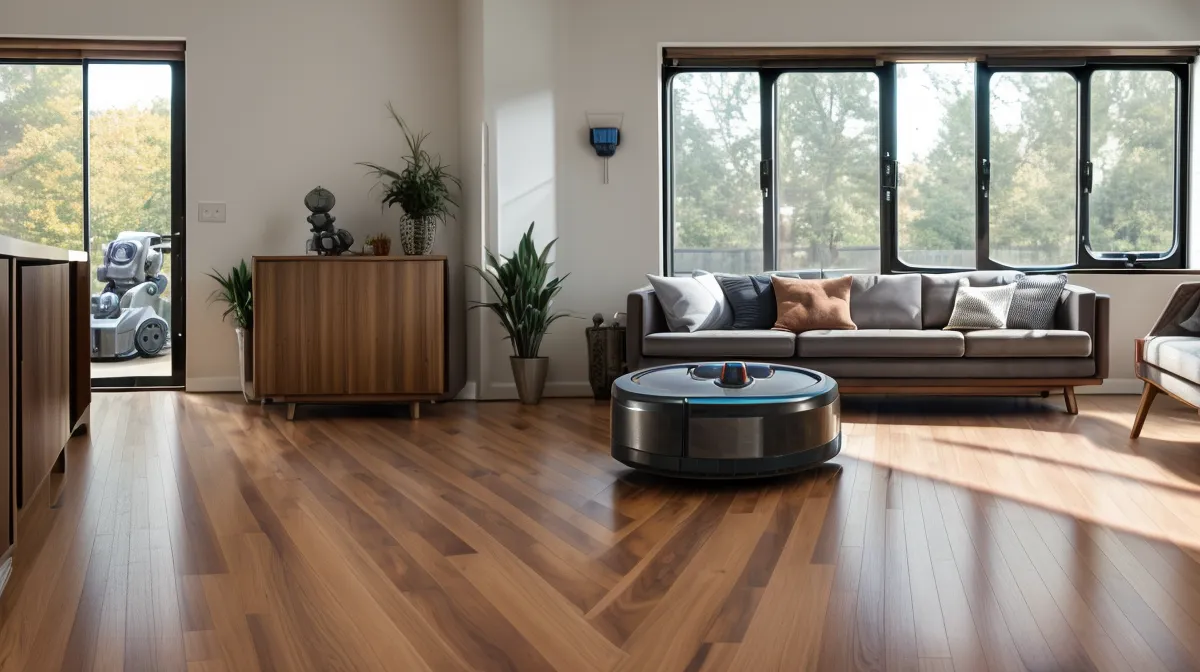
One evening mid-March, right during the peak of Murph’s spring shed, I watched a literal tumbleweed of husky fur drift across the hardwood while my old vacuum sat stuck on the basement transition again. It was the third time that week. I’m a 36-year-old UX writer, which means I spend my days obsessing over friction points in apps, but my nights are spent managing the friction points of a 1920s craftsman bungalow and two rescue dogs. Murph is a husky mix who exists to generate fluff, and Beans is a senior beagle who exists to find the one spot the vacuum missed.
Heads up before we dive into the data: I earn a commission if you click through and buy through one of my links, at no extra cost to you. I’ve personally weighed the dustbins of every bot mentioned here on my kitchen scale, and these picks are based on the 'Robot Tally' spreadsheet I’ve been keeping since my Roomba i3 died on the basement steps in early 2024. I’m not an engineer; I’m just someone who is tired of finding dog hair in my coffee. You can see the full backstory in The Husky-Beagle Hair Tally: Why I Finally Swapped My Dead Roomba for the LG CordZero.
The Craftsman Problem: 1920s Architecture vs. Modern Connectivity
Living in a century-old home in suburban Indianapolis is a dream until you try to install anything 'smart.' These houses were built with lath and plaster walls that are essentially Wi-Fi kryptonite. When I brought home the LG CordZero Robot, I was already bracing for the inevitable connection failure. Most modern routers want to push everything to a 5GHz band, but these bots are notoriously picky about needing a 2.4GHz frequency band to actually talk to their hubs.
I remember one rainy Tuesday evening last month, I was literally crouching on the floor in the dark, trying to force my phone to forget the 5GHz network just so the smoke detector hub for my X-Sense Smart Smoke and CO Detector would acknowledge my existence. It’s the kind of UX failure that makes you want to throw the whole house away. But once I got the LG CordZero on the 2.4GHz band, the onboarding was surprisingly painless. Compared to the ECOVACS app, which feels like a Sephora checkout flow designed to trick you into a credit card application, the LG interface is refreshingly plainspoken.
The Robot Tally: Why Suction Power Isn't Everything
I started the 'Robot Tally' spreadsheet after the Roomba i3 incident because I was tired of guessing which vac was actually doing its job. I weigh the dustbins. It’s weird, I know, but Murph blows his undercoat twice a year, and the volume of fur is staggering. If a vacuum can’t handle a 'blow' season, it’s useless to me. The LG CordZero Robot became the hero of the spreadsheet because of its three-stage suction. It doesn't just push the hair around; it actually inhales it, even from the deep crevices of our 1920s floorboards.
There is a measurable tradeoff I’ve noticed across six months of daily runs: higher navigation precision requires more frequent sensor maintenance. The LG and the Roborock S8 Pro Ultra are geniuses at mapping, but they are also sensitive. If a single husky hair drifts over a cliff sensor, they start pinging your phone like a needy ex. My old 'random-bounce' models would operate longer between cleanings because they were too dumb to know they were dirty, but they also missed half the room. I’d rather wipe a sensor once a week than find a 'Beans incident' smeared across the rug because the bot didn't see it.
Speaking of incidents, the iRobot Roomba j7+ actually saved us once. Beans, in his senior years, sometimes loses midnight arguments with his digestion. The j7+ pet-poop avoidance worked perfectly, steering clear of the mess. However, its map-editing UX is a nightmare. Every time it 'auto-learns' a new chair placement, it seems to forget my no-go zones, leading to it getting eaten by the IKEA rug fringe for the fourth time that week. You can read more about these navigation headaches in My Tracking Notes on Robot Nav Fails: Why Craftsman Bungalows and Huskies are the Ultimate Stress Test.
The Sensory Experience: Noise, Thunks, and Sinus Relief
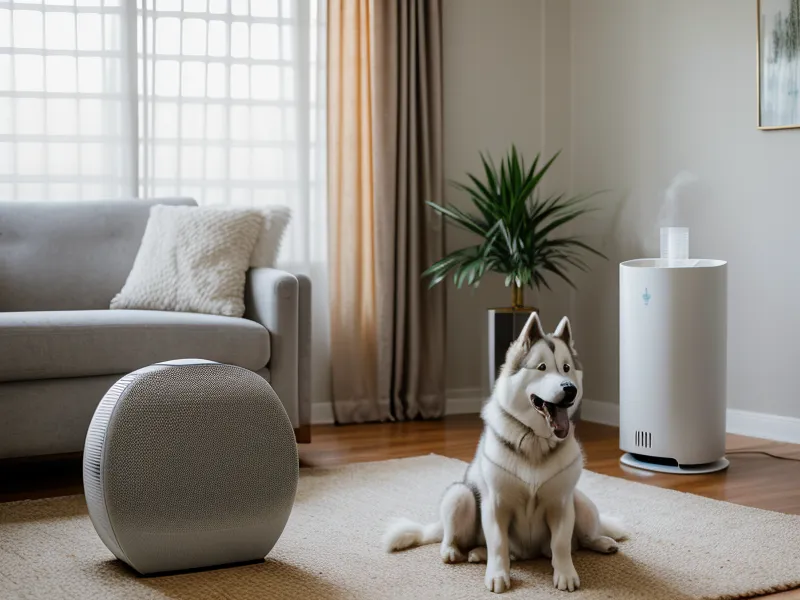
Early July, when the humidity peaked in Indy, the 'dog smell' usually settles into the bungalow's heavy curtains. This year was different. Along with the LG, I’ve been running the PuroAir HEPA 14 Air Purifier. The difference is physical. I felt an immediate relief in my sinuses after running the PuroAir on high for an hour after the dogs came in from a rain-soaked walk. It uses a HEPA 14 filter, which is medical-grade—capturing 99.995% of particles, whereas the standard HEPA 13 filters most people buy just don't cut it for husky dander.
The noise floor is also a huge factor when you’re working from home. I used my phone to check the levels: the PuroAir in sleep mode sits at a whisper-quiet 28 dB. The LG CordZero is louder, obviously, but it has this specific, heavy 'thunk' when it finishes its cycle and hits the auto-empty dock. It’s a satisfying, mechanical sound that signals the end of the chaos. For a few minutes after that thunk, there is the rare silence of a truly clean floor. Even Sam, who usually tunes out my vacuum rants, stood perfectly still in the living room one afternoon, genuinely impressed as the Roborock S8 Pro Ultra lifted its mop pad like a cat avoiding a puddle to cross the runner rug. It’s those little UX touches—the bot 'knowing' the floor type—that make the high price tag sting a little less.
Final Verdict: Is the LG CordZero Worth the Spend?
After about six weeks of daily runs, the LG CordZero has officially taken the top spot in my spreadsheet. It isn't perfect—the brushroll still wraps my long hair after about ten runs, and you’ll spend a few minutes every Saturday morning with a pair of scissors unwinding it. But in terms of sheer reliability in a house that produces enough fur to knit a third dog, it’s the only one that hasn't given up on me. If you’re struggling with pet dander specifically, pairing it with a PuroAir HEPA 14 is the move. It’s the difference between 'looking' clean and the air actually feeling breathable.
If your goal is total floor autonomy and you have the budget, the LG CordZero Robot is the one to get. Its auto-empty dock actually finished a full week without me having to intervene, which is a record in this house. But if you are more concerned about deep-cleaning mops and don't mind a steeper app learning curve, the Roborock is a solid alternative. For most of us just trying to survive the 'Great Shed-Off' without losing our minds, the LG is the shed-slayer you want. For more tips on keeping these bots alive, check out The Unofficial Husky-Owner Guide to Not Killing Your Fourth Robot Vacuum.
Stop overthinking the specs and just get the one that won't get stuck under your sectional. Your sinuses (and your partner) will thank you.
LG CordZero Robot
Pros
- + Three-stage suction handles heavy husky fur on both hardwood and rugs
- + Auto-empty dock is reliable enough for a full week of pet hair
- + App onboarding is clean and lacks the usual subscription nagging
- + Solid 2.4GHz connectivity even in older homes with thick walls
Cons
- − Premium price point is a significant upfront investment
- − Brushroll requires manual cleaning for long human hair every few weeks