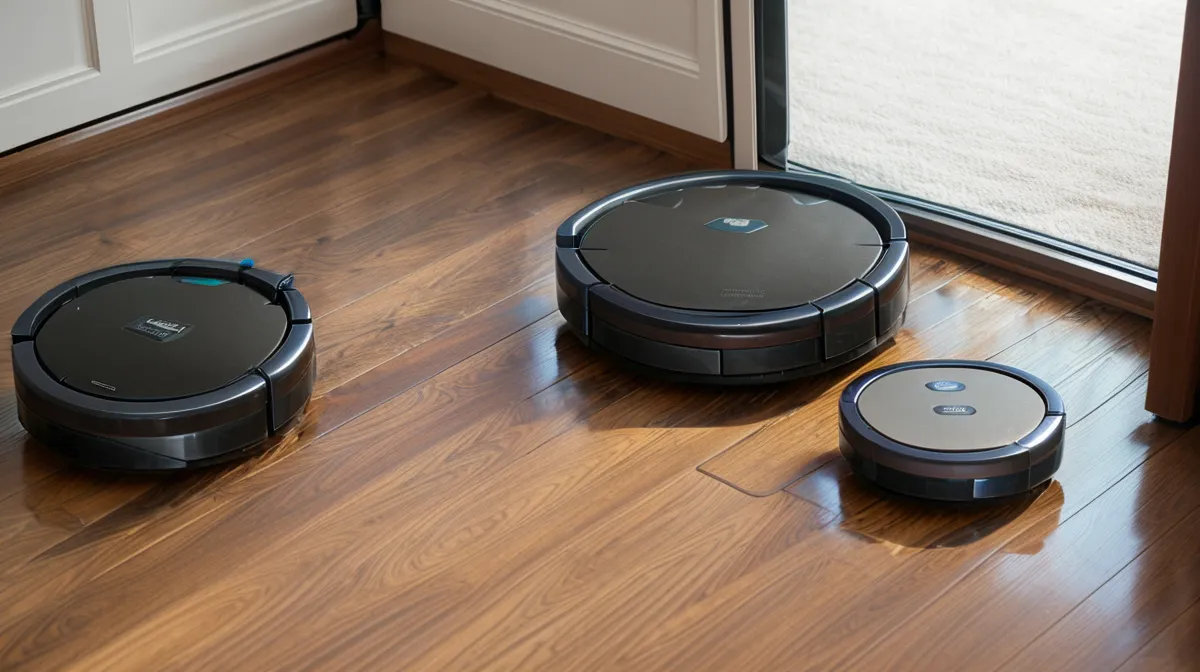
Late one evening in the bungalow, I watched a clump of Murph’s fur drift across the hardwood like a tumbleweed in a western, right past the spot where our old Roomba met its end on the basement steps. It was mid-September, the exact moment when a husky mix decides his undercoat is no longer necessary for his survival but absolutely essential for mine to be ruined. My partner, Sam, just looked at the tumbleweed, then at me, then back at the tumbleweed. He didn’t say anything, but he didn’t have to.
Before we go any further, a quick heads-up: I earn a commission if you grab a robot vacuum or a smart detector through the links in this article, at no extra cost to you. I’ve personally tested these bots in my own 1920s craftsman bungalow, weighed their output on a kitchen scale, and documented every time they got stuck under our sectional. The dustbin tally is real, the failure stories are mine, and the picks are based on what actually survives living with two dogs and a UX writer who treats app onboarding like a performance review.
The Dustbin Tally: Why I Started Weighing Dog Hair
I started keeping a running tally on robot-vacuum runs back in March 2024. It wasn't because I wanted a new hobby; it was because our old Roomba i3 had just committed suicide by tumbling down the basement stairs, and I was tired of guessing which "smart" device was actually earning its keep. Living in a house with original hardwood and a senior beagle named Beans and a husky mix named Murph means you don't just clean; you manage a constant, organic debris field. In this house, the husky-beagle hair tally is the only metric that matters.
Since that first entry in early 2024, I’ve logged everything from the Roborock S7’s first encounter with a stray phone charger to the time an ECOVACS got repeatedly eaten by an IKEA rug fringe. I’m not an engineer, but I am someone who noticed that most reviews ignore the reality of reactive dogs. When you have a senior beagle who treats high-pitched noises like a personal affront, the "UX" of a vacuum isn't just about suction—it's about whether the bot triggers a localized panic attack every time it needs to empty its bin.
The LG CordZero vs. The Autumn Shed
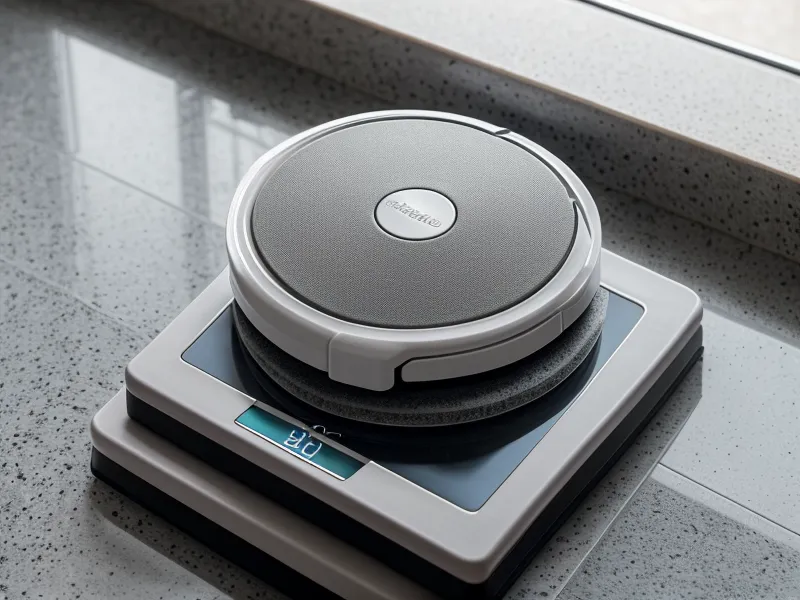
During the first cold snap this year, I brought in the LG CordZero Robot [Editor's Pick] to see if it could handle the peak shedding season. Murph was "blowing coat," a delightful process where a husky-mix sheds their entire undercoat, often overwhelming standard vacuum bins in minutes. I was looking for something that didn't require me to act as its personal assistant every twenty minutes.
The LG comes with three suction stages, which I actually used. Most bots have a "Max" mode that sounds like a jet engine and lasts for about six minutes before the battery dies. The LG managed to hold up across the hardwood and the high-pile rug in our bedroom without the battery percentage plummeting like a bad stock. More importantly, the dustbin auto-empty dock actually finished a full week without me having to clear a clog. For a house with this much fur, that’s basically a miracle. I’ve written about testing the Roomba j7 Plus obstacle avoidance before, but the LG’s lack of friction in the daily maintenance department started moving it to the top of my tally sheet.
The Noise Floor and the Beans Factor
Standard smart home advice usually tells you to schedule your vacuum for whenever you aren't home. That fails the second you have an anxious dog. If I'm out and the vacuum gets stuck or starts making a specific frequency of noise, Beans loses it. I used the NIOSH SLM app on my phone to check the noise levels, and while the LG is relatively quiet during its run, the auto-empty base has a high-pitched, sudden whoosh that sends Beans scurrying into the kitchen for cover every single time.
This is where the "smart" part of the smart home usually breaks down. If the app is a mess, I can't easily adjust the schedule to happen when Sam is taking the dogs for a walk. The LG app onboarding was actually the least painful of the seven I’ve tested—no required scavenger hunt for an account activation code that never arrives. It’s a stark contrast to the iRobot Roomba j7+ [Best Brand Recognition], which keeps hitting me with a subscription nag for their Premium tier every few weeks. I’m already paying for the hardware; I don’t need my vacuum to treat me like a captive audience for an upsell.

The Multi-Device Stress Test
While the LG was tackling the floors, I was also trying to manage the airborne dander. Murph doesn't just leave fur; he leaves a fine mist of dander that makes the 1920s air feel heavy. I’ve been running the PuroAir HEPA 14 Air Purifier [Best for Pet Dander] in the living room. It uses a HEPA 14 filter, which is medical-grade and captures 99.99% of particles down to 0.1 microns. In sleep mode, it’s genuinely quiet—my phone read it at 28 dB from a few feet away. It’s one of the few things in this house that doesn't make Beans nervous.
However, setting up the rest of the ecosystem wasn't as smooth. I recently tried to install the X-Sense Smart Smoke and CO Detector [Best Smart Detector]. I spent about half an hour trying to force the smart hub onto our 5GHz WiFi band before I finally looked at the instructions and realized it specifically required 2.4GHz. It’s a classic UX failure—the app just says "Connection Failed" instead of "Hey, you're on the wrong frequency." Once I swapped it over, it was fine, and the app push notifications are actually faster than the in-house horn, which lets me stop a false alarm from a smoky cast-iron skillet before the dogs start howling.
The Sam Reaction
One evening, Sam was watching the Roborock S8 Pro Ultra [Best DTC Value] move from the hardwood onto the area rug. He actually pointed at the bot's lifting mop pad with genuine shock, as if the vacuum had just performed a card trick. "It didn't soak the rug," he said, sounding genuinely impressed. It’s a great feature, though the Roborock app is feature-dense to the point of being its own learning curve. You can check the current price for the S8 Pro Ultra on the vendor's page, but keep in mind you're paying for that self-cleaning mop dock, which is only worth it if you actually have enough hard floors to justify the footprint of the base.
The Final Tally: What Actually Works
After several weeks of testing through the peak of the autumn shed, my tally finally settled on a winner. The LG CordZero didn't just have the suction; it had the lack of friction. It didn't make me redo the map every time I moved a chair, and it didn't nag me for a subscription. In a 1920s bungalow with two dogs, you already have enough maintenance to deal with—you don't need your vacuum to be another job.
The reality of living with robots is that they are all flawed. One will eat a rug fringe, another will ignore a pile of crumbs, and almost all of them have apps that make me want to delete my digital existence. But when the dustbin tally shows a full week of autonomously collected husky fur without a single "Help, I'm stuck" notification, that's the closest thing to a win I’m going to get.
If you're tired of being a part-time janitor for your own robots, check out the current price for the LG CordZero Robot. It’s the only model from my tracking that handled the transition from Labor Day to the first cold snap without making me weigh the pros and cons of just moving into an apartment with no rugs. For more on my specific tracking notes, you can check out why the LG CordZero finally beat out my old Roomba during the last shed-off.