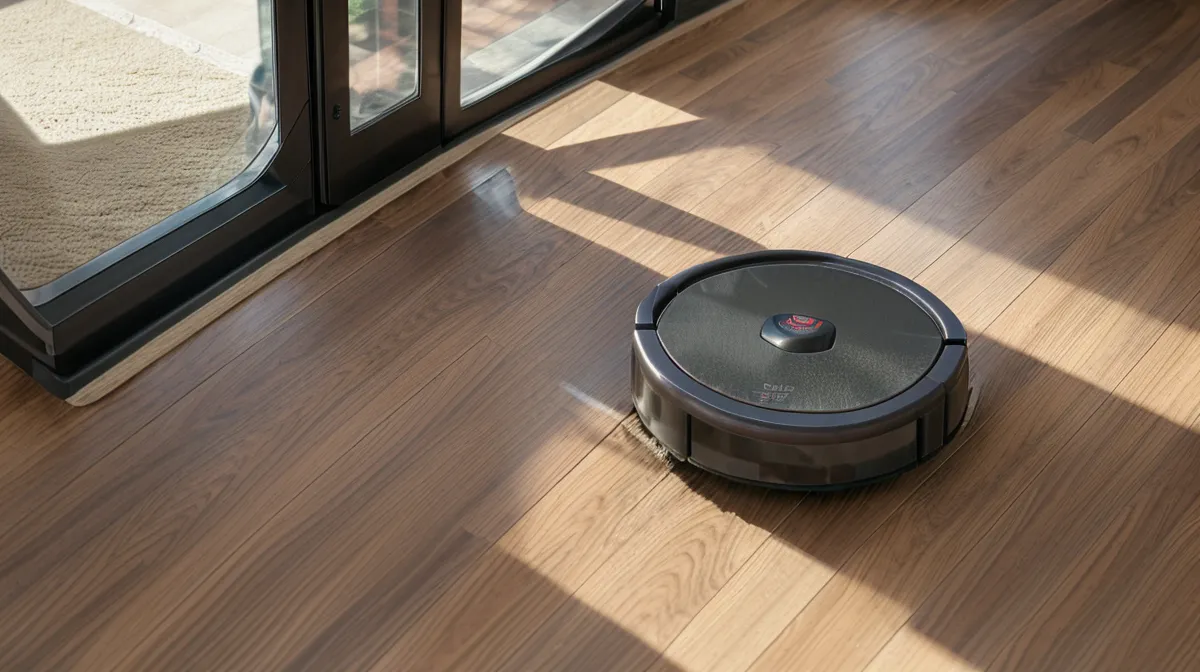
Sixty-eight decibels. That is what the NIOSH sound-meter app on my phone read the one time I actually pointed it at a robot vacuum grinding across the runner rug in our hallway, right after a product listing had promised the thing was basically silent on carpet. Here is the misconception that keeps showing up in robot vacuum reviews across this niche: that a single decibel number on a box tells you anything about what you will actually hear in a house with two dogs shedding across every kind of flooring there is. It does not, and the gap between that number and my hallway is the entire reason the dustbin tally exists in the first place.
Quick disclosure before any of that: I earn a commission if you buy a Roomba, an LG, or any of the other gadgets below through my links, at no extra cost to you. Every bot and purifier in this piece ran in my own house, on my own floors, with results logged on my own kitchen scale and phone. Sam watched most of it happen from the couch with arms crossed, which is roughly his review process for anything new in this house.
The Decibel Number on the Box Doesn't Mean Much in My House
Running any of this gear through a house built in the 1920s turns out to be a decent torture test for a house two dogs actually live in. Original hardwoods have gaps that catch debris, plaster walls eat Wi-Fi signals, and Murph treats the hallway runner like a seismograph for every bot that crosses it. None of that shows up on a spec sheet. A listing will give you a suction rating and a decibel number, and neither one tells you whether a bot can find its way out from under a low sofa or whether the noise changes once it crosses from bare floor onto a rug edge.
Suction turned out to be the vanity metric in this whole tally. A bot that can supposedly pull a bowling ball through a straw is worthless if its navigation is bad enough that it spends real time stuck against a floor lamp instead of cleaning the room next to it. That trade-off between suction and battery life is its own argument I have run the numbers on separately, and so is the question of how accurately a given bot's LiDAR or camera actually maps a floor plan with real furniture in it instead of a showroom floor. In this house, navigation decided almost everything suction did not.
How Mapping Precision Saves Time
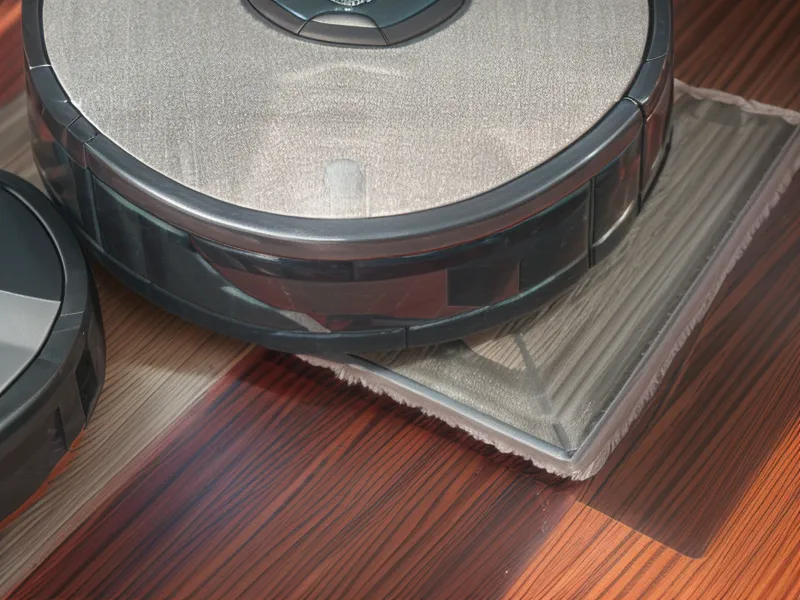
The LG CordZero Robot ended up the clearest answer to that question. Three-stage suction held up across both the hardwood and the high-pile rug in the bedroom, and mapping only needed three full passes before it stopped trying to climb the basement steps off the kitchen, the same steps where our old Roomba i3 met its end back when I started this tally in March 2024. The longer version lives in My Shedding Season Tally: Why I'm Finally Picking One Robot Vacuum Over the Rest, but the short version is that the companion app onboarding was the least painful of the seven I have put through this house, no account scavenger hunt required.
Before it ever got near those stairs, I had tried setting that same Roomba i3 on a daily timer so it would run itself while Sam and I were both at work. I came home one evening to find it wedged against a doorway stop clear on the far side of the house from its dock, like it had wandered three houses down the block before giving up. Scheduling a bot without a real map underneath it is a bet, and that one did not pay off.
The Mop-Lift Trick That Finally Got Sam's Attention
Skepticism is Sam's default setting with anything that plugs in and claims to be smart, so when the Roborock S8 Pro Ultra lifted its mop pad clear of the floor the instant it sensed the bedroom rug, Sam put the phone down and watched it happen twice before admitting out loud that it was neat. Mapping locked in by the second run here, where the Roomba needed three runs to stabilize the same floor plan. Whether a mop function like that earns its keep against just running a plain vacuum and a separate mop is a trade-off I have weighed in detail elsewhere, and sourcing a genuine replacement part for this particular dock without landing on a knockoff is its own small research project I would rather not repeat. The app itself is feature-dense to the point of being its own learning curve. Powerful once it is configured. Getting there is the problem.
A reader named Brenley Hessler found that same Roborock data in a subreddit thread and has been messaging me updates ever since. She runs hers on laminate out in Fort Wayne, and her numbers on the identical model never quite line up with mine. Hardwood, laminate, carpet, and a rug runner are not the same test, no matter what single number sits on the box, which is the whole point of weighing a dustbin instead of trusting a spec sheet.
Weighing the Dustbin After Every Run
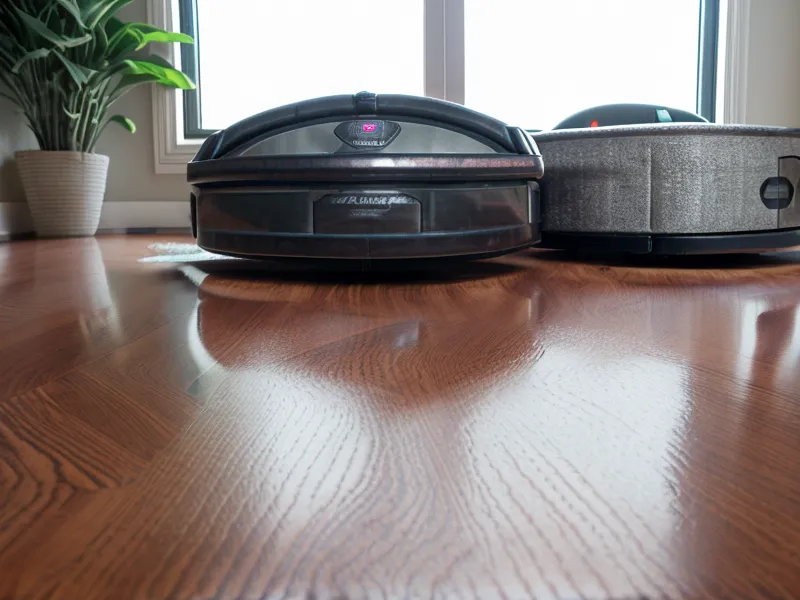
One rainy Tuesday morning, Beans lost an argument with a Greenie treat sometime in the night, and the iRobot Roomba j7+ was the only bot that routed around the mess instead of smearing it the length of the hallway, a run I wrote up in full in my Great Shed-Off comparison. Its auto-empty base also has the strongest seal of the five self-emptying docks I have run, no leaked dust around the station the way a couple of the others manage. Bin size is a separate question, the j7+'s dustbin runs noticeably smaller than the LG's so it empties itself more often for the same square footage, and how much volume actually matters in a two-dog house is its own longer conversation. The app itself. Subscription nags for the premium tier roughly every couple of weeks, even after you decline twice, dressed up exactly like a Sephora checkout flow talking you into one more serum.
Toys and shoes left out are a different test than a biohazard, and which bots actually steer around a stray sneaker instead of just shoving it into a corner is its own catalogued list by now. Late most evenings the LG's dock still gives this short mechanical pulse when it pulls the bin empty, loud enough in an otherwise quiet house that Murph used to flinch every time, before he decided it was just background noise.
Chasing Husky Glitter Out of the Air
This is the air-quality half of the tally, separate from anything with wheels. By late in shedding season the air in the bungalow gets heavy enough that I added the PuroAir HEPA 14 Air Purifier to the rotation, going up against the Levoit Core 300 I had been running before and visibly out-pulling it on dander. It is rated at HEPA 14, a grade above most of what is out there, and I will leave the full filtration-grade comparison to the piece where I actually run those numbers side by side. Where in the house a purifier has to sit to actually matter is its own argument too, ours just lives on Sam's side of the bedroom, and that alone stopped the sneezing whenever the dogs wrestle, which is as good a fix as I have found yet for what I started calling husky glitter, that fine static-charged dander Murph sheds just by existing.
Sleep mode on the PuroAir clocked twenty-eight decibels on the same meter that read sixty-eight on the hallway rug, though the full noise-testing methodology lives in its own separate piece, not this one. What the replacement filters actually cost to keep running is a spreadsheet of its own, and I will not pretend it is nothing, but the filter itself is proprietary, so there is no generic swap to shop around for the way you can with some competitors. Whether any of this touches dog smell specifically, separate from floating dander, is yet another question with its own answer elsewhere. For the longer version of managing dust generally in a house this old, I keep updating best air purifiers for large rooms and dogs.
A 2.4GHz Wall Is the Reason Pairing Took Two Tries
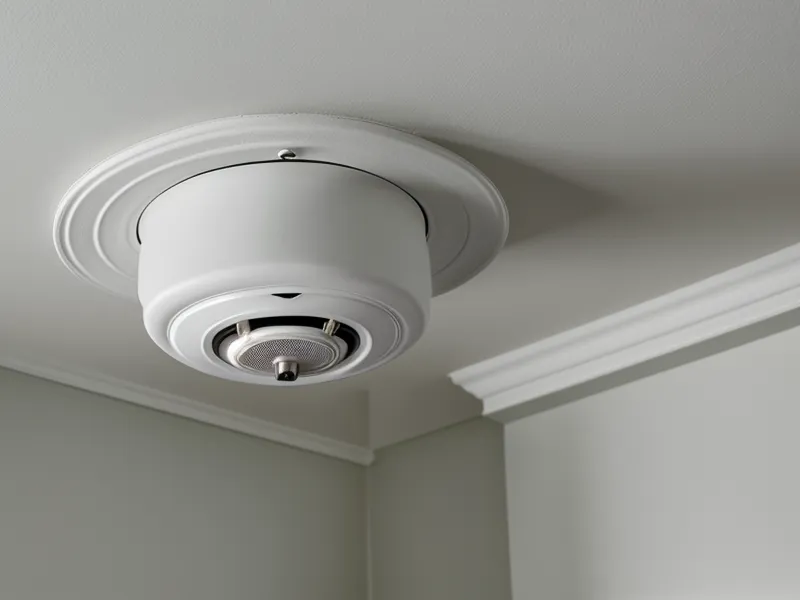
A 2.4GHz-only requirement is what finally humbled me on the X-Sense Smart Smoke and CO Detector. Thick plaster walls in a house this old act like a Faraday cage for anything on 5GHz, and pairing failed twice before I figured out the band issue and dropped the router setting for that one device. Once that was sorted, replacing the landlord-era sealed alarms in three rooms took under fifteen minutes each. The app is functional. Visually it still feels like something out of 2019, not in the same league as the LG's, but the push notification fired roughly four seconds ahead of the in-house horn during a bacon-smoke incident in the kitchen that had Murph halfway to the back door before the horn even caught up.
Where you actually need to mount a detector in a two-story house for the alert to do any good is a longer piece of its own, and whether these units talk to each other room to room is a separate question again, ours mostly do not need to since the phone already does the job of coordinating for us.
The Rest of the Smart Home Testing Log
A few more threads from the smart home testing log, each one worth its own post rather than a paragraph buried here. How deep a bot actually gets into thick carpet pile versus just skimming the top is one of them, especially on the high-pile rug in the bedroom. Whether a round or square-fronted bot gets closer into a trim corner along the original craftsman baseboards is another, and it is a smaller gap than you would think. More than one bot in this lineup clipped the low frame of our sectional and backed off rather than squeezing under the roughly three inches of clearance it actually has, which says more about the sensor than the vacuum underneath it. Long human hair wraps a brushroll at wildly different rates between bots, and a rug with loose fringe can eat one whole if the edge-mapping is not solid. Whether a self-emptying dock keeps its seal a year in rather than just on day one, how long any given bot's components hold up before something wears out, and whether a mop pad actually lifts dried mud paw prints instead of smearing them sideways, those are all separate write-ups by now, not footnotes to this one.
After cycling through returns and refurb deals for two years now, the bot that actually stuck is not the one with the most gimmicks. It is the LG CordZero Robot, mostly because it does not make me fight an app just to get the kitchen clean before Sam gets home. If you are done pulling your own robot out from under a sectional, the current listing sits below, it is the first one in this whole tally that actually survived start to finish.
| Product | Rating | |
|---|---|---|
| LG CordZero Robot Editor's Pick | 9.2 | Read More → |
| iRobot Roomba j7+ | 8.8 | Read More → |
| Roborock S8 Pro Ultra | 8.5 | Read More → |
| PuroAir HEPA 14 | 8.4 | Read More → |
| X-Sense Smart Detector | 8.2 | Read More → |
LG CordZero Robot
Pros
- + Three-stage suction handled husky hair on both hardwood and rugs
- + The least painful app onboarding process of the seven I tested
- + Dustbin auto-empty actually works for a full week without intervention
Cons
- − Brushroll still requires a manual hair-snip every few runs
- − Price is premium compared to some DTC alternatives